
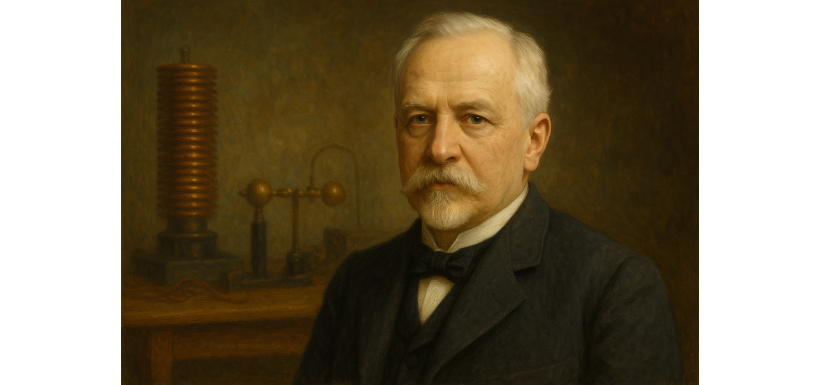
Imagine being shown a revolutionary invention, something that promises to change the world. For most of us, the reaction would be pure amazement. But for a true engineer, the wonder is immediately followed by a different impulse: to deconstruct it, to figure out its secrets, and, most importantly, to see a better way to build it. That was precisely the reaction of Professor Adolf Slaby, a leading German electrical engineer, when he first witnessed Guglielmo Marconi's wireless demonstrations. This encounter wouldn't just satisfy his scientific curiosity; it would spark a national effort to create a German alternative, igniting one of the great technological and commercial rivalries of the early 20th century. As we continue our "Pioneers of Radio" series, we'll meet the academic visionary who became the catalyst for the German radio industry.
The Professor of Charlottenburg: An Established Expert
Adolf Karl Heinrich Slaby was born in Berlin in 1849. Unlike some of the more solitary inventors we've discussed, Slaby was a pillar of the German scientific establishment. He was a highly respected professor of electrical engineering and mechanics at the prestigious Technische Hochschule in Charlottenburg, Berlin (which is now the Technical University of Berlin). He wasn't just some tinkerer in a shed; he was a leading academic, shaping the minds of a new generation of German engineers.
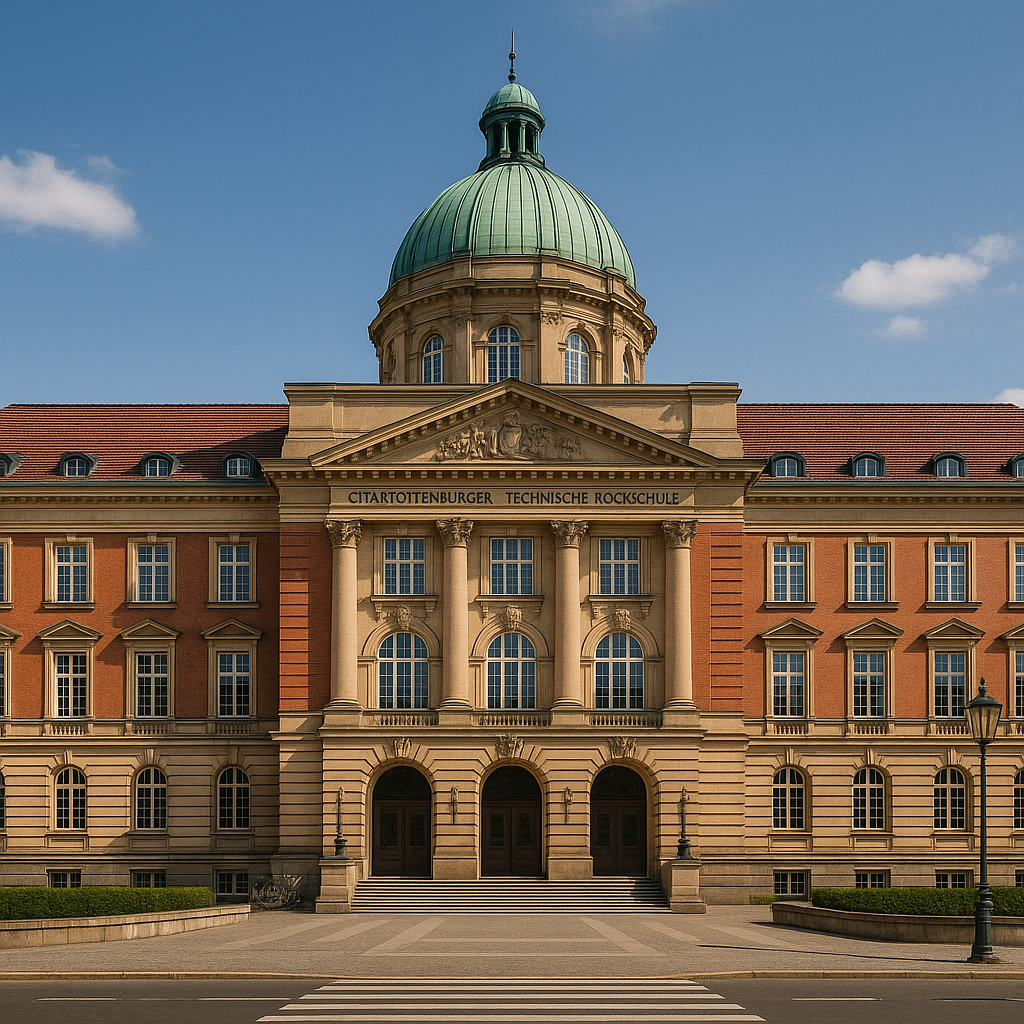
His expertise wasn't confined to the classroom. Before his focus shifted entirely to wireless, he was a renowned expert on steam turbines and electrical machinery. This deep grounding in applied engineering and physics gave him the perfect toolkit to analyse and improve upon the new wireless technologies that were beginning to emerge. What's more, he had a close personal relationship with the German Emperor, Kaiser Wilhelm II, often delivering lectures on science and technology to the royal court. This connection would prove to be incredibly important, giving him the influence to champion his ideas at the very highest levels of the state.
The Encounter That Sparked a Rivalry (1897)
The pivotal moment in Slaby's radio career came in 1897. Thanks to his reputation, he was invited by the British telegraph authorities to witness Marconi's groundbreaking wireless demonstrations across the Bristol Channel in England. Marconi was successfully sending signals over a distance of nearly nine miles, a stunning achievement at the time.
Slaby was, by all accounts, astounded by what he saw. He reportedly called it "a new branch of science." But he wasn't just a passive observer dazzled by the spectacle. With his deep theoretical knowledge, he quickly grasped the fundamental principles of Marconi's system. And, with the critical eye of an expert engineer, he also immediately identified what he saw as its weaknesses. He felt Marconi's system, while brilliant in its practical application, was inefficient in its use of energy and, crucially, suffered from relatively poor tuning.
He returned to Germany with a mission. It wasn't just about replicating Marconi's work; it was about surpassing it. Driven by a potent mix of scientific curiosity and a strong sense of national pride, he set out to develop a German wireless system that would be independent of Marconi's patents and, he hoped, technically superior. I can just imagine the gears turning in his head on the journey home, already sketching out improvements and new circuit diagrams in his mind.
The Slaby-Arco System: A German Innovation
Back in his laboratory in Berlin, Slaby didn't work alone. He began a powerful partnership with one of his brilliant young assistants at the industrial giant AEG, Count Georg von Arco (who we'll be covering in our next post). This collaboration was a perfect match: Slaby was the established professor with the deep theoretical vision and the high-level connections, while von Arco was the gifted hands-on engineer who could turn those complex ideas into practical, working hardware.
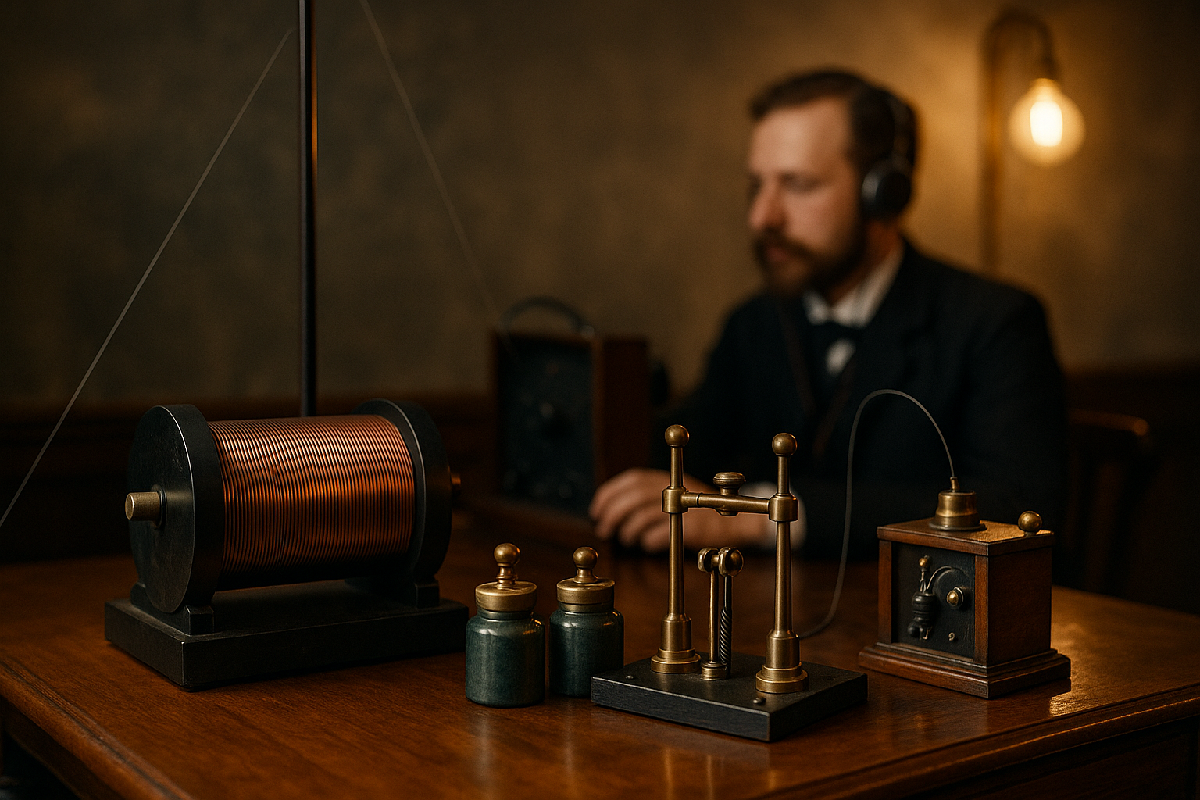
Together, they developed what became known as the Slaby-Arco system. Their key innovation was in the area of tuning and antenna coupling. They developed a method of direct-coupling the antenna to the resonant circuit in such a way that the antenna itself became an integral part of the tuning system. This was a different approach from Marconi's initial systems, which used a more loosely coupled arrangement.
The main advantage of their system was improved selectivity. By making the antenna part of the resonant circuit, they could achieve sharper tuning. This was a major step forward. It meant their receivers could more easily pick out a specific frequency while rejecting interference from other stations – a problem that was becoming increasingly serious as more wireless transmitters came on the air. Slaby also developed a concept he called "multiplication," which was a method for coupling the antenna to the spark-gap transmitter. He claimed this was more efficient at transferring energy into the antenna, resulting in a stronger radiated signal for a given amount of power.
Their work quickly produced impressive results. They successfully established a wireless link over 21 kilometres between Berlin and a naval station, a demonstration that greatly impressed Kaiser Wilhelm II. The Kaiser, a man with a keen interest in technology and a strong desire to see Germany compete with Britain on the world stage, became a passionate supporter of their work, securing crucial military and government backing.
The Path to Telefunken
By the early 1900s, the wireless scene in Germany was becoming complicated. Slaby and von Arco, backed by the industrial giant AEG, were making great strides. But so was another group. The rival firm, Siemens & Halske, was backing the work of Ferdinand Braun (another pioneer on our list), who had also developed his own innovative wireless system. This led to a fierce and ultimately counterproductive patent war between Germany's two largest electrical companies.

Slaby, with his high standing in German scientific circles and his personal connection to the Kaiser, played a crucial role as an advocate for a unified national strategy. He argued that this internal rivalry was weakening Germany's ability to compete with Marconi's rapidly expanding international empire.
His advocacy, combined with the Kaiser's strategic push for a national champion, led directly to a landmark event in 1903. The wireless interests of AEG and Siemens & Halske were merged to form a single, powerful new company: the Gesellschaft für drahtlose Telegraphie m.b.H., System Telefunken, known to the world simply as Telefunken. The Slaby-Arco system, alongside the Braun-Siemens system, became one of the two foundational patent pillars of this new German giant, which was now poised to take on Marconi for control of the world's airwaves.
Synergies with Ham Radio: The Pursuit of Better Tuning
Adolf Slaby's work resonates deeply with the spirit of amateur radio.
- The Quest for Selectivity:
- Antenna Coupling:
- The Home-Brewer Spirit:
His relentless focus on improving tuning and selectivity is a core concern for every ham radio operator. We are always trying to hear that weak DX station right next to a powerful local broadcaster, and our ability to do so comes down entirely to the quality of our receiver's filtering and tuning – a field Slaby helped to pioneer.
His work on efficiently coupling transmitters to antennas is fundamental. Hams constantly experiment with different ways to get power from the rig to the aerial – using tuners, baluns, and various matching networks. This practical pursuit follows directly from the theoretical and experimental work of pioneers like Slaby.
Although he was a respected professor, Slaby's initial work to replicate and then improve upon Marconi's system has strong echoes of the "home-brewer" spirit in ham radio. It’s that desire not just to use the technology, but to understand it, take it apart, and see if you can make it better. It's about pushing the performance of your station through your own ingenuity.
Later Life and Legacy
After the formation of Telefunken, Adolf Slaby continued to serve as a consultant and an "elder statesman" for the company, his expertise highly valued. He also continued his academic duties, helping to train the next generation of German electrical engineers who would go on to work in the burgeoning radio industry.
Sadly, his health began to decline, and he passed away in 1913. He didn't live to see the outbreak of the First World War, a conflict where the wireless technology he helped to create would play such a crucial and unprecedented role, particularly for the German Navy and its global communications.
Conclusion: Germany's Answer to Marconi
Adolf Slaby was the catalyst for the German radio industry. He was the academic visionary who, upon witnessing Marconi's invention, had the insight to understand its principles, the critical eye to identify its weaknesses, and the drive and influence to create a powerful national alternative. His partnership with Georg von Arco produced a technically advanced system that formed the basis of the Telefunken empire. His story is a perfect example of how scientific understanding, combined with national ambition and industrial might, can fuel incredible technological progress. He may not have been the first to send a wireless signal, but he was one of the first to perfect it, ensuring that Germany would be a leading player in the new age of radio.
What are your thoughts on the role of national competition in driving innovation? Does it accelerate progress or lead to unnecessary conflict? Let me know in the comments below! And, as always, if you have suggestions for other "Pioneers of Radio" that you'd like to see featured, don't hesitate to share.
For more information please visit our online store or alternatively contact us and our team will be happy to assist you.