
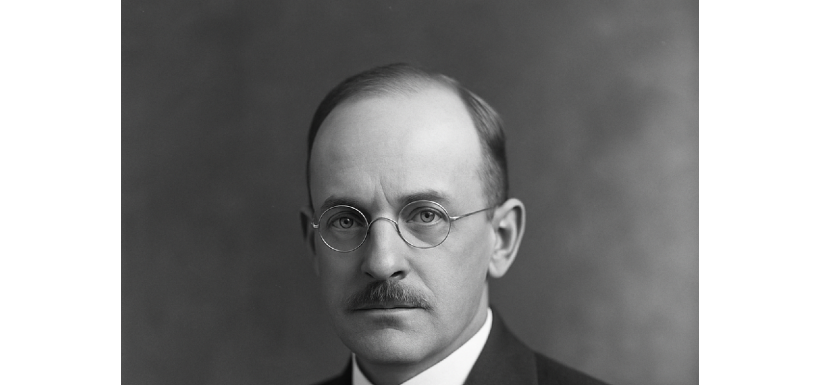
In the grand orchestra of technological progress, some pioneers compose the beautiful melodies – the big, famous inventions that everyone knows. Others, however, are the virtuoso musicians who design the instruments themselves, making it possible for the music to be played at all. Today in our "Pioneers of Radio" series, we meet one of these master instrument makers: Albert Wallace Hull, an American physicist and a true giant of the vacuum tube era. Working from within the powerhouse of General Electric's research laboratory, Hull invented a whole family of essential electron tubes, including the original magnetron – the device that would later be transformed into the heart of Allied radar and, eventually, every microwave oven in the world.
An Unlikely Start: From Ancient Greek to Modern Physics
Albert Hull's journey into the world of electronics began in a rather unexpected place. Born in Southington, Connecticut, in 1880, he attended Yale University where he didn't major in physics or engineering, but in Greek! It's a fantastic piece of trivia that I find truly charming. It just goes to show that a solid grounding in the classics is no barrier to becoming a master of cutting-edge technology. After graduating, he even taught languages for a spell at a prep school.
But the lure of physics was too strong to ignore. Hull returned to Yale to pursue his doctorate in physics, which he completed in 1909. After teaching for another five years at the Worcester Polytechnic Institute, where he conducted his own midnight research into photoelectricity, he made the move that would define his career. In 1914, he joined the legendary General Electric Research Laboratory in Schenectady, New York. He would remain there until his retirement in 1949, becoming one of its most prolific and important scientists.
The GE Research Lab and the Patent Problem
To understand Hull's work, you have to understand the environment at GE's research lab in the 1910s. It was a crucible of innovation, home to brilliant minds like Irving Langmuir and William Coolidge. But it was also a commercial enterprise with a very practical problem: patents. Lee de Forest's Audion (the triode vacuum tube) was patented, and these patents were controlled by rival companies. This gave them a stranglehold on the burgeoning market for radio amplifiers and oscillators.
GE's strategy was simple and audacious: they tasked their scientists with inventing their way around the de Forest patents. They needed to find fundamentally new ways to control the flow of electrons in a vacuum tube, without using de Forest's electrostatic grid method. This challenge of "patent circumvention" was the catalyst for some of Hull's most brilliant inventions. He decided to investigate using magnetic fields, rather than electric fields, to control the electron stream.
The Dynatron: An Oscillator with a Twist
One of Hull's first major successes, published in 1918, was a vacuum tube he called the dynatron. The dynatron was a type of tetrode (a four-element tube) that exploited a curious phenomenon called secondary emission. When high-energy electrons from the cathode strike the main anode (or plate), they can knock loose other electrons. Hull cleverly arranged the voltages on the tube's elements so that, over a certain operating range, an increase in the plate voltage would actually cause a decrease in the plate current, because more secondary electrons were being knocked loose and attracted to another, more positive, electrode.
This behaviour is known as negative resistance. It's a bit of a mind-bending concept, but it's incredibly useful. A circuit with negative resistance can overcome the natural energy loss in a tuned circuit (an inductor and capacitor), allowing it to generate a pure, stable oscillation. The dynatron oscillator was noted for its excellent frequency stability, comparable even to later crystal oscillators over a wide range of frequencies. It became popular in laboratory signal generators and was used in the local oscillators of early superheterodyne receivers. It was a completely different way of making a tube oscillate, a clever piece of engineering born out of the necessity to avoid existing patents.
The Magnetron: Taming Electrons with Magnetism
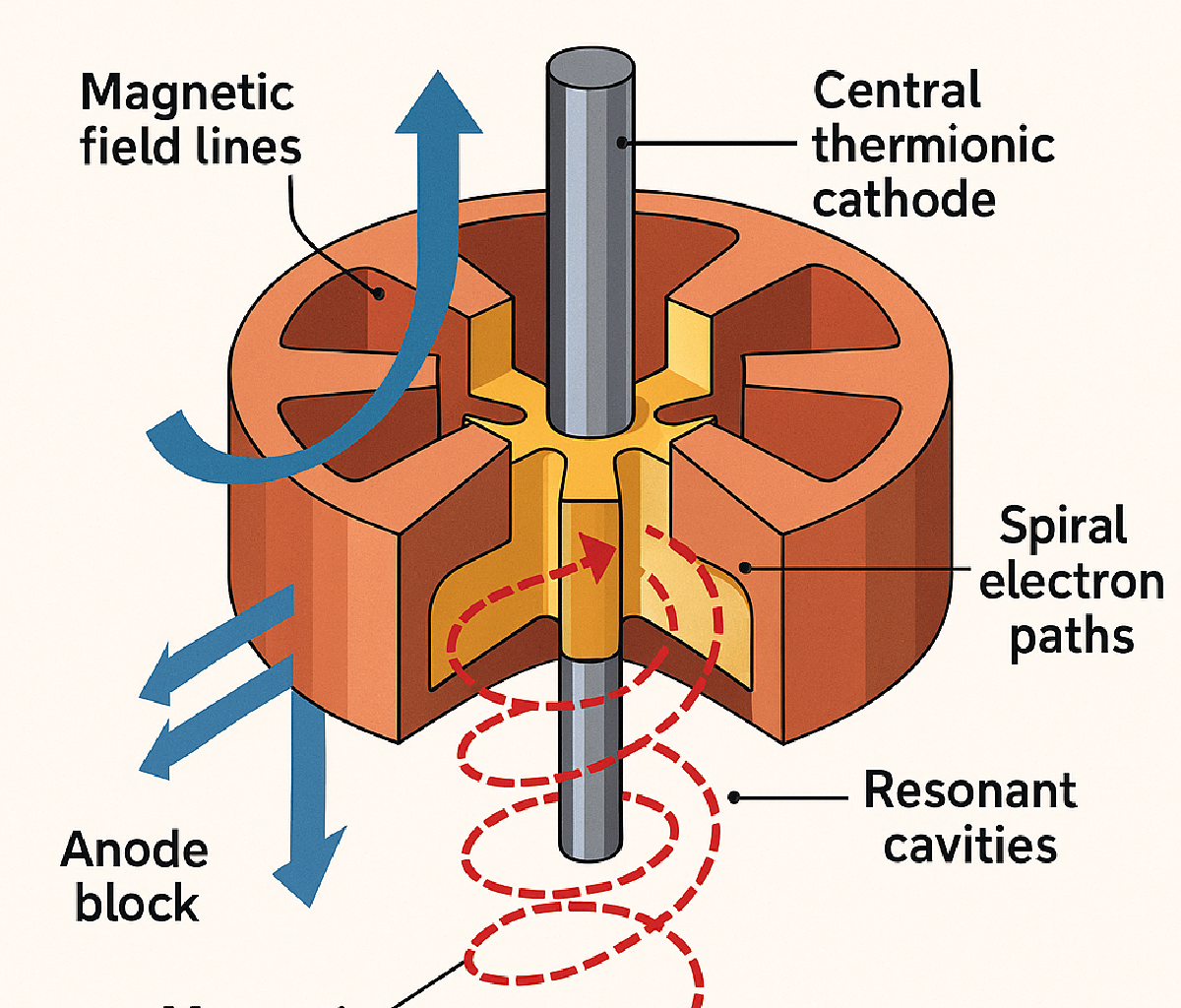
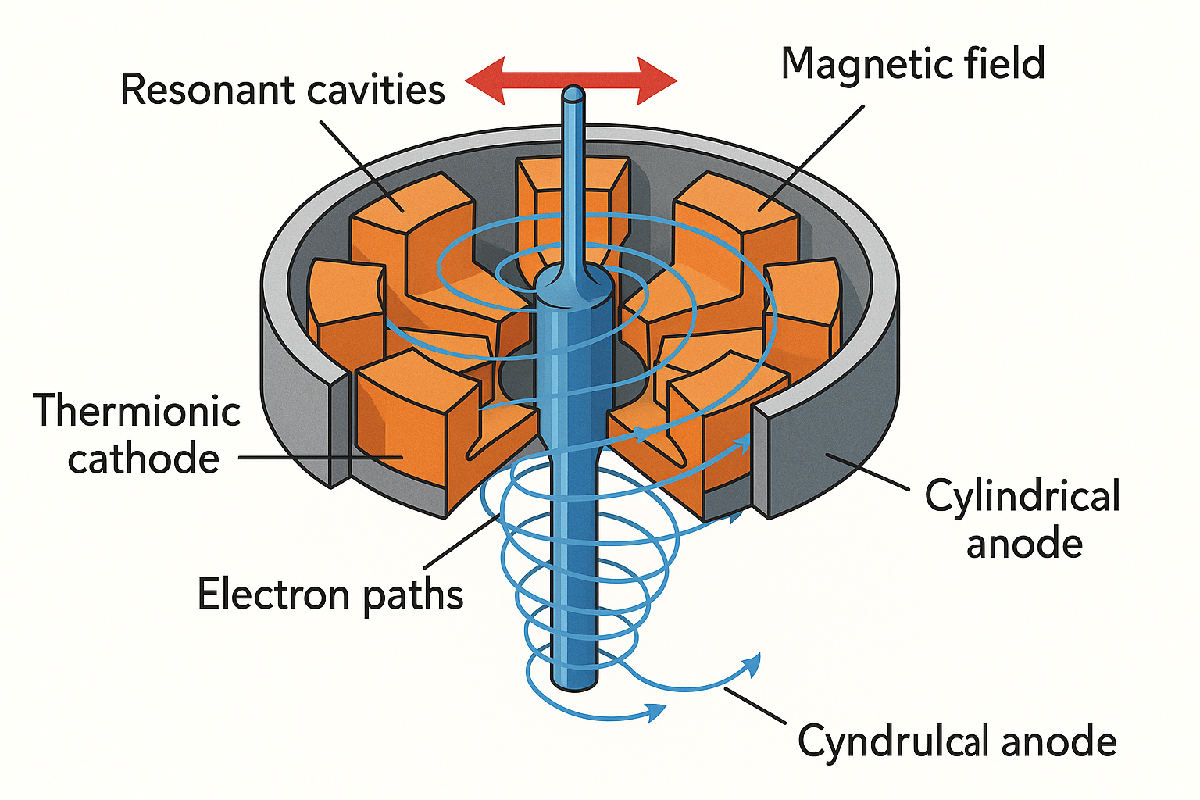
Hull's exploration of magnetic control led to his most famous invention. In 1921, he unveiled the magnetron. His original design was elegant in its simplicity: a central cathode (the electron emitter) surrounded by a cylindrical anode (the plate) inside a vacuum tube. The whole assembly was placed within a strong magnetic field aligned with the axis of the cathode.
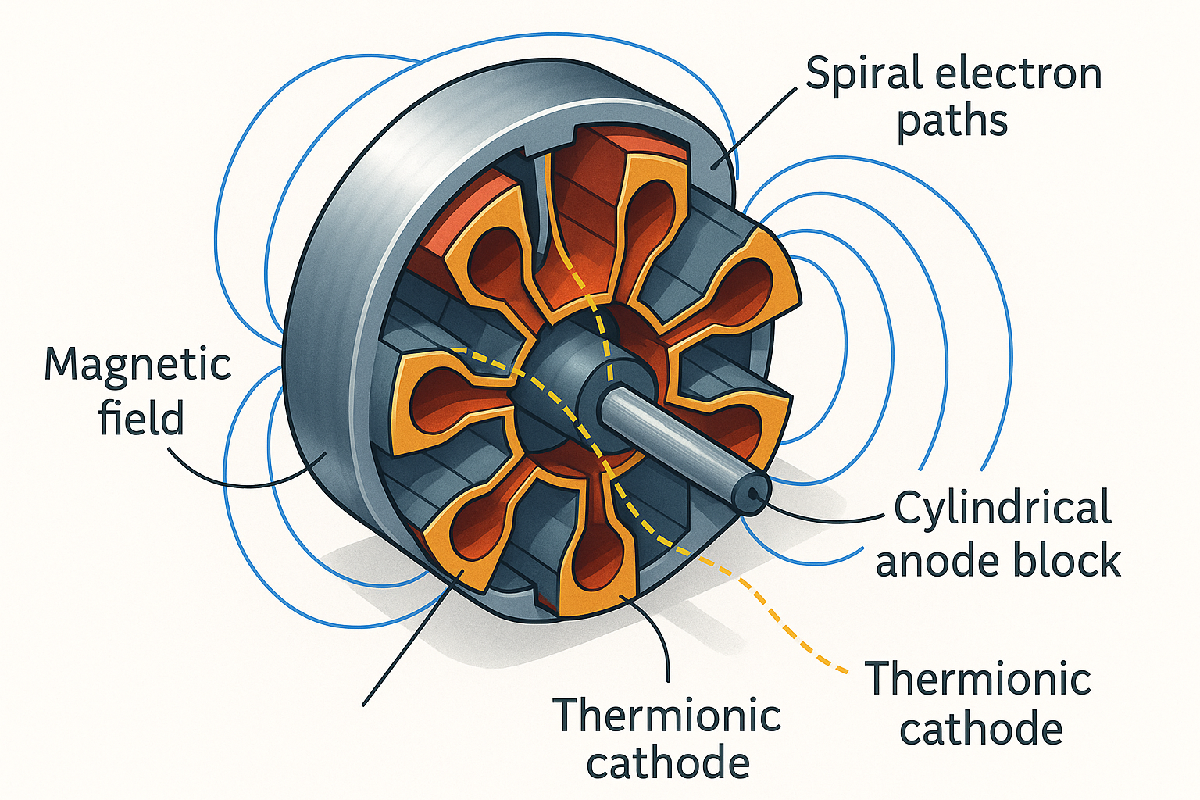
Here's the basic idea: electrons trying to travel from the central cathode to the outer anode are forced into curved paths by the magnetic field. By carefully controlling the anode voltage and the strength of the magnetic field, Hull could determine whether the electrons would reach the anode or be deflected back towards the cathode. This gave him a way to control the current – a magnetic alternative to de Forest's grid.
Hull's early magnetrons were not the high-power microwave devices we think of today. He tested them as amplifiers and, more successfully, as low-frequency oscillators. A GE magnetron in 1925 was reported to generate an impressive 15 kilowatts of power at 20 kHz. At the time, Hull actually anticipated his invention would be more useful for power conversion than for communications.
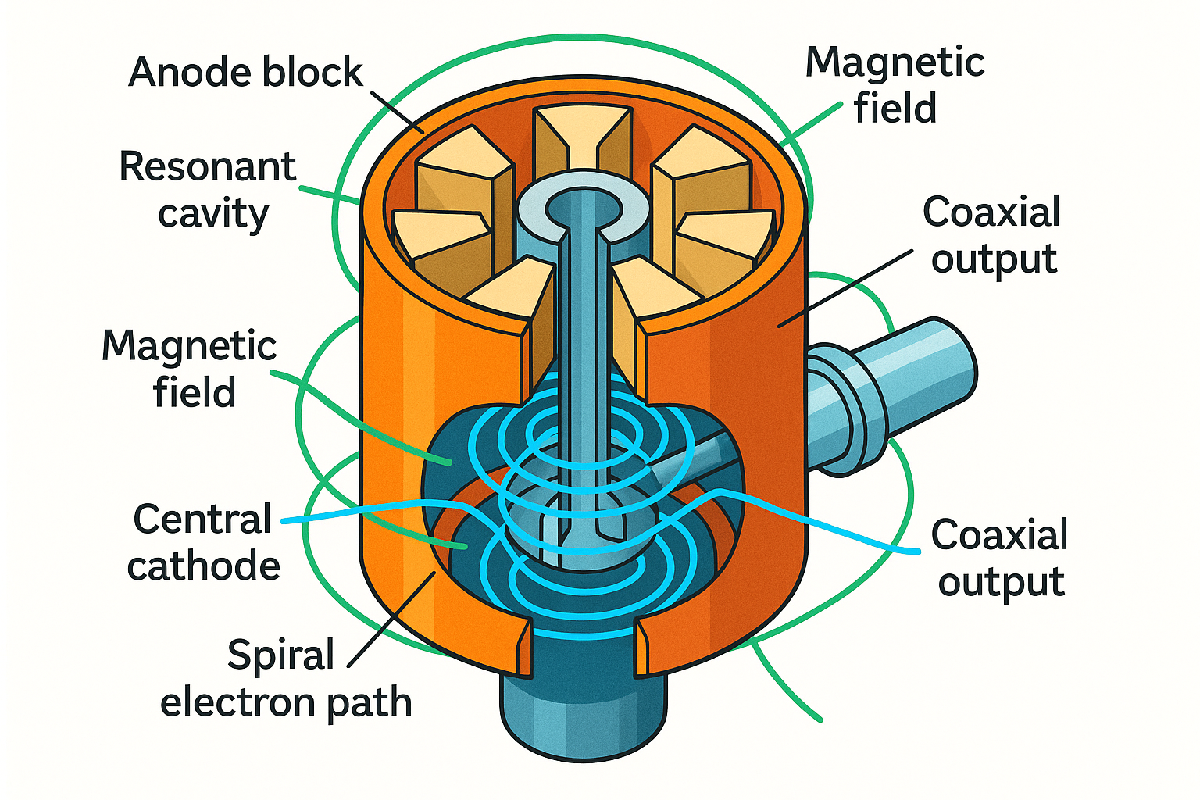
The story of the magnetron, however, took a dramatic turn during the Second World War. British physicists John Randall and Harry Boot, working at the University of Birmingham, took Hull's fundamental concept of using a magnetic field to control electrons and combined it with the idea of using resonant cavities within the anode block. The result was the multi-cavity magnetron, a device capable of generating immense power at microwave frequencies. This invention was an absolute game-changer, becoming the heart of Allied radar systems and providing a crucial advantage in the air war. It's a perfect example of how one inventor's foundational concept can be transformed by others into a world-changing technology. While Randall and Boot invented the practical high-power device, Albert Hull was undeniably the original father of the magnetron itself. And, of course, a descendant of that wartime technology now sits in most of our kitchens, heating our food in the microwave oven.
The Thyratron: A High-Power Electronic Switch
Hull's inventiveness wasn't limited to high-frequency applications. During the 1920s, he made major contributions to the development of gas-filled tubes. One of the most important of these was the thyratron.
Unlike a high-vacuum tube, a thyratron is filled with a small amount of an inert gas (like mercury vapour or argon). It acts like a super-fast, high-power electronic switch. It remains "off" until a small voltage pulse is applied to its control grid. Once triggered, the gas inside ionises, and a large current can flow through the tube with very little voltage drop. To turn it off, you have to cut the main anode current.
The thyratron was a workhorse of industrial electronics. It was used to control large motors, in welding equipment, and for high-power lighting controls. For radio, it was crucial in the modulator circuits of high-power transmitters and in the high-voltage power supplies needed for radar systems. Hull's key contribution here was figuring out how to protect the tube's delicate thermionic cathode from being destroyed by the bombardment of positive ions from the gas – a discovery that made hot-cathode gas-filled tubes like the thyratron practical and long-lasting.
A Legacy in Tubes and Beyond
Albert Hull was an incredibly versatile physicist. Beyond his tube development, he independently discovered the powder method of X-ray crystal analysis in 1917 (a technique also discovered in Europe by Debye and Scherrer around the same time), which became a vital tool for studying the structure of materials. He was truly one of the world's most prolific inventors of electron tubes, holding at least 94 patents and authoring over 70 technical publications.
For us in the radio world, Hull's legacy is immense.
- The magnetron, his most famous invention, kick-started the age of practical microwaves. This directly impacts hams who operate on the GHz bands, and the technology it spawned (radar, microwave links) has shaped modern communications.
- The dynatron was an important early component in high-stability oscillators for receivers and test equipment – the kind of gear that was essential for developing and aligning radio sets.
- The thyratron was a key component in controlling the high power needed for broadcasting and radar, influencing the design of transmitters and power supplies.
His work is a perfect example of the "enabling technology" that often happens behind the scenes in large research labs. The tubes he invented were the fundamental building blocks that other engineers used to construct the complex radio, radar, and industrial systems of the 20th century.
Conclusion: The Unsung Virtuoso
Albert W. Hull passed away in 1966. His career at General Electric was a testament to the power of sustained, well-resourced industrial research. He was awarded the IEEE Medal of Honor in 1958, cited for his "outstanding scientific achievement and pioneering inventions and development in the field of electron tubes."
Hull might not have the same public recognition as the lone-wolf inventors, but his impact was arguably just as profound. He was a vacuum tube virtuoso, a man who could seemingly conjure a new type of tube to solve any given problem. His inventions were driven by practical needs – the need to bypass patents, the need to control high power, the need to generate microwaves – and the results were revolutionary. He was a quiet giant whose work empowered countless other engineers and scientists, and whose inventions were crucial to the Allied victory in the Second World War and the subsequent explosion in electronic technology.
What do you think about the role of scientists working within large corporate labs like GE's? Do they get the credit they deserve compared to independent inventors? Let me know your thoughts in the comments below! And, as always, if you have suggestions for other "Pioneers of Radio" that you'd like to see featured, don't hesitate to share.
For more information please visit our online store or alternatively contact us and our team will be happy to assist you!