
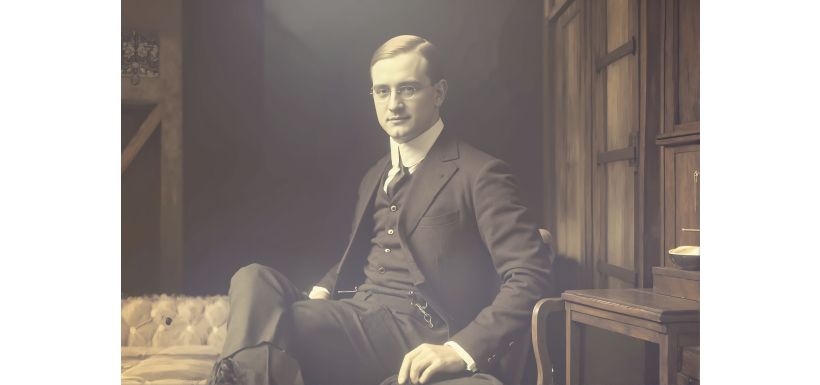
The Pioneers of Radio: Alfred N. Goldsmith - The Standard Bearer
In the heady, early days of radio, it wasn't just about innovation and flashy inventions, though there were plenty of those. It was also about bringing order to the chaos, establishing standards, and creating a framework for the industry to grow and mature. And that's where Alfred N. Goldsmith comes in. As we continue our "Pioneers of Radio" series, we'll meet a man who, while perhaps not as well-known as Marconi or Armstrong, played a crucial role in shaping the technical foundations of radio broadcasting and electronics. He was a founding member of the Institute of Radio Engineers (IRE), a tireless advocate for standardization, and, in many ways, the unsung hero who helped transform radio from a wild west of competing technologies into the well-regulated and reliable medium we know today.
Early Life and a Knack for Electronics
Alfred Norton Goldsmith was born in New York City in 1887, right as the first sparks of the wireless revolution were beginning to fly. I can't help but wonder if, as a lad, he was captivated by early demonstrations of wireless telegraphy. Did he dream of sending messages through the airwaves? We do know that he showed an early aptitude for science and engineering, eventually earning his Bachelor of Science degree from the College of the City of New York in 1907, followed by a Ph.D. from Columbia University in 1911, under the supervision of none other than Michael Pupin, who we covered earlier in the series. It's fascinating how these pioneers' lives often intersected, isn't it? He would also go on to teach at both institutions. He then embarked on a career that would see him become a key figure in the development of radio and, surprisingly, even television.
The Institute of Radio Engineers: Bringing Order to the Chaos
In 1912, a pivotal moment in radio history occurred: the founding of the Institute of Radio Engineers (IRE). And guess who was one of its three founding fathers? That's right, Alfred N. Goldsmith. Now, the IRE might sound a bit dry and institutional, but trust me, it was anything but boring in those early days. Imagine a bunch of brilliant, passionate engineers, all trying to figure out this newfangled thing called "radio." There were competing technologies, conflicting claims, and a general lack of standardization. It was, frankly, a bit of a mess.
The IRE was formed to bring some much-needed order to this chaos. And Goldsmith, with his sharp mind and dedication to technical excellence, was at the heart of it all. He served as the editor of the Proceedings of the IRE for a whopping 42 years, from 1912 to 1954. Can you imagine the sheer volume of technical papers, research findings, and debates he must have overseen during that time? He was also President of the IRE in 1928, and a member of its Board of Directors for 17 years, guiding the organisation through a period of incredible growth and change.
But his role wasn't just administrative. Goldsmith was instrumental in developing technical standards for the radio industry. He chaired committees that tackled issues like receiver sensitivity, interference, and frequency allocation. This might sound a bit dull, but it was essential work. Standardization meant that different manufacturers' equipment could work together, that radio stations wouldn't constantly interfere with each other, and that listeners could actually tune into the stations they wanted. It was about laying the groundwork for a reliable and user-friendly radio experience.
From Radio to Television: A Visionary's Touch
While Goldsmith's contributions to radio are undeniable, what makes him even more fascinating, in my opinion, is his involvement in the early development of television. Yes, you heard that right. This "radio guy" also played a role in shaping the future of visual communication.
He was a consultant to RCA on television, as well as being their Director of Research, and, as part of that work, he collaborated with other engineers to create improved colour television systems. He even developed an early colour television system based on the field-sequential method, where red, green, and blue images were transmitted in rapid succession and then combined to create a full-colour picture. Now, this wasn't the system that ultimately won out, but it demonstrates Goldsmith's forward-thinking approach and his willingness to explore new frontiers. He was also involved in developing innovative television technologies such as projection television, where the image was projected onto a larger screen. He would go on to patent over 100 inventions in radio and television.
I find it incredibly cool that someone so deeply involved in the nuts and bolts of radio also had a hand in the birth of television. It just goes to show how interconnected these fields were, especially in those early days. It also highlights Goldsmith's versatility as an engineer and his ability to adapt to new technologies.
A Lasting Legacy: The Unsung Standard Bearer
Alfred N. Goldsmith passed away in 1974, leaving behind a legacy that's perhaps not as flashy as some of the other "Pioneers of Radio," but no less important. He was a tireless advocate for technical excellence, a meticulous editor, and a visionary engineer who understood the importance of standardization in a rapidly developing field. He was, in many ways, the ultimate "behind-the-scenes" guy, ensuring that the foundations of radio and television were solid and well-structured.
His contributions might not be immediately obvious when you turn on your radio or television, but they're there, nonetheless. He helped create the technical framework that made these technologies reliable, accessible, and enjoyable for millions of people around the world. And for that, I think he deserves a hearty round of applause. He received numerous awards during his career, including the IRE Medal of Honor in 1941 "for his contributions to radio engineering, including his work in the standardization of radio equipment and practices, his contributions to the early development of television, and his guidance of research in the field."
Conclusion: The Importance of Getting it Right
Alfred N. Goldsmith's story is a reminder that progress in technology isn't always about headline-grabbing inventions. It's also about the painstaking work of setting standards, refining designs, and ensuring that new technologies are built on a solid foundation. He was a standard-bearer, quite literally, and his dedication to technical excellence helped shape the radio and television industries into the powerful forces they are today. So, the next time you effortlessly tune into your favourite radio station or enjoy a crisp, clear television picture, spare a thought for Alfred N. Goldsmith, the man who helped make it all possible by ensuring that the industry got the fundamentals right.
For more information please visit our online store or contact us, our team will be happy to assist you!
What are your thoughts on Alfred N. Goldsmith and the importance of standardization in technology? Do you know of any other unsung heroes who worked behind the scenes to make our modern world possible? Share your thoughts in the comments below! And, as always, if you have suggestions for other "Pioneers of Radio" that you'd like to see featured, don't hesitate to let me know.