
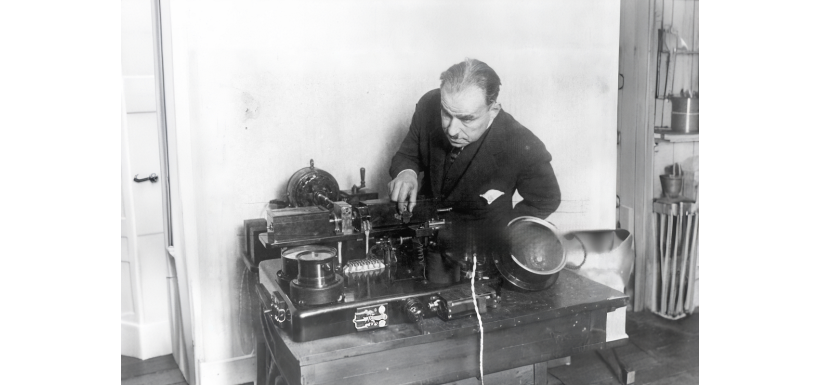
Imagine a world where the only way to see a photograph from a distant location was to wait for it to arrive by mail. News events, portraits, important documents – all had to be physically transported, taking days, weeks, or even months to reach their destination. Then, imagine the breakthrough of seeing an image appear, line by line, on a piece of paper, transmitted electronically from hundreds or even thousands of miles away. This was the magic of phototelegraphy, a technology that revolutionized the way we communicate visual information. And one of the key pioneers in this field was a German physicist named Arthur Korn. As we continue our "Pioneers of Radio" series, we'll explore the life and work of this often-overlooked innovator, whose inventions laid the groundwork for fax machines, television, and many other forms of image transmission we take for granted today.
Early Life and Education: A Passion for Physics
Arthur Korn was born in 1870 in Breslau, Germany (now Wrocław, Poland), into a Jewish family. He showed an early aptitude for science and mathematics, and he pursued these interests with great dedication. He studied at the universities of Leipzig, Berlin, Munich, and Paris, earning his doctorate in physics from the University of Leipzig in 1895. His doctoral dissertation focused on the properties of electrical discharges, a topic that was at the forefront of scientific research at the time.
Korn's academic career was marked by a deep interest in the relationship between electricity and light. This interest would become the driving force behind his most significant inventions. He was fascinated by the possibility of using electricity to transmit not just sounds, as in the telephone, or coded messages, as in the telegraph, but images – photographs, drawings, and other visual representations.
The Challenge of Image Transmission: From Mechanical to Photoelectric
The idea of transmitting images over a distance was not new. Even in the mid-19th century, inventors had experimented with various "facsimile" systems, using mechanical scanning methods to break down an image into a series of signals that could be sent over telegraph lines. However, these early systems were slow, cumbersome, and produced images of very poor quality.
The key breakthrough that Korn brought to the field was the use of photoelectric cells, devices that convert light into electrical current. Selenium, a non-metallic element, was known to exhibit this photoelectric effect: its electrical resistance decreases when exposed to light. Korn realized that this property could be exploited to create a much more sensitive and efficient image-scanning system.
Korn's Telautograph: A Milestone in Image Transmission
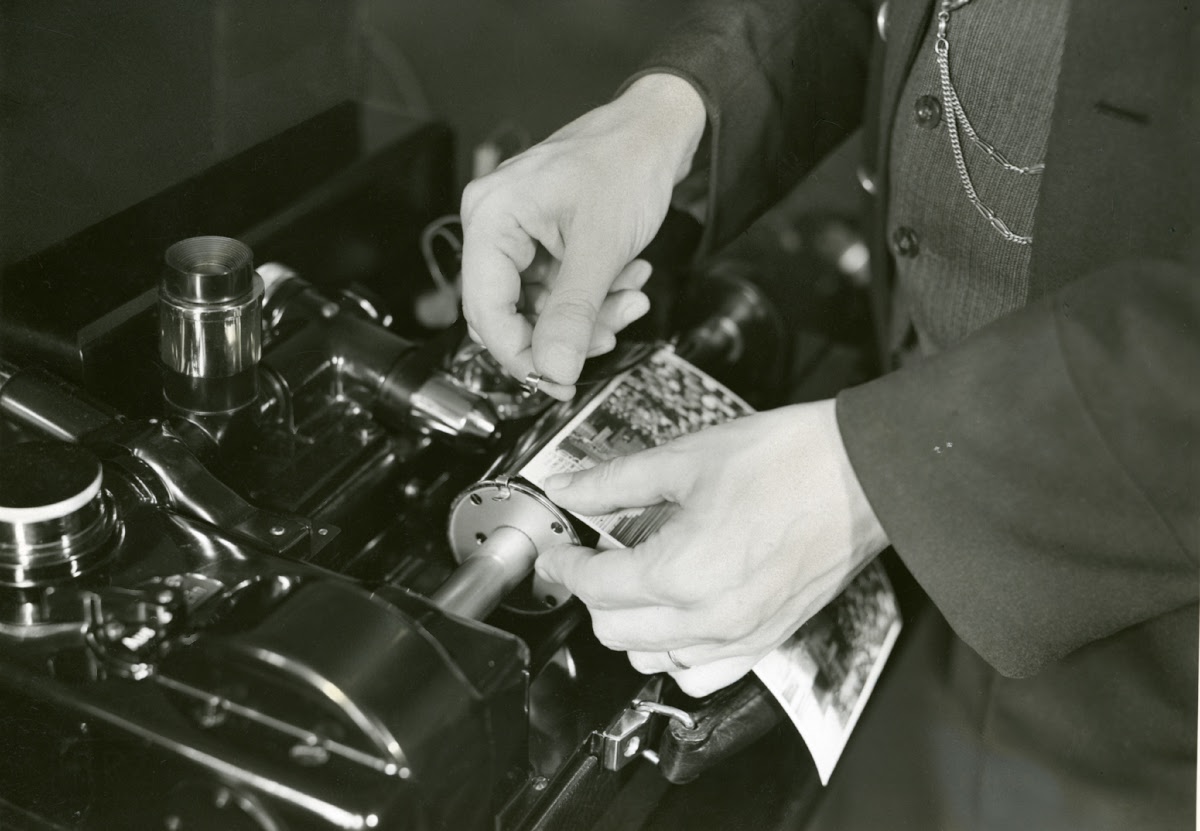
In 1902, Korn achieved his first major success with a system he called the Telautograph. This device used a selenium cell to scan a photograph. Here's how it worked, in simplified terms:
- Scanning: The photograph to be transmitted was wrapped around a rotating cylinder. A beam of light was focused onto the photograph, and as the cylinder rotated, the light beam scanned the image line by line.
- Photoelectric Conversion: The light reflected from the photograph fell onto the selenium cell. The varying brightness of the reflected light caused corresponding changes in the electrical resistance of the cell.
- Signal Transmission: These variations in electrical resistance were converted into a fluctuating electrical current, which was then transmitted over telegraph wires to a receiving station.
- Image Reproduction: At the receiving end, the fluctuating current controlled the movement of a pen or pencil, which traced out the image on a piece of paper wrapped around another rotating cylinder, synchronized with the one at the sending end.
It was a remarkable achievement. For the first time, photographs could be transmitted over long distances with reasonable speed and accuracy. Korn's Telautograph was initially used for transmitting images over telephone lines, but he soon recognized the potential for using it with wireless telegraphy – radio.
Wireless Image Transmission: A Forerunner of Television
In 1904, Korn demonstrated the wireless transmission of photographs, sending images from Munich to Nuremberg, a distance of about 100 miles. This was a groundbreaking achievement, a clear precursor to television. It showed that images, like sounds, could be sent through the air using electromagnetic waves. While it was by no means the instantaneous, moving-image transmission that we associate with television, it was a crucial step in that direction.
Korn's system used a modified form of spark-gap transmitter, similar to those used for early radio telegraphy. The varying electrical current from the selenium cell was used to modulate the intensity of the radio waves, encoding the image information onto the carrier wave. At the receiving end, a specialized receiver demodulated the signal, and the image was reproduced using a similar mechanical process as in the wired Telautograph.
The Bildtelegraph: An Improved System and Commercial Success
Korn continued to refine his phototelegraphy system, and in 1907, he introduced an improved version called the Bildtelegraph ("picture telegraph"). This system used a more sensitive photoelectric cell and incorporated improved synchronization mechanisms, resulting in better image quality and faster transmission speeds.
The Bildtelegraph achieved considerable commercial success. It was adopted by newspapers and police agencies in Europe and North America, allowing for the rapid transmission of photographs of news events, criminals, and other important visual information. For example, in 1908, the Bildtelegraph was used to transmit a photograph of a suspect in a Paris murder case to London, leading to the suspect's arrest within hours. This was a dramatic demonstration of the power of this new technology.
The system could send an 18 x 24cm photograph in roughly 20 minutes. While this may seem slow by modern standards, it was a revolutionary advancement at the time, drastically reducing the time it took to share visual information across long distances.
The Challenge of Synchronization and Compensating Circuits
One of the major technical challenges that Korn had to overcome was synchronization. The sending and receiving cylinders had to rotate at precisely the same speed, otherwise, the image would be distorted or unrecognizable. He developed ingenious electromechanical systems to ensure accurate synchronization, a crucial aspect of any image transmission system.
Another significant innovation was Korn's use of compensating circuits to overcome the "inertia" of the selenium cell. Selenium doesn't respond instantaneously to changes in light intensity; there's a slight delay. This delay, if uncorrected, would cause blurring and distortion in the transmitted image. Korn's compensating circuits, using clever arrangements of capacitors and inductors, effectively counteracted this inertia, resulting in sharper and clearer images.
Legacy and Connections to Radio
Arthur Korn's work on phototelegraphy had a profound and lasting impact on the development of communication technology. He demonstrated that images, like sounds, could be converted into electrical signals, transmitted over long distances (both wired and wireless), and accurately reproduced.
Although his systems were primarily mechanical, they laid the groundwork for later electronic image transmission technologies, including fax machines and television. His use of photoelectric cells, his development of synchronization techniques, and his understanding of the challenges of signal modulation and transmission were all crucial contributions. His work was cited by later pioneers in the field of television, including Zworykin.
Korn's work also has strong connections to the "Pioneers of Radio" theme:
- Wireless Transmission: His demonstration of wireless image transmission in 1904 was a significant milestone, showing the potential of radio waves for carrying more than just Morse code.
- Signal Modulation: His systems used a form of amplitude modulation to encode the image information onto the carrier wave, a technique that is fundamental to both radio and television broadcasting.
- Electromagnetic Spectrum: His work helped to expand the use of the electromagnetic spectrum beyond simple communication, paving the way for the diverse range of applications we see today.
Later Life and Recognition
Arthur Korn continued to work on image transmission and other scientific projects throughout his career. He held professorships at several universities in Germany and later became a research scientist at the Berlin Institute of Technology. He received numerous awards and honours for his contributions to science and technology. He died in 1945.
Conclusion: The Visionary of Visual Communication
Arthur Korn may not be as widely recognized as some of the other "Pioneers of Radio," but his contributions to the development of image transmission were truly groundbreaking. He was a visionary scientist and engineer who saw the potential of using electricity and light to communicate visual information across vast distances. His phototelegraphy systems, while now obsolete, were essential stepping stones on the path to modern technologies like fax machines, television, and even the digital image transmission we rely on every day. He was, in a very real sense, a pioneer of the visual age, a man who helped to make the world a smaller and more connected place. He showed the world that it was possible to 'fax the future'.
What are your thoughts on Arthur Korn and his contributions to image transmission? Do you think his work is adequately recognized? Let me know in the comments below! And, as always, if you have suggestions for other "Pioneers of Radio" that you'd like to see featured, don't hesitate to share.
For more information please visit our online store or alternatively contact us, our team will be happy to asisst you!