
We all know Marconi, right? The chap who famously sent radio signals across the Atlantic, the name synonymous with the birth of wireless communication. But have you ever wondered who inspired him? Who was doing the crucial experimental heavy lifting that paved the way for such a monumental achievement? Major inventions rarely spring from a vacuum; they build upon the work of others, sometimes less famous figures whose contributions are absolutely vital. Today in our "Pioneers of Radio" series, we meet one such figure: Augusto Righi, an Italian physicist whose brilliant experiments with electromagnetic waves profoundly influenced the young Marconi and helped solidify our understanding of the invisible forces that make radio possible. He was a meticulous experimenter, a pioneer of microwaves, and a key link in the chain from theoretical prediction to practical application.
Early Life and Academic Ascent: A Bologna Boy
Augusto Righi was born in Bologna, Italy, in 1850. Unlike some of the inventors we've discussed who came from more varied backgrounds, Righi seemed destined for a life in science and academia. He initially studied engineering but soon found his true passion lay in physics, graduating with honours from the prestigious University of Bologna. It's clear he had a natural aptitude for the subject, particularly for the hands-on, experimental side of things.
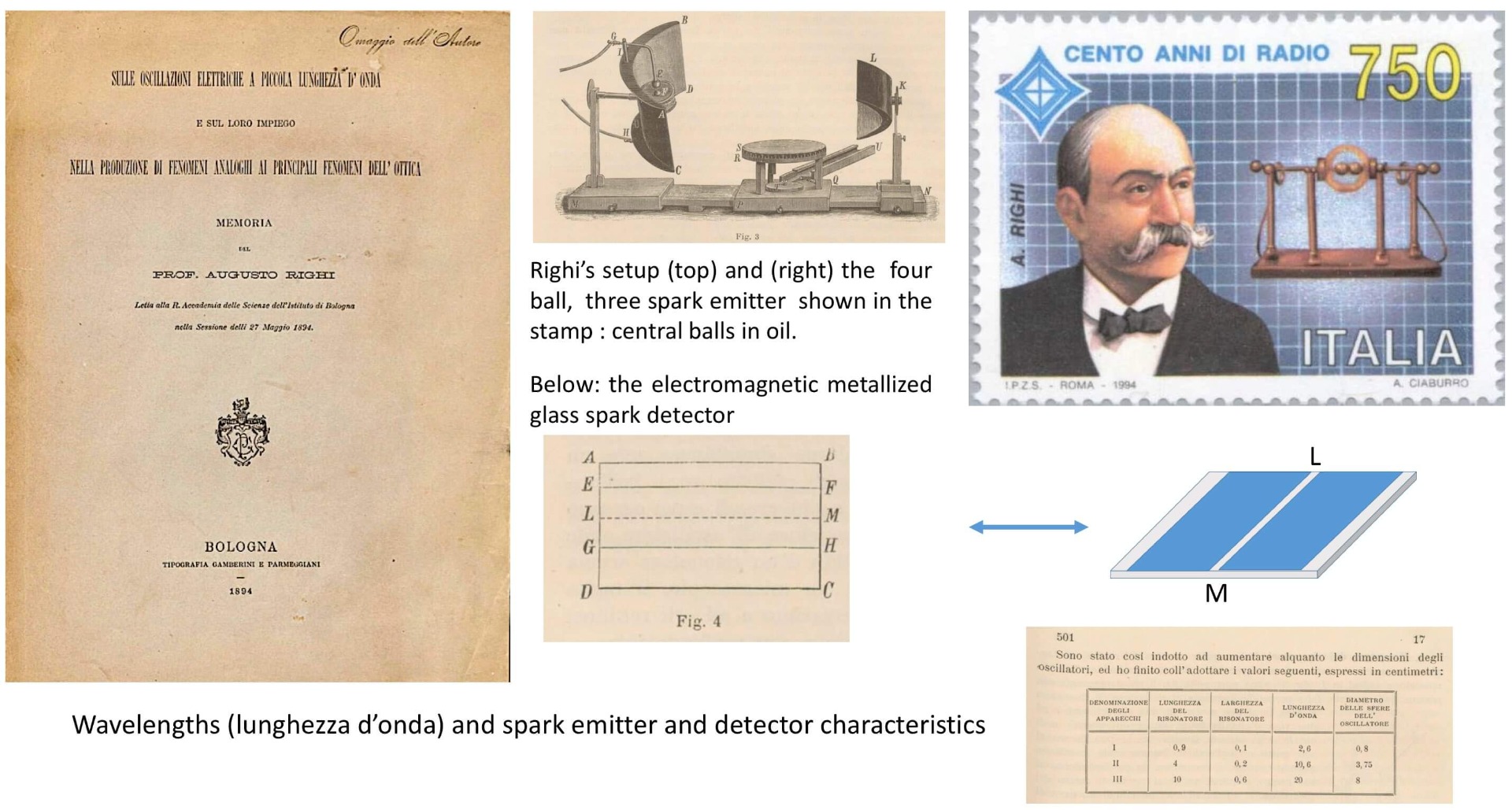
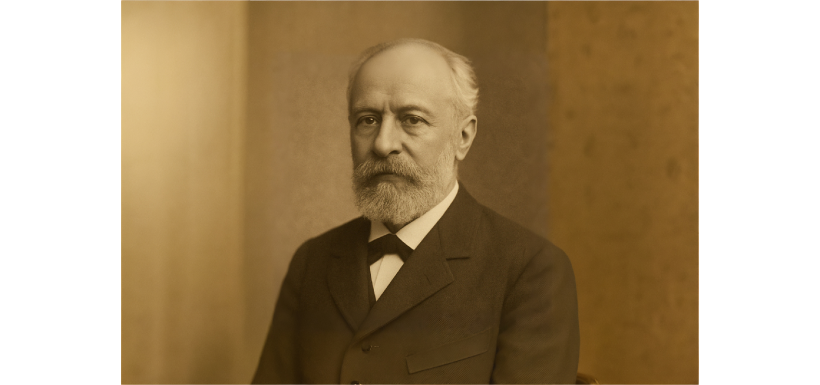
Image: Agusto Righi
His early academic career saw him hold positions at various Italian institutions, including the Bologna Technical Institute and the University of Palermo. But Bologna, his hometown, clearly held a special place in his heart. He eventually returned to the University of Bologna in 1889, securing the esteemed position of Professor of Physics. This wasn't just any professorship; it placed him at the forefront of physics research in Italy at a time when the world was buzzing with excitement about electricity and the newly discovered electromagnetic waves.
Mastering the Waves: Righi's Experiments
Following Heinrich Hertz's groundbreaking experiments in Germany (starting around 1887) which proved the existence of electromagnetic waves, the scientific world was eager to replicate and explore these new phenomena. Augusto Righi was one of the first, and arguably one of the most skilled, physicists to take up this challenge. He didn't just copy Hertz; he meticulously refined the experimental techniques and significantly extended the scope of the research.
One of Righi's key improvements was to Hertz's spark-gap oscillator, the device used to generate the waves. Hertz's original setup was effective but produced waves that were relatively long and not particularly stable. Righi developed a more sophisticated oscillator. His design often used four larger metal spheres (instead of Hertz's two smaller ones), sometimes immersed in oil or vaseline to improve the spark quality and prevent energy loss. This refined oscillator produced more powerful, more stable, and, crucially, shorter wavelength waves. Righi was pushing into the microwave region of the electromagnetic spectrum – waves with wavelengths measured in centimetres. He was, without doubt, one of the very first microwave experimenters, exploring a part of the spectrum that would become incredibly important decades later.
But generating the waves was only half the battle; you also needed to detect them and study their properties. Righi designed improved resonators and detectors, allowing for more precise measurements than Hertz had achieved.
And this is where Righi's brilliance as an experimentalist truly shone. He conducted a series of elegant experiments that beautifully demonstrated that these invisible Hertzian waves behaved exactly like light waves, just as Maxwell's theory predicted. He showed they could be:
- Reflected: Using large metal sheets as mirrors.
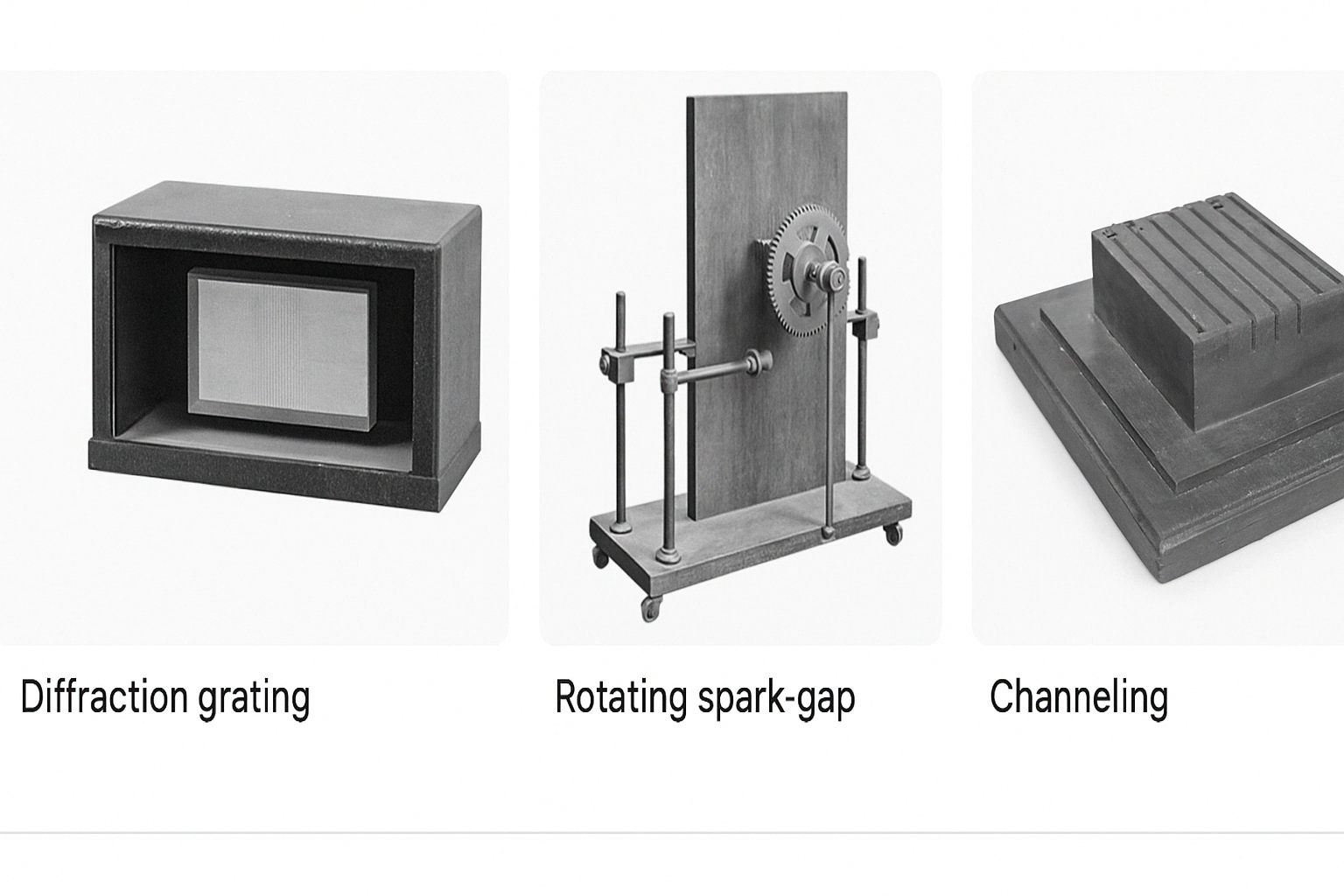
- Refracted: Bending the waves by passing them through large prisms made of sulphur or paraffin wax.
- Polarised: Demonstrating that the waves had a specific orientation, much like polarised light, using grids of parallel wires.
- Diffracted and Interfered: Showing that the waves could bend around obstacles and interfere with each other, creating patterns of reinforcement and cancellation, just like light waves.
These weren't just qualitative demonstrations; Righi made careful, quantitative measurements. His experiments provided compelling evidence supporting Maxwell's electromagnetic theory and significantly deepened the scientific understanding of these newly discovered waves. His work was published widely and gained him considerable respect within the international physics community. He wasn't just confirming Hertz; he was building a much more detailed picture of the electromagnetic world.
The Bologna Connection: Mentoring Marconi
Now, here comes the part of the story that directly links Righi to the most famous name in radio. In the early 1890s, a young, ambitious man named Guglielmo Marconi was living with his family near Bologna. Marconi was fascinated by Hertz's discoveries and was already dreaming of using these waves for practical communication.
Around 1894, Marconi began attending lectures given by Professor Righi at the University of Bologna. Imagine the scene: the established, respected professor demonstrating the generation and detection of electromagnetic waves with his sophisticated apparatus, and the young, eager Marconi sitting in the audience, soaking it all in.
There's no doubt that Righi's lectures and demonstrations had a profound impact on Marconi. It was Righi's work that likely ignited Marconi's intense focus and provided him with the crucial experimental knowledge he needed. He saw firsthand how to build oscillators (spark gaps), how to detect the waves (using devices based on the coherer principle, which Righi also experimented with), and how these waves behaved. Righi's lab essentially provided the practical toolkit for Marconi's future endeavours.
The exact nature of their relationship is sometimes debated. Was Righi a direct mentor? Did Marconi work in his lab? The evidence for direct, close mentorship is limited. Marconi wasn't formally enrolled as a regular student, and Righi was a busy, established professor. However, Marconi certainly benefited immensely from Righi's public lectures, his published papers, and potentially from interactions with Righi's lab assistants. He learned the state-of-the-art experimental techniques from the master.
It's also interesting to contrast their approaches. Righi was the quintessential academic physicist, focused on fundamental understanding, precise measurement, and exploring the properties of the waves themselves. Marconi, on the other hand, was the driven inventor and entrepreneur, focused almost exclusively on the practical application: sending signals over longer and longer distances and building a commercial enterprise. They represented two different, yet complementary, aspects of technological progress.
How did Righi view Marconi's subsequent, world-changing success? Accounts suggest he was generally supportive but perhaps maintained a degree of academic detachment. He likely recognised the practical brilliance of Marconi's achievements but might have viewed Marconi's approach as less scientifically rigorous than his own meticulous laboratory work.
Beyond Radio Waves: Other Scientific Contributions
It's important to remember that Augusto Righi was a physicist of broad interests, not solely focused on Hertzian waves. His scientific curiosity led him to make significant contributions in other areas of physics as well, particularly in optics and magnetism.
He conducted important research on phenomena like the Kerr effect (how electric fields can affect the polarisation of light) and the Zeeman effect (the splitting of spectral lines when atoms are placed in a magnetic field). He also made contributions to the understanding of the photoelectric effect. This breadth of research demonstrates his deep understanding of fundamental physics and his skill as an experimentalist across multiple domains. He wasn't just a "radio guy"; he was a leading physicist of his generation.
Synergies with Ham Radio: Experimental Foundations
For us radio amateurs, Augusto Righi's story holds several important lessons and connections:
- The Experimental Spirit: Righi embodied the spirit of hands-on experimentation. His meticulous approach to building apparatus, making measurements, and verifying theory is something that resonates deeply with the ham radio tradition of building, testing, and refining our own equipment.
- Understanding Microwaves: His pioneering work in generating and studying microwaves is directly relevant to modern amateur radio, where bands like 23cm, 13cm, and higher are increasingly popular for experimentation and communication. He was exploring our higher bands over a century ago!
- Validating Theory: Righi's work beautifully illustrates the importance of experimental validation. He didn't just accept Maxwell's theory; he rigorously tested its predictions. This mirrors what hams do every time they build an antenna based on a theoretical design and then measure its SWR and performance.
- Inspiration: The fact that his lectures directly inspired Marconi shows how academic research and the sharing of knowledge can spark practical innovation, both in the commercial world and within our hobby.
Legacy: The Respected Experimenter
Augusto Righi was held in high esteem by the international scientific community throughout his career. He was nominated for the Nobel Prize in Physics on several occasions, although he never ultimately received the award. His contributions were widely recognised, and his experimental results were considered definitive by many of his contemporaries.
He passed away in 1920, having witnessed the birth of radio communication, a technology he had profoundly influenced. His legacy is that of a brilliant experimental physicist who not only provided crucial validation for Maxwell's theory but also significantly advanced our understanding of electromagnetic waves, particularly in the then-uncharted territory of microwaves.
And, of course, there's the Marconi connection. While Marconi rightfully gets credit for turning wireless telegraphy into a practical reality, Righi played the indispensable role of teacher and inspirer. He provided the foundational experimental knowledge and likely the spark of inspiration that set Marconi on his world-changing path.
Conclusion: The Bridge Between Theory and Practice
Augusto Righi stands as a vital figure in the story of radio, a crucial bridge between James Clerk Maxwell's profound theories, Heinrich Hertz's initial discovery, and Guglielmo Marconi's practical application. He was a master experimentalist, a physicist who explored the properties of electromagnetic waves with meticulous care and ingenuity. His work not only deepened our fundamental understanding but also provided the essential knowledge and perhaps the direct inspiration needed for the invention of practical radio communication. While his name might not be as universally known as Marconi's, Augusto Righi was undoubtedly a giant in his own right, a true pioneer whose work helped shape the wireless world.
What are your thoughts on Augusto Righi and his influence on Marconi? Do you think experimental physicists like Righi get the recognition they deserve compared to the inventors who commercialise the technology? Let me know in the comments below! And, as always, if you have suggestions for other "Pioneers of Radio" that you'd like to see featured, don't hesitate to share.
For more information please visit our online store or alternatively contact us and our team will be happy to assist you!