
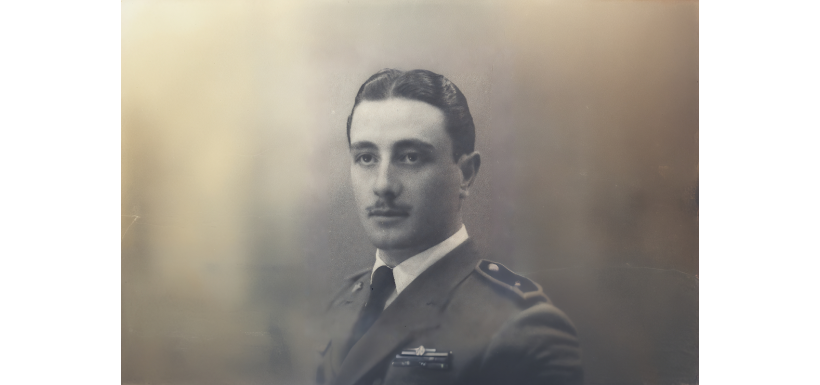
Think about those 'aha!' moments in science. Often, they aren't grand pronouncements or complex inventions, but quiet observations of strange phenomena, noticed by someone curious enough to pay attention. What if I told you that the key to detecting the very first radio signals, the faint whispers travelling through the ether, came from noticing how simple metal filings behaved near electrical sparks? It sounds almost too simple, doesn't it? As we continue our "Pioneers of Radio" series, we'll meet the man who made that crucial observation: Temistocle Calzecchi-Onesti, an Italian physicist and dedicated educator. While he didn't invent radio or build a complete wireless system, his fundamental discovery about the behaviour of metal filings was the essential spark that lit the fuse for the first practical radio wave detector, the coherer.
Early Life & Career as an Educator in Italy
Temistocle Calzecchi-Onesti was born in Lapedona, Italy, in 1853. Unlike some of the more famous inventors who set up large laboratories, Calzecchi-Onesti spent his career primarily as an educator. He dedicated his life to teaching physics at Italian lyceums – secondary schools – first in L'Aquila and later in Fermo.
Now, I have immense respect for dedicated teachers. They're the ones who ignite curiosity and inspire the next generation. It's often these educators, working away from the major research centres, perhaps with limited resources but boundless curiosity, who make surprising discoveries. Calzecchi-Onesti seems to fit this mould perfectly. His teaching likely involved numerous practical demonstrations and experiments, fostering an environment where careful observation was paramount. He wasn't just reciting formulae; he was exploring the physical world alongside his students.
The Curious Case of the Metal Filings (1884-1886)
It was during his time as a teacher, likely while exploring the effects of electricity, that Calzecchi-Onesti made his most significant observation. Between 1884 and 1886, he conducted a series of experiments using a simple apparatus: a small glass tube loosely filled with metal filings – he tried various metals like iron, copper, silver, and brass – sandwiched between two metal electrodes. He connected this tube in a circuit with a battery and either a galvanometer (to measure tiny electrical currents) or an electric bell.
Here's what he noticed, and it was quite peculiar: normally, the loose metal filings had a very high electrical resistance. Very little current flowed through the circuit, and the bell wouldn't ring. However, when an electrical disturbance occurred nearby – like the sparks generated by an induction coil (a common piece of laboratory equipment at the time) or even distant lightning flashes during a thunderstorm – something remarkable happened. The electrical resistance of the filings dramatically decreased. Suddenly, current flowed easily through the tube, deflecting the galvanometer needle or causing the bell to ring.
But the really intriguing part was what happened next. The filings didn't just momentarily conduct electricity; they stayed in this low-resistance state, continuing to conduct current long after the initial electrical disturbance had passed. It was as if the filings had a "memory" of the event. The only way to restore the tube to its high-resistance state was to mechanically disturb the filings – by gently tapping the tube or shaking it. This would break the connection, and the circuit would reset.
Calzecchi-Onesti meticulously documented these fascinating observations, publishing his findings in the respected Italian scientific journal Il Nuovo Cimento between 1884 and 1886. He carefully described the phenomenon, the different metals he tested, and the conditions under which the effect occurred.
It's crucial to note the timing here. Calzecchi-Onesti was making these observations before Heinrich Hertz published his definitive experimental proof of the existence of electromagnetic waves (radio waves) starting around 1887. Calzecchi-Onesti was studying the effects of electrical sparks and atmospheric electricity on his tube of filings; he wasn't necessarily thinking in terms of detecting propagating Hertzian waves, because their existence hadn't yet been widely accepted or understood.
Understanding the Phenomenon (or Lack Thereof)
So, what was actually happening inside that tube of metal filings? Calzecchi-Onesti himself likely didn't have the full picture in terms of radio wave theory, given the timing of his work. He probably focused on the direct electrical effects of the sparks or the induced currents from atmospheric discharges.
The generally accepted explanation today involves a kind of micro-welding effect. The tiny electrical potential difference created across the gaps between the filings by the incoming electrical disturbance (whether a spark's field or a radio wave) causes microscopic sparks between the filings. These tiny sparks effectively weld the filings together at their contact points, creating continuous conductive paths through the tube and drastically lowering the overall resistance. The mechanical tapping physically breaks these delicate micro-welds, restoring the high-resistance state. It's a beautifully simple, yet effective, mechanism.
While Calzecchi-Onesti might not have fully grasped the underlying wave mechanics, he certainly recognised the potential of his device. He saw it as an extremely sensitive detector of any form of electrical disturbance, including those from distant lightning – a sort of primitive lightning detector.
The Italian Connection: Influence on Branly and the Coherer
Science rarely happens in a vacuum. Discoveries made in one country often influence researchers elsewhere, sometimes years later. This was certainly the case with Calzecchi-Onesti's work. His publications in Il Nuovo Cimento eventually found their way to France, where they caught the attention of physicist Édouard Branly in the late 1880s or early 1890s.
By this time, Hertz had published his groundbreaking experiments, proving the existence of radio waves. Branly realised that Calzecchi-Onesti's tube of filings might just be sensitive enough to detect these newly discovered Hertzian waves. He took the basic principle observed by the Italian teacher and set about refining the device.
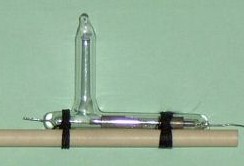
Branly experimented extensively. He tried different types of metal filings, finding that a mixture including nickel and silver worked particularly well. He improved the design of the electrodes and the tube itself, sometimes evacuating the air to improve stability. The result was a much more reliable and sensitive detector, which became known as the Branly coherer. Crucially, Branly demonstrated that his coherer could reliably detect Hertzian radio waves over significant distances, far beyond what simple induction effects could explain.
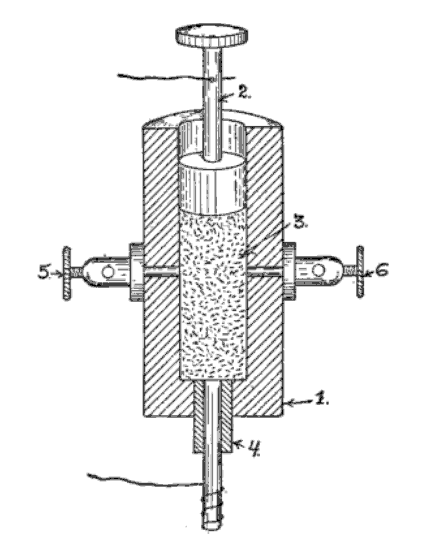
While Branly deserves immense credit for developing the practical radio wave detector, it's vital to remember the foundation laid by Calzecchi-Onesti. Branly himself acknowledged the Italian physicist's earlier work. Calzecchi-Onesti made the fundamental observation; Branly turned that observation into a working tool for the new science of radio.
The Coherer Era and Early Radio
The Branly coherer, based directly on the principle discovered by Calzecchi-Onesti, became the absolute linchpin of early radio technology. For roughly a decade, from the early 1890s to the early 1900s, it was the only practical way to detect radio waves.
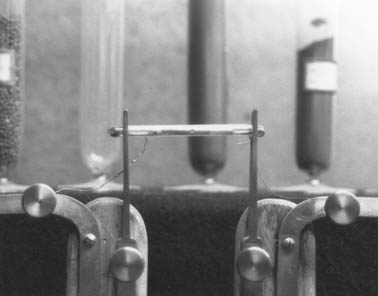
Think about the other pioneers we've discussed. Oliver Lodge in England (who actually coined the term "coherer") used it in his early demonstrations of wireless signalling. Alexander Popov in Russia used a coherer in his lightning detector, which also functioned as a primitive radio receiver. And, most famously, Guglielmo Marconi relied heavily on improved versions of the Branly coherer in his early wireless telegraphy systems, including those used for his historic transatlantic transmissions. The coherer was the "magic" component, the electronic ear that could "hear" the faint electromagnetic whispers travelling through space.
Of course, the coherer wasn't perfect. It needed that constant mechanical tapping to reset itself after detecting a signal (often achieved with a small electromagnetic tapper, like a doorbell mechanism, triggered by the received signal itself – a rather ingenious feedback loop!). It wasn't particularly sensitive compared to later detectors, and it wasn't well-suited for detecting the amplitude variations needed for voice transmission (AM radio). These limitations eventually led to its replacement by more sensitive and versatile detectors like the electrolytic detector, the magnetic detector, and eventually the crystal set and the vacuum tube. But for that crucial first decade of radio development, the coherer reigned supreme.
Synergies with Ham Radio: The Dawn of Detection
For us radio amateurs, Calzecchi-Onesti's story provides fascinating historical context. The very first ham radio receivers, built by enthusiasts tinkering in their sheds and attics, would have used coherers based on the principle he uncovered. It's a world away from the sophisticated digital signal processing in our modern rigs, but it's where radio reception began.
His story also highlights the importance of careful observation in experimentation – something every good ham understands. Sometimes, just noticing an unexpected effect, like Calzecchi-Onesti did with his metal filings, can be the first step towards a significant breakthrough. It encourages us to keep our eyes open, to question, and to explore.
Legacy: An Unsung Foundation
Temistocle Calzecchi-Onesti passed away in 1922. How is he remembered? Within Italy, his contributions are acknowledged, and he's recognised as a significant figure in the history of Italian physics. Internationally, however, his name is far less known than Branly, Lodge, or Marconi.

His legacy is perhaps best described as providing an unsung, yet essential, foundation. He made the critical observation that enabled the development of the first practical radio detector. He didn't build the complete radio system, nor did he fully unravel the theory of radio waves himself, but his meticulous experimental work provided a vital piece of the puzzle that others could then build upon. His story is a perfect example of the incremental nature of scientific progress, where breakthroughs often rely on the accumulated knowledge and observations of many individuals, not all of whom achieve widespread fame.
Conclusion: The Importance of Observation
Temistocle Calzecchi-Onesti's quiet work in his Italian classroom, driven by scientific curiosity, had consequences far beyond what he likely imagined. His simple observation about the behaviour of metal filings near electrical discharges became the cornerstone of the coherer, the device that allowed the pioneers of radio to detect the first wireless signals. While others built upon his work to create practical radio systems, Calzecchi-Onesti deserves recognition for providing that crucial initial spark. His story reminds us that fundamental discoveries often arise from careful observation and that even seemingly minor phenomena can hold the key to unlocking major technological advancements. He truly helped launch the age of radio communication, one tap of a tube at a time.
What are your thoughts on Calzecchi-Onesti and the role of fundamental observation in science? Do you know of other unsung heroes whose initial discoveries were built upon by others? Share your thoughts in the comments below! And, as always, if you have suggestions for other "Pioneers of Radio" that you'd like to see featured, don't hesitate to let me know.
For more information please visit our online store or alternatively contact us and we'll be happy to assist you!