
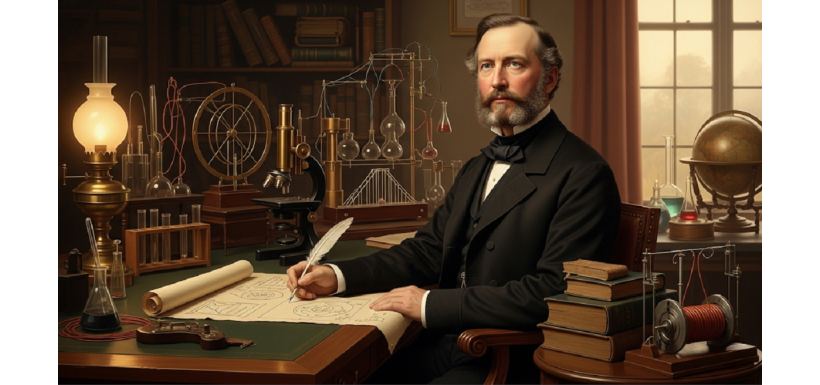
In the bustling, steam-powered world of Victorian Britain, a handful of brilliant minds were laying the electrical foundations for the modern world. It was an era of immense scientific energy and industrial ambition, where new discoveries promised to reshape society. One of the most versatile and ingenious of them all was Charles Wheatstone. While his name is famously attached to a circuit for measuring resistance, a device that many of us will have used in our school science labs, his work on telegraphy and his deep understanding of electricity were a crucial prequel to the age of wireless. As we continue our "Pioneers of Radio" series, we'll meet a shy, modest professor who, despite his dislike of the spotlight, created technologies that shouted to the world, wiring the nation and paving the way for all subsequent communication technologies.
The Musical Instrument Maker's Son
Charles Wheatstone was born in Gloucester, England, in 1802. His family were makers and sellers of musical instruments, and they later moved to London to set up a successful business. This early exposure to the world of music and acoustics would have a profound impact on young Charles. He was, by all accounts, a shy and retiring lad, not one for the rough and tumble of school life. He was largely self-educated, preferring to spend his time reading voraciously in his father's shop, surrounded by flutes, concertinas, and the tools of the trade.
It was here, amidst the wood shavings and musical scores, that his inventive genius first began to shine. He was fascinated by the physics of sound, and his first public success was a wonderfully whimsical creation called the "Acoucryptophone" or "Enchanted Lyre". He would suspend a large lyre from the ceiling with a thin steel rod, and to the amazement of the audience, the lyre would begin to play intricate melodies, seemingly of its own accord. It was a marvellous illusion, a piece of Victorian stage magic. But the secret was pure science: the music was being played on a piano in a room upstairs, and the sound vibrations were being transmitted silently down the steel rod to the lyre, which then acted as a soundboard, making the music audible. It was a brilliant demonstration of sound transmission, and a clear foreshadowing of his later work in transmitting information over a medium. I love this story; it shows a playful and creative mind at work, already grappling with the fundamental challenges of communication.
The Professor and the Telegraph
In 1834, despite his intense shyness and a profound dislike of public speaking, Wheatstone's scientific reputation was such that he was appointed Professor of Experimental Philosophy at King's College London. It was a position he would hold for the rest of his life. He was reportedly so nervous in front of an audience that he often had his close friend, the great Michael Faraday, deliver his lectures for him!
It was during this period that the race to create a practical electric telegraph was heating up. The idea of using electricity to send messages over long distances was in the air, and inventors across Europe and America were scrambling to be the first to perfect a workable system.
In 1837, Wheatstone formed a partnership with William Fothergill Cooke, a former army officer and entrepreneur. It was a classic pairing of inventor and businessman. Wheatstone provided the deep scientific knowledge and inventive genius, while Cooke brought the commercial drive and the vision to turn the invention into a profitable enterprise. Their relationship was often tense and fraught with arguments over who deserved the most credit, but together, they created the world's first commercially successful electric telegraph.
Their first great invention was the Cooke and Wheatstone five-needle telegraph. This was a remarkable device. The receiver had five magnetic needles arranged on a diamond-shaped grid that displayed the letters of the alphabet. When a current was sent down the line, a combination of two needles would be deflected, pointing to a specific letter. The great advantage of this system, as they saw it, was that it didn't require the operator to learn a complex code like Morse code. Anyone could, in theory, read the message directly from the grid.
In 1839, they installed their system along the Great Western Railway line from Paddington to West Drayton, a distance of 13 miles. This was the world's first commercial electric telegraph, a milestone in the history of communication.
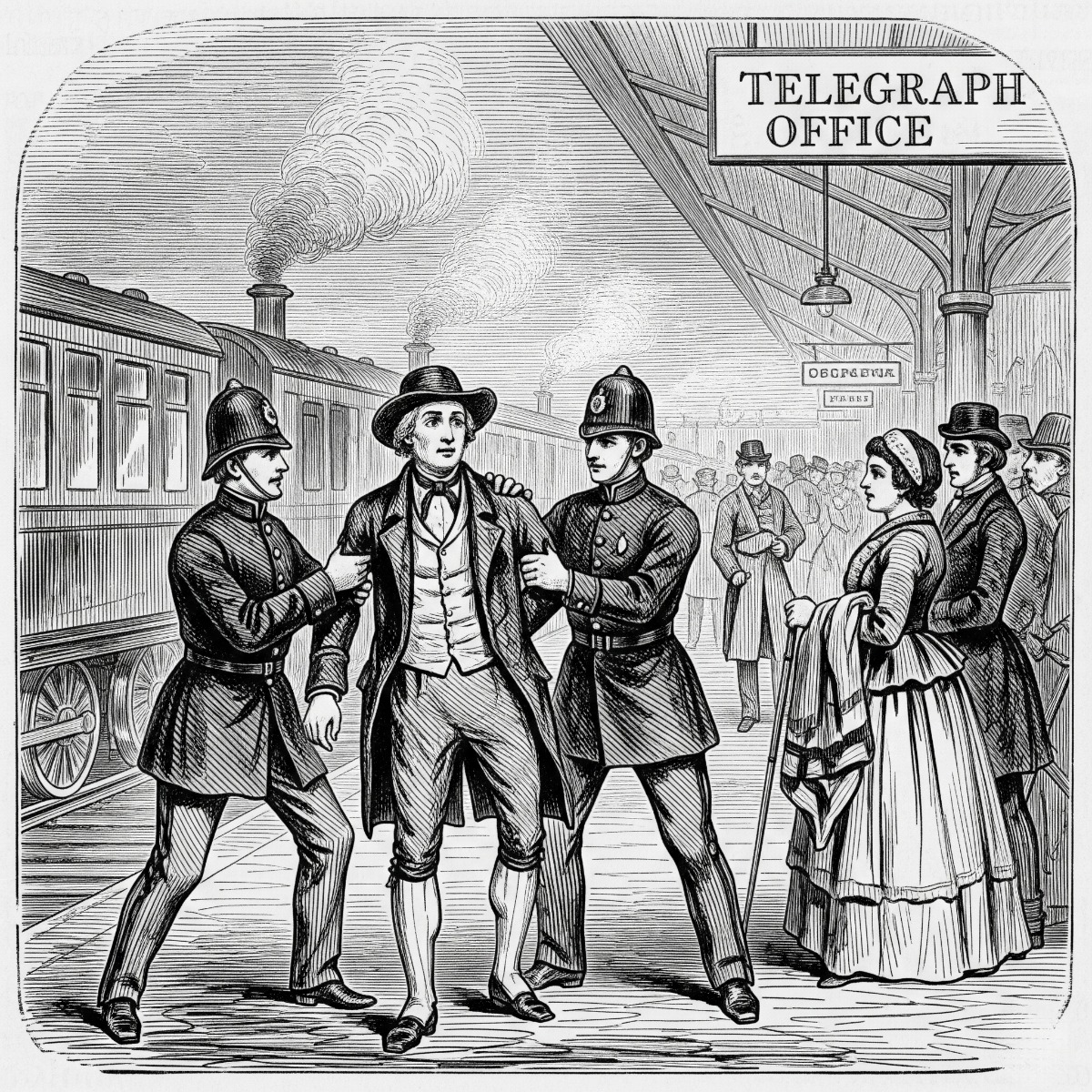
The practical power of their invention was demonstrated in a truly dramatic fashion in 1845. A man named John Tawell had committed a murder in Slough and had boarded a train to London to make his escape. A message was sent ahead via the telegraph, describing the suspect – "a man in the garb of a Quaker." When Tawell arrived at Paddington, the police were waiting for him. He was arrested, tried, and subsequently hanged. The story was a media sensation. It was a huge public relations coup for the new technology, proving beyond any doubt that the electric telegraph was not just a scientific curiosity, but a powerful tool with real-world applications.
The Wheatstone Bridge and Other Inventions
While the telegraph was his most famous contribution to communication, Charles Wheatstone's inventive mind ranged far and wide. One of his most enduring legacies is the device that bears his name: the Wheatstone bridge.
Now, with his characteristic modesty and scientific integrity, Wheatstone always gave credit where it was due. He made it clear that the circuit was actually invented by Samuel Hunter Christie in 1833. But it was Wheatstone who recognised its immense potential and popularised it, using it in his own research and demonstrating its utility to the broader scientific community.
The Wheatstone bridge is a circuit used to accurately measure an unknown electrical resistance. Its importance cannot be overstated. In the 19th century, the ability to make precise, repeatable measurements of electrical properties was absolutely fundamental to the development of consistent and reliable electrical components. You can't mass-produce something if you can't measure it accurately. The Wheatstone bridge provided the tool that was needed to turn electrical science into a true engineering discipline.
But his inventiveness didn't stop there. He was a true polymath, a man of wide-ranging interests and talents. He also invented:
- The Stereoscope:
- The Concertina:
- Cryptography:
A device for viewing two slightly different images of the same scene, creating a stunning illusion of three-dimensional depth. It became a hugely popular form of entertainment in Victorian drawing rooms.
An improved version of the accordion, which he patented in 1829.
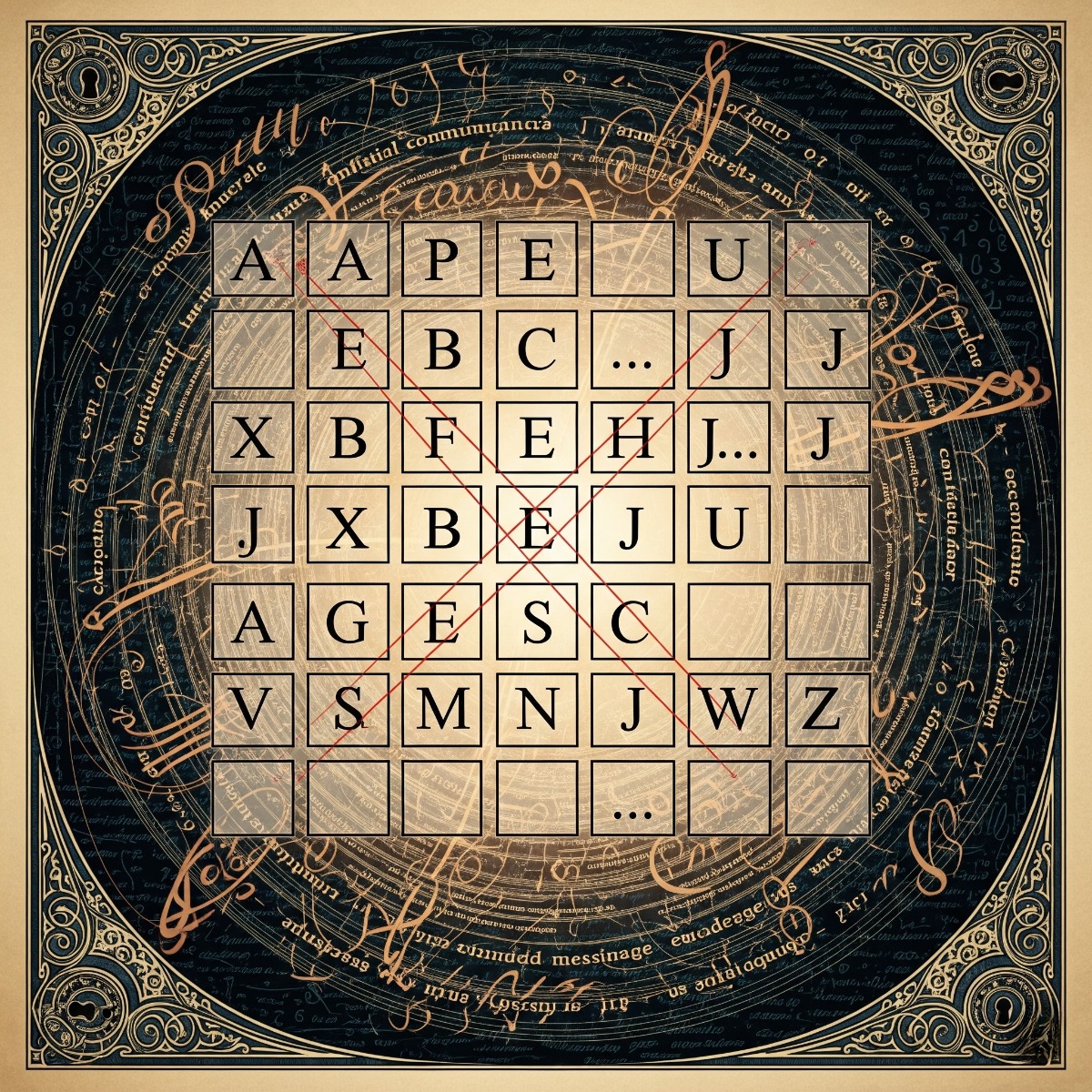
He invented the Playfair cipher, a simple but effective method of encrypting messages. It was used by the British military in the Boer War and even during the First World War.
It's an astonishing range of inventions, from optics and music to secret codes. It paints a picture of a mind that was constantly curious, constantly exploring, and constantly creating.
Synergies with Ham Radio: The Foundations of the Craft
Charles Wheatstone's work, though it predates the discovery of radio waves, is deeply connected to the world of amateur radio. He was, in a very real sense, laying the groundwork for the hobby we enjoy today.
- The Birth of Electrical Comms:
- The Importance of Measurement:
- Circuit Principles:
- A Shared Spirit:
The electric telegraph is the direct ancestor of all digital communication. Morse code, which was eventually adopted for telegraphy, is the original "digital" mode, and it's still a beloved part of ham radio today. Wheatstone's work in creating a practical, commercial telegraph system was the first step on that long road.
The Wheatstone bridge is a direct link to the practical side of our hobby. Every ham who has ever used a multimeter to check a resistor, or who has used an antenna analyser to measure the impedance of their aerial, is working in the tradition of precise electrical measurement that Wheatstone championed. It's all about understanding the fundamental properties of our components and systems.
The basic concepts of circuits, current flow, and resistance that he worked with are the absolute fundamentals of electronics that every radio amateur learns when they're studying for their license.
His early 'Enchanted Lyre' experiment, sending sound down a solid rod, is a fantastic example of a 'what if?' experiment, just like a ham trying to bounce a signal off a new surface or build an antenna from unusual materials. It's the same spirit of curiosity and a desire to explore the possibilities of communication.
Later Life, Knighthood, and Legacy
Charles Wheatstone's contributions to science and technology were widely recognised during his lifetime. He was made a Fellow of the Royal Society in 1836 and was knighted by Queen Victoria in 1868 for his work on the telegraph. He was a highly respected, if somewhat reclusive, figure in the scientific community.
He continued to work and invent throughout his life, contributing to the development of dynamo-electric machines and submarine telegraphy. He passed away in Paris in 1875, while on a trip to discuss his latest inventions.
Conclusion: The Quiet Architect of the Connected World
Charles Wheatstone was a true Victorian polymath. He was a quiet, modest professor who disliked the spotlight, but whose brilliant mind created technologies that shouted to the world. He helped to wire the nation, gave us tools for precise measurement, and laid the electrical groundwork upon which the wireless age would be built. He was a true architect of the connected world, a pioneer whose work continues to resonate in the technology we use every single day. His story is a powerful reminder that sometimes, the most significant contributions come from the most unassuming of individuals.
What are your thoughts on Charles Wheatstone? How important do you think the development of the telegraph was in paving the way for radio? Let me know in the comments below! And, as always, if you have suggestions for other "Pioneers of Radio" that you'd like to see featured, don't hesitate to share.
For more information please visit our online store or alternatively contact us and our team will be happy to assist you!