
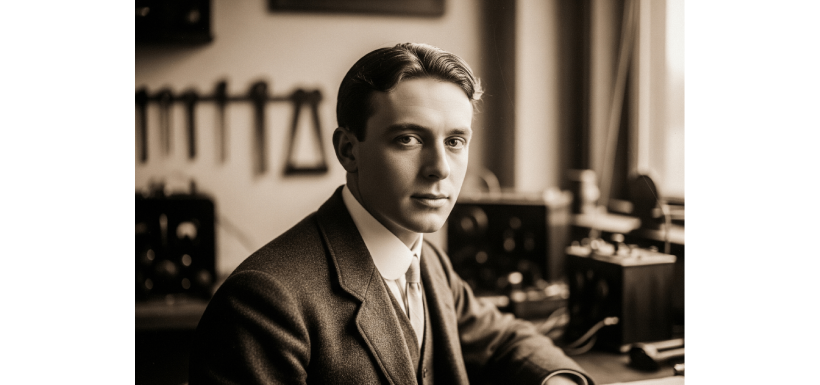
Behind every great visionary, there's often an energetic and indispensable partner, someone who does the crucial, hands-on work of turning a grand vision into a functioning reality. We've all heard of Hiram Percy Maxim, the celebrated "father of amateur radio." But who was the young man at his side, the teenage technical whiz and tireless organiser who helped forge a scattered hobby into a national institution? Today in our "Pioneers of Radio" series, we meet Clarence D. Tuska, the indispensable co-founder of the American Radio Relay League (ARRL) and the very first editor of its iconic magazine, QST. His story is a brilliant testament to the power of youthful passion and practical skill in building a community from the ground up.
The Young Ham from Hartford: A Spark Plug for a Movement
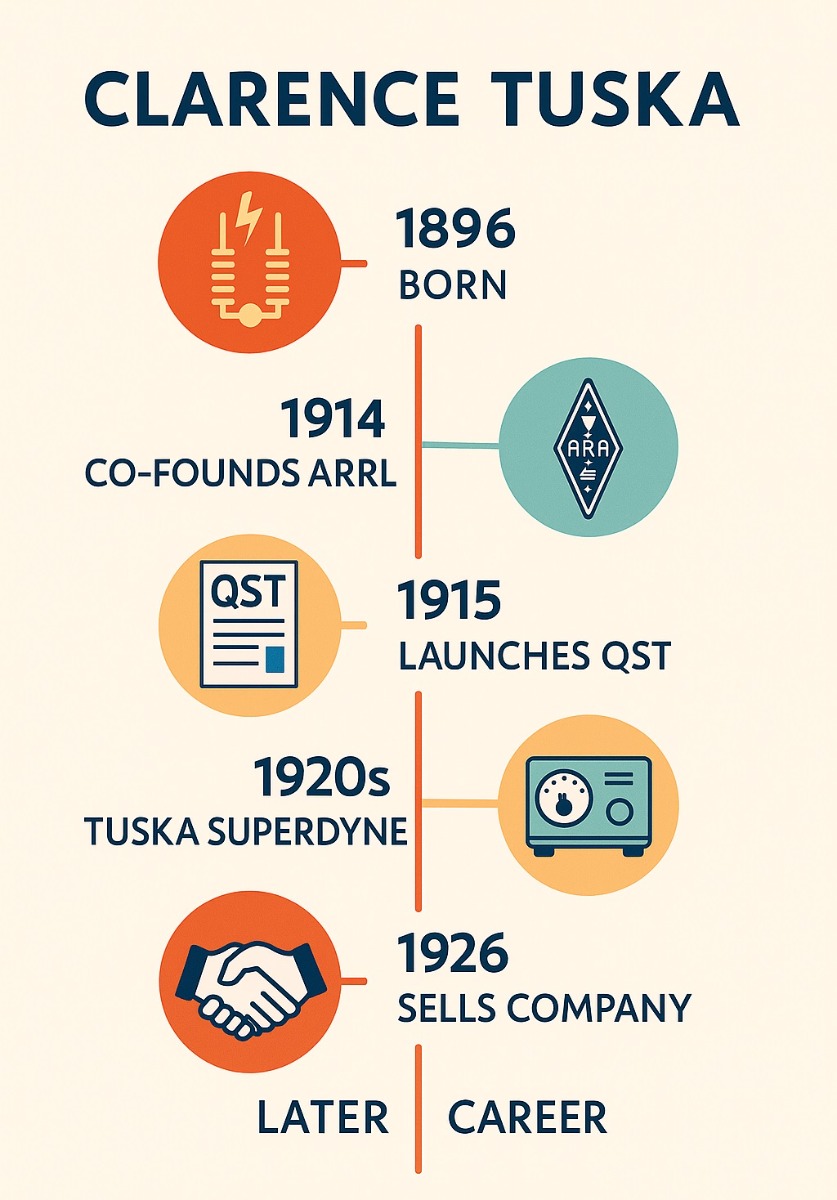
Clarence Denton Tuska was born in New York City in 1896 but grew up in Hartford, Connecticut, a city that was becoming a hub of industrial and inventive activity. From a young age, he was completely captivated by the new magic of wireless. He was a quintessential early radio enthusiast, a "spark" – the slang term for a wireless operator – who spent his teenage years immersed in the world of coils, crystals, and Morse code.
He wasn't just a casual listener; he was a skilled and active operator. His amateur radio station, with the call sign 1XT (later 1ZT), was known in the local Hartford radio community as one of the best. He was a technical whiz kid, constantly tinkering and improving his home-brewed equipment to achieve better range and clearer signals.
It was this reputation that led to a fateful meeting that would change the course of amateur radio history. Hiram Percy Maxim, an established inventor in his mid-40s and another Hartford resident, was deeply involved in experiments with message relaying. He was looking for a reliable local station to help him extend his communication range. He found the teenage Clarence Tuska. It was a meeting of minds: the seasoned visionary with a grand plan, and the young, energetic enthusiast with the on-the-ground technical skills and a direct line to the network of young "spark" operators who made up the hobby. This partnership, forged in the shared excitement of radio frequency, would lay the foundation for a global community.
The Birth of the ARRL: A Partnership Forged in RF
The challenge facing early amateur radio was immense. The range of most home-built stations was limited to a few dozen, perhaps a few hundred, miles on a good night. There was rampant interference and absolutely no coordination. It was a chaotic and fragmented hobby.
Maxim had the grand vision: a national "relay league" where messages could be passed from station to station, creating a coast-to-coast communication network. But a vision needs an engine to make it move. While Maxim provided the gravitas and the big idea, it was the 18-year-old Clarence Tuska who provided the youthful energy and practical organisational skills.
In 1914, the American Radio Relay League was officially founded. Maxim, naturally, became its first President. And the teenage Clarence Tuska was appointed its first Secretary. Now, "Secretary" wasn't just a title for taking minutes. In reality, Tuska became the organisational engine of the entire fledgling league. He was the one who handled the flood of correspondence from interested amateurs across the country. He was the one who managed the growing membership roster, meticulously recording call signs and locations. He was the one who helped map out the first relay routes, coordinating schedules and ensuring there were reliable stations to handle the traffic. It must have been an incredible amount of work for someone who was barely out of school, a true labour of love for the hobby.
QST: Giving a Voice to Amateur Radio
As the ARRL grew, a new problem emerged. How could the league effectively communicate with its hundreds, and soon thousands, of members scattered across the vast expanse of the United States? They needed a newsletter, a journal, a magazine.
In December 1915, Tuska, not yet 20 years old, took on this monumental task. He founded and became the first editor of QST magazine. Today, QST is a glossy, professional publication, but back then, it was very much a one-man show. It's easy to imagine Tuska working late into the night, not just editing, but also writing much of the technical content himself, laying out the pages, and managing the printing and distribution, likely from his own home. It was a passion project of the highest order.
He chose the name perfectly. "QST" is a Q-code, a standardised abbreviation from the language of professional radiotelegraphy. It's a general call that means, "Calling all stations." There could be no better name for a magazine intended to unite all radio amateurs, to provide a common forum for sharing knowledge, and to build a true sense of national, and eventually international, community.
QST quickly became the essential glue holding the ARRL together. It published the official lists of relay stations, shared technical articles on how to build better transmitters and receivers, and fostered a sense of shared identity among its readers. Tuska's work in creating and nurturing QST through its crucial early years was absolutely foundational to the long-term success of the league.
The Engineer and Entrepreneur: The C. D. Tuska Company
It's important to remember that Clarence Tuska wasn't just a brilliant organiser; he was a highly skilled engineer and a savvy entrepreneur in his own right. While building the ARRL, he also started his own successful business, the C. D. Tuska Company, based in Hartford.
His company quickly gained a reputation for manufacturing and selling high-quality radio equipment to the rapidly growing amateur and broadcast listener market. This wasn't just a side hustle; it was a serious commercial enterprise that produced some of the most respected receivers of the 1920s radio boom.
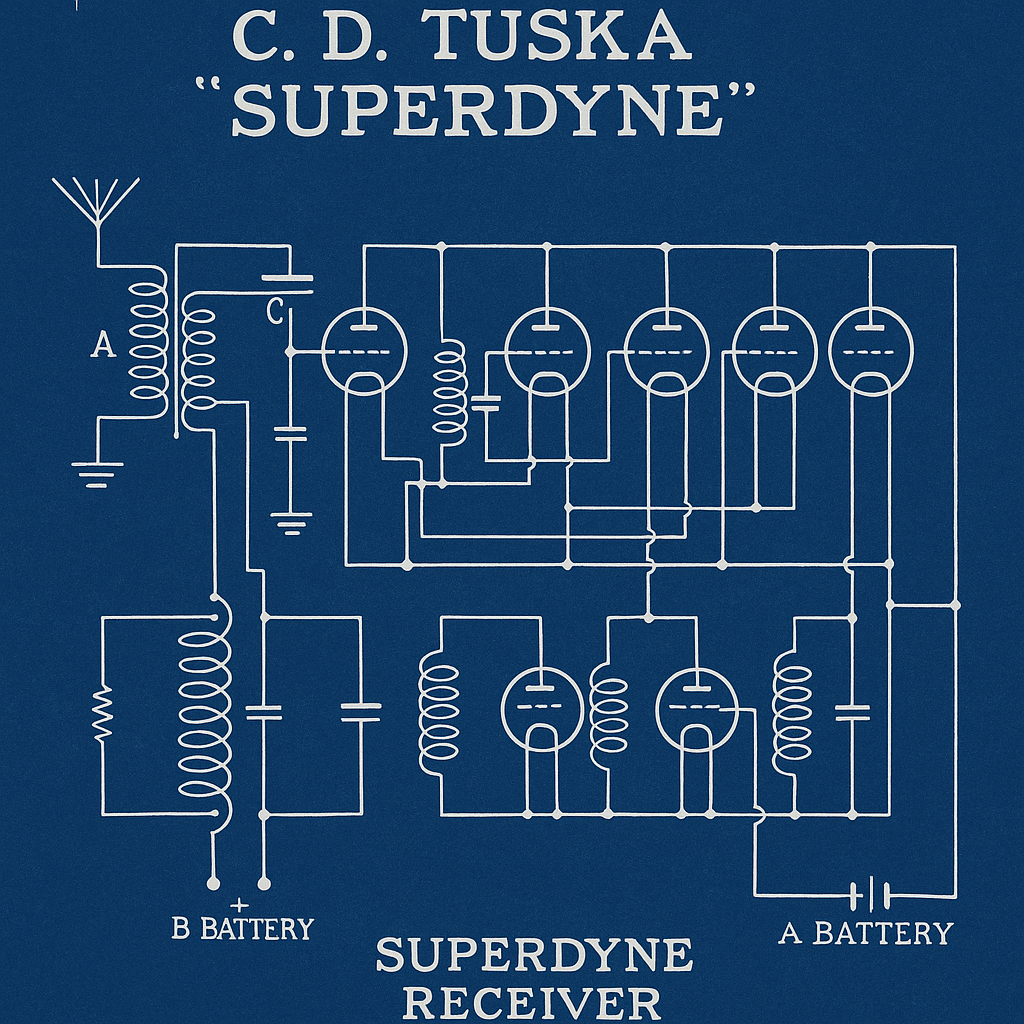
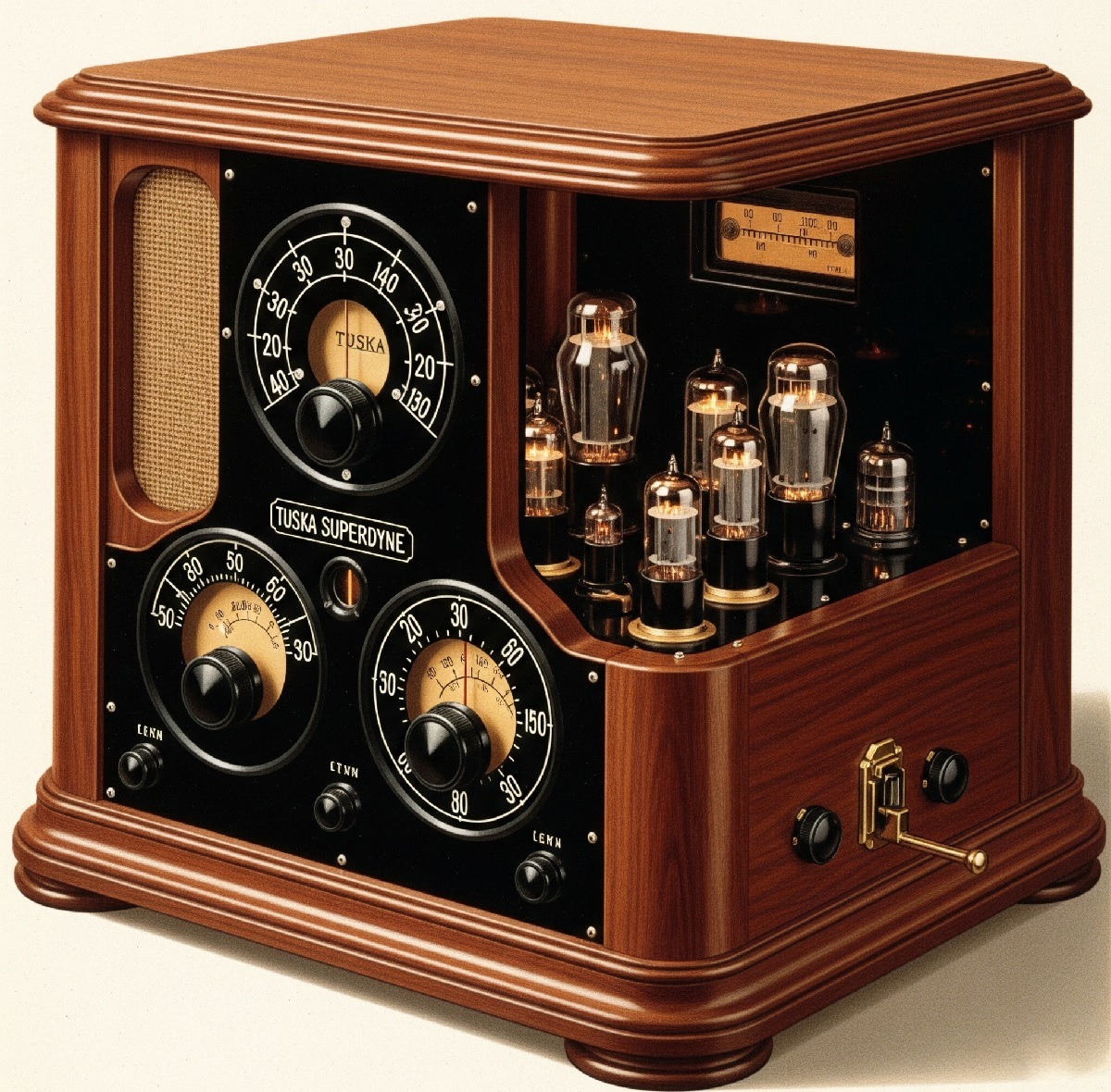
One of his most notable products was the "Tuska Superdyne" receiver. This was an innovative and well-regarded type of superheterodyne receiver, a complex circuit that offered superior selectivity and sensitivity. For his company to be designing and selling a sophisticated receiver like the Superdyne gives him serious engineering credibility. It shows that he was not just reporting on the technology in QST; he was actively contributing to it and pushing it forward. His company thrived during the radio craze of the 120s before it was eventually sold to the larger firm, Atwater Kent, in 1926.
The Ultimate "Elmer"
In the world of ham radio, an "Elmer" is an experienced mentor who helps newcomers learn the ropes. In many ways, Clarence Tuska was the ultimate Elmer on a national scale.
He embodied every aspect of the ham radio spirit. He was a skilled operator who loved making contacts. He was a builder and an innovator, designing his own respected line of receivers. But most importantly, he was a community builder. His tireless work as the first Secretary of the ARRL and the founding editor of QST was all about helping others, sharing knowledge, and creating a space where the hobby could grow and flourish. He didn't just participate in the community; he built the clubhouse and wrote the newsletter.
Later Life and Legacy
After his intense and incredibly productive early involvement in radio, Tuska eventually moved on from his leadership roles at the ARRL and sold his company. He pursued other interests later in life, including work in the patent field. But his legacy in the world of amateur radio was already firmly cemented. He had done the hard, foundational work during the ARRL's most critical formative years, from its birth in 1914 until after the First World War.
It's true that he is often overshadowed in the history books by the more famous and older Hiram Percy Maxim. But it's no exaggeration to say that without Tuska's youthful energy, technical skill, and organisational talent, the ARRL might never have gotten off the ground so quickly or so successfully.
Conclusion: The Indispensable Co-Founder
Clarence Tuska's story is a powerful lesson in the importance of partnership and the incredible impact that a passionate young person can have. While Hiram Percy Maxim had the grand vision for a national relay league, it was the teenage Clarence Tuska who provided the tireless work, the practical skill, and the communicative glue to forge that vision into the institution that has supported amateur radio for over a century. He was the indispensable co-founder, the young man who answered the call and, in doing so, helped to build a global community. He reminds us that behind every great leader, there's often a dedicated and brilliant partner making it all happen.
What are your thoughts on the importance of community builders like Clarence Tuska in the world of technology? Let me know in the comments below! And, as always, if you have suggestions for other "Pioneers of Radio" that you'd like to see featured, don't hesitate to share.
For more information please visit our online store or alternatively contact us and our team will be happy to assist you.