
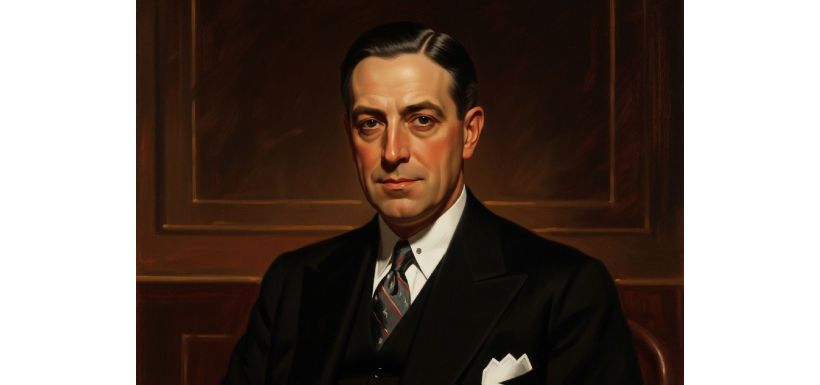
Some pioneers invent the technology. They are the brilliant minds in the laboratory who conjure up new circuits and tame the laws of physics. Others, with a different, but no less potent, kind of genius, see what that technology can become. David Sarnoff didn't invent the radio, but he arguably invented radio broadcasting as we know it. He was the visionary who saw a 'music box' in every home, a ruthless businessman who built a media empire from the ground up, and a figure so powerful and commanding that he was known for much of his life simply as 'The General'. As we continue our "Pioneers of Radio" series, we meet one of the most influential and controversial figures of the 20th century, a man who shaped the very sound and sight of modern life.
From a Russian Shtetl to American Telegraphy
David Sarnoff's story is the quintessential American "rags-to-riches" tale. He was born in a small, impoverished Jewish shtetl near Minsk, in the Russian Empire, in 1891. His early life was one of poverty, and the dream of a better life in America was a powerful lure. In 1900, the family emigrated, settling in the tenements of New York City.
Life was not easy. Sarnoff's father was struck by illness, and young David, from the age of just nine, became a primary breadwinner for the family. He worked tirelessly, delivering newspapers, running errands, and singing in a synagogue choir. This early experience of hardship undoubtedly forged in him a relentless drive and an ambition that would define his entire career. He wasn't just hoping for success; he was determined to achieve it.
In 1906, a chance encounter set him on the path that would lead to greatness. He had hoped for a job in the newspaper industry but mistakenly walked into the offices of the Commercial Cable Company. He was hired as an office boy. Soon after, he moved to the Marconi Wireless Telegraph Company of America. He was captivated by the new technology. He bought a Morse key, taught himself the code, and devoured every book he could find on wireless. His ambition and quick learning did not go unnoticed. He rose rapidly through the ranks, from a junior telegraph operator to the manager of the company's most important and technically advanced wireless station, located on the roof of the Wanamaker department store in New York City.
The Titanic Incident and the "Radio Music Box" Memo
In April 1912, an event occurred that would not only shock the world but also cement in Sarnoff's mind the incredible power of radio. When the RMS Titanic struck an iceberg and sank, the world waited desperately for news. The popular legend, often promoted by Sarnoff himself in later years, is that he was the lone, heroic operator who stayed at his telegraph key for 72 sleepless hours, receiving the faint signals and relaying the names of the survivors to a frantic public.
The historical reality is a little more nuanced. As the manager of the powerful Wanamaker station, Sarnoff did play a crucial role. He was at the centre of the information flow, helping to coordinate messages from ships at sea and providing the press with lists of survivors. However, he was one of several operators involved in this effort. While the story of him being the lone hero is likely a classic Sarnoff embellishment, there's no doubt that this experience had a profound impact on him. He witnessed firsthand how radio could connect the public to a major breaking news event in real-time, and he never forgot it.
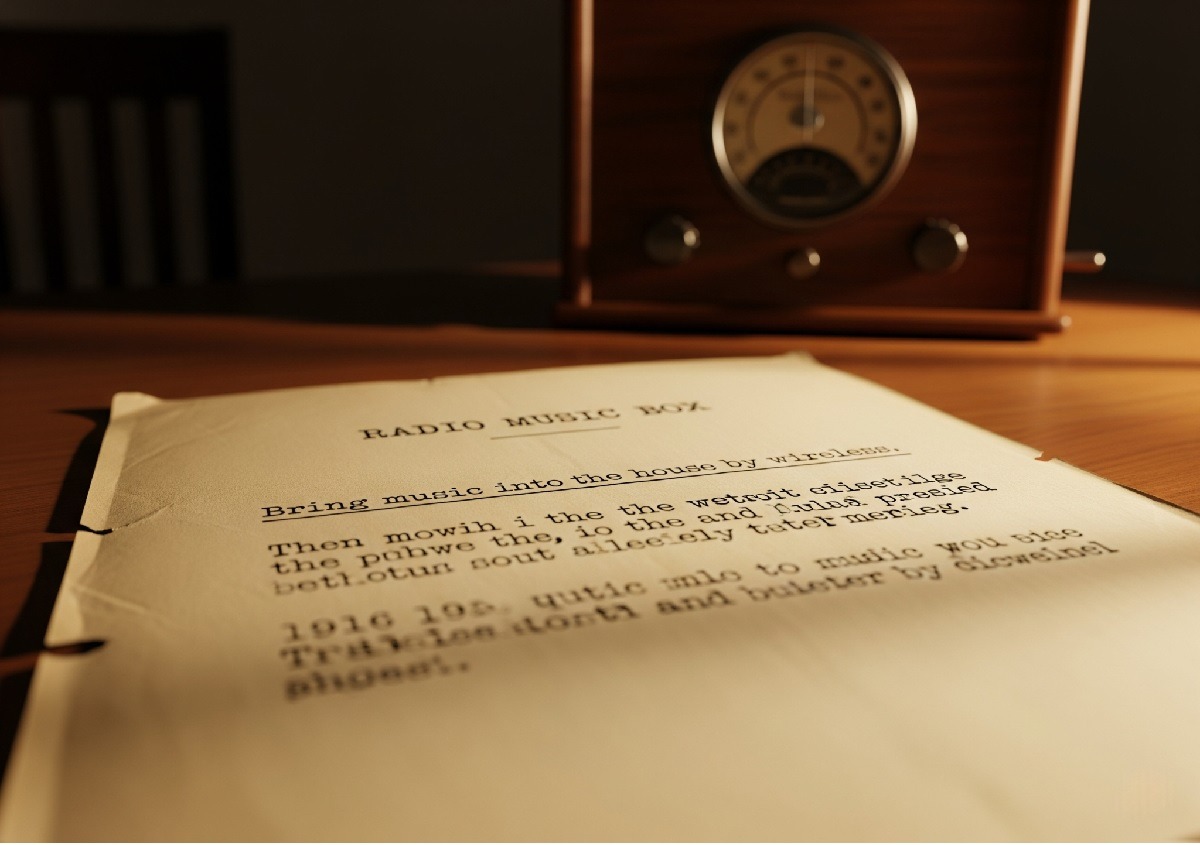
This understanding of radio's potential culminated in what is perhaps his most famous act of foresight. In 1915 or 1916, as a young and relatively junior official at the Marconi Company, he wrote a memo to his superiors that was breathtaking in its vision. It became known as the "Radio Music Box" memo.
In it, he proposed a radical new idea. "I have in mind a plan of development which would make radio a 'household utility' in the same sense as the piano or phonograph," he wrote. "The idea is to bring music into the house by wireless." He went on to predict, with uncanny accuracy, that these "music boxes" could also broadcast lectures, concerts, and even up-to-the-minute baseball scores.
His superiors, still focused on the business of point-to-point telegraphy – ship-to-shore and business-to-business messages – initially dismissed his idea. It was simply too far outside their established business model. But Sarnoff was patient. His vision was ahead of its time, but he knew its time would come.
Building an Empire: The Rise of RCA and NBC
After the First World War, the US government, wary of foreign control over the strategically vital technology of radio, pushed for the creation of a powerful, American-owned radio company. This led, in 1919, to the formation of the Radio Corporation of America (RCA), which acquired the assets of the American Marconi company. David Sarnoff, with his deep knowledge of the business, moved to the new corporation, and his ascent to power truly began.
Now in a position of influence, and with the recent success of Frank Conrad's KDKA broadcasts proving the public's appetite for radio entertainment, Sarnoff finally had the opportunity to make his "Radio Music Box" a reality. RCA began mass-producing affordable radio receivers for the home, and Sarnoff pushed the company to invest in broadcasting content.
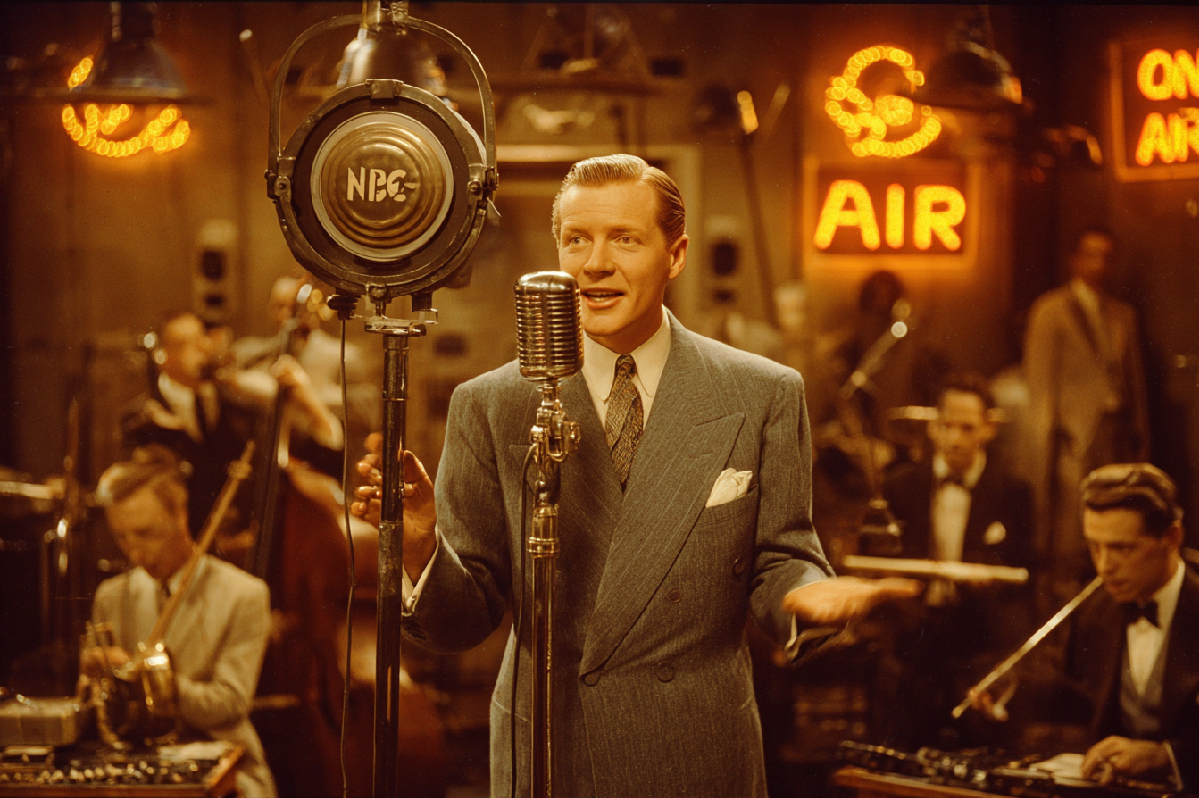
His masterstroke came in 1926 with the creation of the National Broadcasting Company (NBC), the first national radio network in America. The network model was revolutionary. By linking many individual radio stations across the country with high-quality telephone lines, NBC could broadcast the same programme simultaneously to a massive, nationwide audience. This transformed radio from a local affair into a powerful national medium. It created shared cultural experiences, turned singers and comedians into national stars, and opened up a vast new market for advertising. It's hard for us to grasp today, in our fragmented media landscape, just how revolutionary it was for a family in California to be listening to the exact same live musical performance as a family in New York. Sarnoff had not just sold a product; he had created a new cultural institution.
The Darker Side: The Battles with Farnsworth and Armstrong
David Sarnoff was a visionary, but he was also a ruthless and fiercely competitive businessman. He was utterly determined to ensure RCA's dominance, and he was not afraid to use his company's immense power and resources to crush anyone who stood in his way. This is a difficult, but essential, part of his story to reconcile.
The war for television saw Sarnoff and RCA, with their inventor Vladimir Zworykin, pitted against the independent inventor Philo Farnsworth. As we've covered, Farnsworth had invented key television technologies and held crucial patents. Sarnoff tried to buy him out, and when that failed, RCA engaged in long and costly patent battles. While RCA eventually lost the legal case and was forced to pay Farnsworth royalties, the years of litigation successfully delayed Farnsworth's commercial efforts, allowing RCA to establish a dominant position in the new television market.
Even more tragic was the war for FM radio. Edwin Howard Armstrong, a brilliant inventor and a one-time friend of Sarnoff's, had invented FM radio, a technology that was vastly superior to the existing AM broadcasting system. It offered high-fidelity sound and was immune to static. Sarnoff and RCA, however, had built their entire empire on AM radio. They saw FM not as a brilliant innovation, but as a disruptive threat to their profitable business model.
What followed was a shameful chapter in corporate history. Sarnoff and RCA used their immense power, their political influence, and their legal muscle to obstruct and suppress the development of FM radio. They lobbied for regulatory changes that handicapped FM, refused to pay Armstrong fair royalties, and effectively marginalised his invention for years. This relentless battle took a terrible toll on Armstrong, contributing to his financial ruin and, ultimately, his tragic suicide in 1954. It's a stark reminder that in the world of big business, progress and profit don't always walk hand-in-hand.
"The General": World War II and Colour Television
During the Second World War, Sarnoff's expertise in communications was called upon by the US government. He served as a special consultant to General Dwight D. Eisenhower, helping to coordinate communications for the D-Day landings and the subsequent campaign in Europe. In recognition of his service, he was promoted to the rank of Brigadier General in the Army Reserve, a title he proudly used for the rest of his life.
After the war, "The General" turned his attention to the next great frontier: colour television. He drove RCA's massive research and development effort to create a compatible colour television system – one that could be received in black and white on existing television sets. This led to another "format war," this time with the rival network CBS, which had developed its own, incompatible, mechanical colour system. After a fierce battle, Sarnoff's electronic, compatible system was chosen as the American national standard in 1953, another major victory for RCA and a testament to his unwavering determination.
Synergies with Ham Radio: The Industry Giant
David Sarnoff's impact on the world of amateur radio was immense, if indirect.
- Shaping the Spectrum:
- RCA and "Radiotron":
- A Cautionary Tale:
His creation of a powerful, commercial broadcasting industry fundamentally shaped the radio landscape. It created the very environment of commercial stations that hams have to share the spectrum with, and his influence in Washington had a direct impact on the frequency allocations that govern our hobby to this day.
The company he led, RCA, became a major manufacturer of the essential components of amateur radio. Generations of hams built and maintained their rigs using RCA "Radiotron" vacuum tubes, RCA test equipment, and components manufactured by the company he built. Many a vintage rig is still full of RCA valves.
His ruthless battles with independent inventors like Armstrong and Farnsworth serve as a powerful, if cautionary, tale for the amateur community. It's a stark reminder of the often-difficult dynamics between corporate interests and individual innovation, a theme that continues to be relevant in the world of technology.
Legacy and Conclusion: The General of Broadcasting
David Sarnoff passed away in 1971. He was a towering figure, one of the most powerful and influential men of the 20th century. He was a driving force behind the creation of not one, but two mass media: radio and television.
His legacy, however, is complex. He was the brilliant visionary who, as a young, penniless immigrant, foresaw the "radio music box" and built a media empire. But he was also the ruthless monopolist who used his power to crush competition and stifle innovation when it threatened his interests.
David Sarnoff was a force of nature. His life was a testament to ambition, hard work, and a profound belief in the power of the airwaves. He may not have invented the circuits, but he built the industry, and in doing so, he shaped the sound and sight of modern life in ways that are still felt today. He was, in every sense, the General of Broadcasting.
What are your thoughts on David Sarnoff's complex legacy? Can his visionary achievements be separated from his ruthless business practices? Let me know in the comments below! And, as always, if you have suggestions for other "Pioneers of Radio" that you'd like to see featured, don't hesitate to share.
For more information please visit our online store or alternatively contact us and our team will be happy to assist you!