
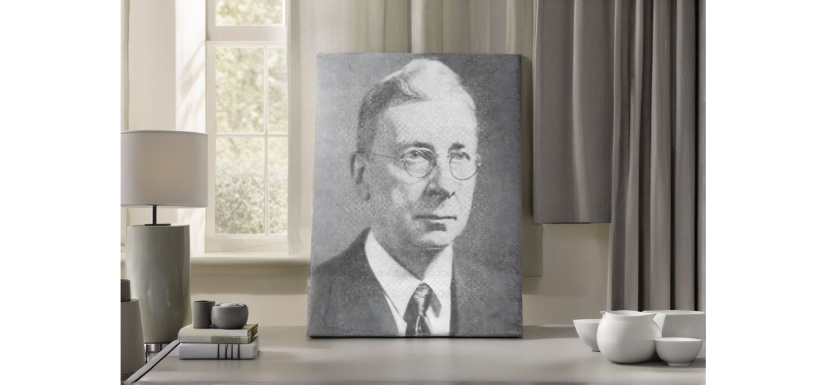
The Pioneers of Radio: George C. Southworth - The Waveguide Warrior
In the ever-evolving world of radio technology, we often take for granted the seamless flow of information that reaches our devices. We marvel at high-definition television broadcasts, lightning-fast internet connections, and the ability to communicate with people across the globe in real time. But underpinning these marvels are decades of groundbreaking research and development, often in areas that are invisible to the average user. Today, as part of our "Pioneers of Radio" series, we'll journey into the realm of microwaves and waveguides, exploring the crucial contributions of George C. Southworth, a visionary engineer who revolutionized the way we transmit and receive high-frequency electromagnetic waves. While perhaps not a household name, Southworth's work at Bell Labs paved the way for technologies that are fundamental to modern communication, radar, and even scientific instruments like particle accelerators.
Early Life and Education
George Conrad Southworth was born in Little Cooley, Pennsylvania, in 1890. While details about his family background are relatively scarce, his inherent curiosity and aptitude for science and mathematics were evident from a young age. He pursued his passion for knowledge at Grove City College, earning a bachelor's degree in physics in 1914. He continued his studies at Yale University, where he obtained his doctorate in 1923. His doctoral research focused on the behaviour of electrons in vacuum tubes, a field that was intimately connected to the burgeoning field of radio technology. Even in his early academic years, Southworth demonstrated a keen interest in the fundamental principles governing the then-new frontier of radio waves. His doctoral advisor was physics professor, and radio pioneer, Lynde P. Wheeler. After graduation, he briefly taught before finding his true calling at a renowned institution that would become synonymous with innovation in communication technology.
Bell Labs and the Development of Waveguides
In 1923, Southworth made a career-defining move, joining the research department of the American Telephone and Telegraph Company (AT&T) in New York. His initial work focused on radio propagation, studying how radio waves interact with the Earth's surface and atmosphere. This involved the use of a former navy patrol boat, Shortly after joining AT&T he transferred to their new research facility at Bell Telephone Laboratories. Bell Labs, during this period, was a hotbed of research, attracting some of the brightest minds in physics and engineering. It was here that Southworth would make his most significant contributions.
As radio technology advanced, there was a growing need to explore higher frequencies. The shorter wavelengths of microwaves offered the potential for greater bandwidth, meaning more information could be transmitted. However, conventional transmission lines, such as coaxial cables, became increasingly inefficient at these frequencies. The wires themselves would begin to radiate energy, leading to significant signal loss. A new approach was needed, and Southworth was at the forefront of finding it.
The solution came in the form of waveguides - hollow metallic tubes, often rectangular or circular in cross-section, designed to guide electromagnetic waves. Unlike wires or coaxial cables that rely on the flow of electric current along conductors, waveguides confine and direct the waves within their enclosed space, much like a speaking tube channels sound.
Southworth's work on waveguides was not entirely without precedent. The theoretical possibility of wave propagation within hollow pipes had been suggested by Lord Rayleigh in 1897. However, it was Southworth who, through meticulous experimentation and a deep understanding of electromagnetic theory, demonstrated the practical feasibility of waveguide transmission.
His experiments at Bell Labs in the early 1930s were groundbreaking. He used newly developed vacuum tubes to generate microwaves and ingeniously adapted existing laboratory equipment to create his first waveguides. One of the major challenges was detecting and measuring the waves inside the waveguide. Southworth developed special probes and detectors that could be inserted into the waveguide to sample the electromagnetic field without significantly disturbing the wave propagation.
Southworth's research went beyond simply demonstrating that waveguides could work. He meticulously studied the different modes of propagation within the guides. These modes, designated as TE (transverse electric) and TM (transverse magnetic), describe the various patterns of electric and magnetic fields that can exist within the waveguide. Understanding these modes was crucial for designing waveguides for specific frequencies and applications. He explored how the dimensions of the waveguide affected its performance, determining the optimal size and shape for different frequency ranges. He showed that for each mode, there is a critical "cut-off frequency". The cut-off frequency is the lowest frequency that will propagate in that mode for a given size of waveguide.
Furthermore, Southworth investigated the use of dielectric waveguides. Instead of relying solely on metallic walls, these waveguides use materials with specific dielectric properties to guide the waves. Dielectric waveguides offered advantages in certain applications, particularly at very high frequencies, and Southworth's work helped to lay the foundation for their development. His experiments weren't limited to the lab. He famously used a 400-foot length of 16-inch diameter galvanized iron pipe, buried under his backyard in Red Bank, New Jersey, as an experimental waveguide, further demonstrating the practicality of his ideas.
World War II and Radar
The outbreak of World War II dramatically accelerated the development of microwave technology, primarily driven by the urgent need for advanced radar systems. Radar, an acronym for RAdio Detection And Ranging, relies on the ability to transmit and receive radio waves to detect and locate objects. Higher frequencies were crucial for achieving the desired resolution and accuracy in radar systems.
Southworth's work on waveguides proved to be invaluable in this context. Waveguides provided an efficient way to transmit and receive the microwave signals used in radar. They were incorporated into radar systems used by Allied forces, contributing significantly to the war effort. For example, waveguides were used to connect the magnetron (which generated the microwaves) to the antenna in radar transmitters, and to connect the antenna to the sensitive receiver in radar receivers.

Image reference - National Air and Space Museum
The ability to guide microwaves with precision and minimal loss, thanks to Southworth's pioneering research, was a key factor in the development of effective radar systems that could detect enemy aircraft and ships with unprecedented accuracy. The impact of radar on the outcome of the war cannot be overstated, and Southworth's contribution to this critical technology was substantial.
Legacy and Lasting Impact
After the war, the use of microwaves and waveguides expanded rapidly in various fields. Southworth continued his research at Bell Labs, contributing further to the understanding of waveguide theory and the development of new microwave components. He retired from Bell Labs in 1955.
His work had a profound and lasting impact on several technologies that are integral to modern society:
- Telecommunications: Waveguides are still used in high-bandwidth communication systems, particularly for terrestrial microwave links and in satellite communication earth stations. They are essential for transmitting large amounts of data over long distances.
- Satellite Communication: Waveguides are used in the ground stations that transmit and receive signals to and from satellites. They handle the high-power microwave signals used for uplinks and downlinks.
- Radio Astronomy: Radio telescopes often use horn antennas and waveguides to collect and guide faint radio waves from distant celestial objects.
- Particle Accelerators: In high-energy physics, particle accelerators use waveguides to guide and accelerate particles to extremely high speeds. The precise control offered by waveguides is essential for these complex instruments.
Southworth's contributions were recognized by his peers. He received the IRE Morris N. Liebmann Memorial Award in 1938 and the prestigious IRE Medal of Honor in 1963, "for his contributions to the development of microwave theory and techniques."
Conclusion
George C. Southworth's pioneering work on waveguides revolutionized the field of microwave technology. His research not only advanced the theoretical understanding of electromagnetic wave propagation but also led to practical applications that had a profound impact on radar, telecommunications, and other fields. He was a true "Waveguide Warrior," pushing the boundaries of radio technology and enabling the development of systems that operate at frequencies once considered unreachable. His story serves as a powerful reminder that progress in technology often comes from those who dare to explore new frontiers and develop the fundamental building blocks upon which future innovations are built. While his name may not be as widely recognized as some other radio pioneers, his legacy is deeply embedded in the fabric of our modern wireless world.
What are your thoughts on George C. Southworth and the significance of his contributions? Are there other pioneers in the realm of microwaves and waveguides that you believe deserve greater recognition? Share your comments below!
For more information please visit our online store or alternatively contact us and our team will be happy to assist you!