
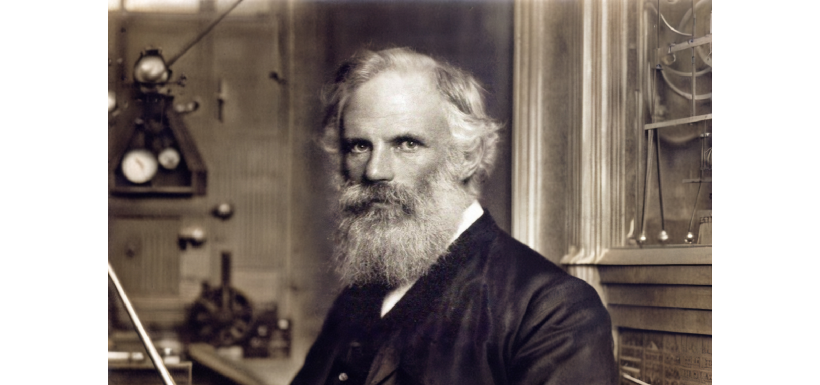
We often celebrate the inventors who build the gadgets, the Marconis who send the first signals across vast oceans. It's easy to picture them in their labs, surrounded by wires and sparking contraptions, making history happen. But what about the thinkers who first predicted it was even possible? Behind every great invention, there's often a brilliant theoretical mind who first imagined the possibility, who looked at the equations and saw a future others couldn't yet grasp. Today in our 'Pioneers of Radio' series, we're looking at one such mind: George Francis FitzGerald, an Irish physicist whose theoretical insights paved the way for the wireless revolution. He might not have built a transmitter himself, but his work helped write the instruction manual for those who did.
Early Life and Dublin Roots: A Scientific Heritage
George Francis FitzGerald was born in Dublin in 1851, into a family where science wasn't just a subject, it was practically a family business. His father was a clergyman who eventually became a Bishop, but his mother's family, the Stoneys, were steeped in scientific pursuits. His uncle, George Johnstone Stoney, was a prominent physicist who actually coined the term "electron"! Talk about having big scientific shoes to fill! I sometimes wonder if family dinners involved discussions about atomic theory alongside the Sunday roast.
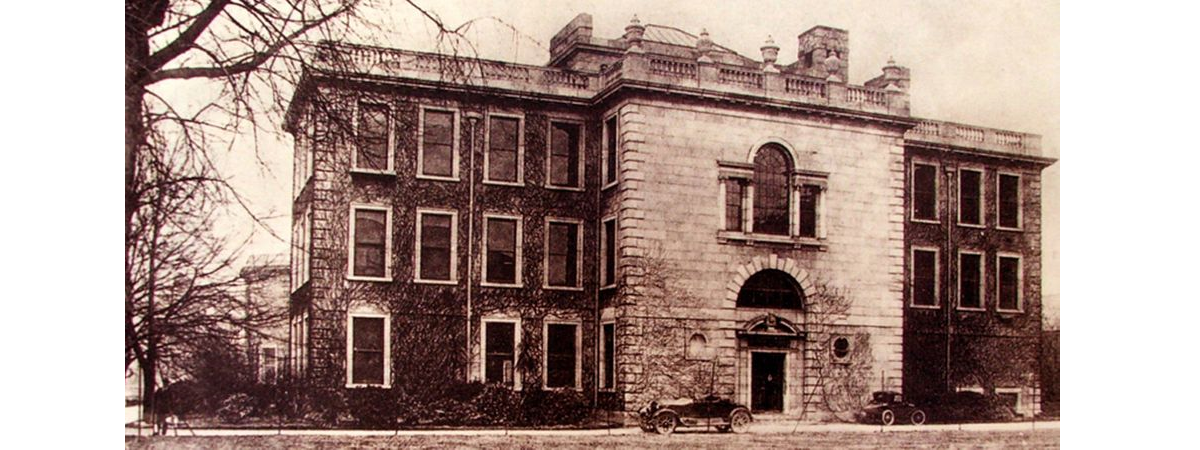
It's no surprise, then, that young George excelled academically. He studied mathematics and physics at Trinity College Dublin (TCD), a renowned institution with a rich history. He was clearly brilliant, becoming a Fellow of Trinity at the remarkably young age of 25 – a significant achievement that marked him out as a rising star. Unlike many academics who move between institutions, FitzGerald remained loyal to TCD for his entire career, eventually becoming the prestigious Professor of Natural and Experimental Philosophy in 1881. Dublin was his home, and Trinity College was the stage upon which his brilliant mind would perform.
Championing Maxwell: Unravelling the Mysteries of Electromagnetism
FitzGerald's academic prime coincided with one of the biggest upheavals in physics since Newton: James Clerk Maxwell's theory of electromagnetism. Published in the 1860s, Maxwell's equations were a masterpiece, unifying electricity, magnetism, and light into a single elegant framework. But, and it's a big but, they were incredibly difficult to understand. The mathematics were dense, the concepts were abstract, and many physicists at the time struggled to grasp their full implications. It wasn't exactly light reading.
This is where FitzGerald truly shone. He became one of the earliest and most ardent champions of Maxwell's work. He wasn't content just to accept the theory; he immersed himself in it, working tirelessly to interpret its complexities, simplify its mathematical expressions, and explore its profound predictions. He wasn't alone in this endeavour. He formed part of an informal group, sometimes dubbed "The Maxwellians," which included other brilliant minds like Oliver Lodge in England and the eccentric genius Oliver Heaviside. These physicists communicated frequently, sharing ideas, debating interpretations, and collectively pushing the boundaries of electromagnetic theory. FitzGerald, with his clarity of thought and enthusiasm, played a crucial role in making Maxwell's revolutionary ideas understandable and accessible to a wider scientific audience. He was, in essence, a translator, bridging the gap between Maxwell's abstract equations and the physical reality they described.
The Spark of Prediction (1883): "Seeing" Radio Waves Before They Were Seen
Maxwell's theory predicted the existence of electromagnetic waves travelling at the speed of light. This was mind-blowing stuff. But the crucial question remained: how could you actually generate these hypothetical waves in a laboratory? How could you prove they really existed?
This is where FitzGerald made his most direct and perhaps most underappreciated contribution to the foundation of radio. In 1883, five years before Heinrich Hertz would famously succeed in generating and detecting these waves, FitzGerald published a short but incredibly insightful paper in the Transactions of the Royal Dublin Society. Based purely on his deep understanding of Maxwell's equations, he reasoned that rapidly oscillating electric currents should radiate electromagnetic waves into space.
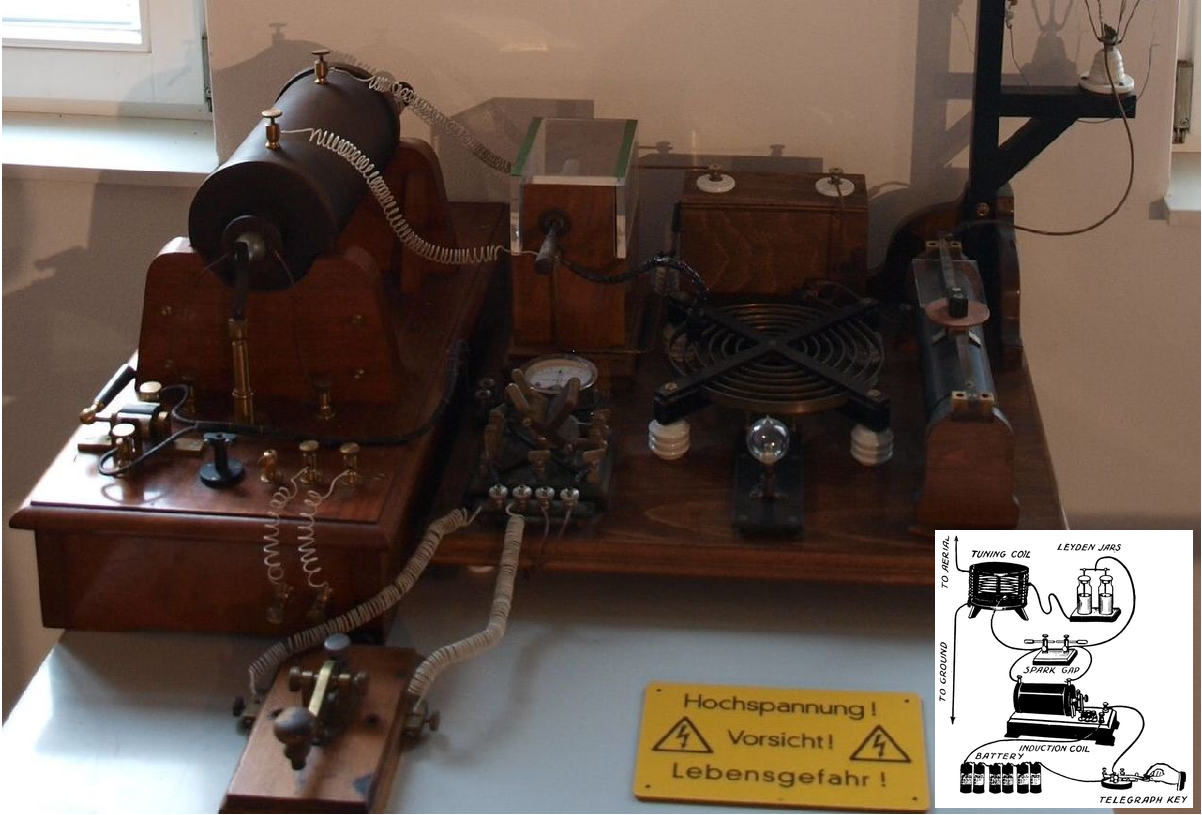
He didn't just stop at the theoretical possibility; he suggested a practical method. He proposed using the oscillatory discharge of a Leyden jar (an early form of capacitor) connected across a loop of wire. When the Leyden jar discharged, the current would oscillate back and forth very rapidly, and according to FitzGerald's calculations based on Maxwell's theory, this oscillation should produce electromagnetic waves of a specific, calculable wavelength. He essentially provided the theoretical blueprint for a spark-gap transmitter!
Think about that for a moment. He described how to create radio waves before anyone had definitively done so. It required immense confidence in Maxwell's theory and a remarkable ability to visualise the physical consequences of abstract mathematical equations. It's one thing to understand a theory; it's another thing entirely to see how to bring its predictions into the real world.
Connections and Confirmation: Hertz, Lodge, and Heaviside
The scientific community in the late 19th century was surprisingly well-connected, despite the lack of instant communication we have today. FitzGerald was part of a vibrant network of physicists who corresponded regularly, sharing ideas, debating theories, and suggesting experiments. He exchanged numerous letters with Oliver Lodge and Oliver Heaviside, discussing the intricacies of Maxwell's theory and exploring ways to test its predictions.
Then came the news from Germany. Starting around 1887, Heinrich Hertz began publishing the results of his brilliant experiments. Hertz had successfully generated and detected electromagnetic waves in his laboratory, using an apparatus remarkably similar to what FitzGerald had predicted – a spark gap connected to an oscillator.
FitzGerald immediately grasped the monumental significance of Hertz's work. It was the experimental proof that Maxwell's theory was correct, the confirmation that electromagnetic waves were not just a mathematical abstraction but a physical reality. FitzGerald became one of Hertz's most enthusiastic supporters in the British Isles, promoting his findings and explaining their importance to his colleagues. He wasn't just content to read about it either; he replicated some of Hertz's experiments at Trinity College, demonstrating his own experimental skill alongside his theoretical prowess. He understood that science progresses through this vital interplay of theory and experiment.
Beyond Radio Waves: Length Contraction and A Fascination with Flight
FitzGerald's brilliant mind wasn't confined solely to electromagnetic waves. He grappled with other fundamental questions in physics. Around 1889, he independently proposed a radical idea to explain the puzzling null result of the Michelson-Morley experiment – an experiment designed to detect the hypothetical "luminiferous ether" thought to carry light waves. FitzGerald suggested that objects moving at very high speeds through the ether would physically contract in the direction of their motion. The Dutch physicist Hendrik Lorentz proposed the same idea shortly afterwards, and it became known as the Lorentz-FitzGerald contraction. While ultimately superseded by Einstein's theory of special relativity (which did away with the ether altogether), this hypothesis demonstrated FitzGerald's deep thinking about the nature of light, motion, and the very fabric of space and time.
And here's a less common bit of trivia that I find rather charming: FitzGerald was fascinated by the possibility of human flight! He wasn't just thinking about it; he was actively experimenting. He studied the flight of birds and experimented with gliders, even building models in an attempt to achieve powered flight. This reveals a practical, inventive streak beyond his theoretical work, a desire to apply scientific principles to conquer real-world challenges. It makes him seem less like an abstract theorist and more like a hands-on inventor, doesn't it?
Synergies with Ham Radio: The Theoretical Bedrock
So, why should a ham radio operator care about a 19th-century theoretical physicist like FitzGerald? Well, because his work is, quite literally, the bedrock upon which our entire hobby is built.
- Foundation of Transmission: FitzGerald's prediction of how to generate radio waves using oscillating currents is the fundamental principle behind every single transmission we make. He explained why putting an oscillating current into an antenna makes it radiate. Without that theoretical understanding, Hertz might not have known what to look for, and Marconi would have had nothing to build upon.
- Antenna Principles: His work involved oscillating circuits and the concept of resonance. These are absolutely central concepts for anyone designing, building, tuning, or matching antennas – activities that are at the heart of ham radio. Understanding resonance helps explain why antennas work best at specific frequencies and why tuning is so crucial.
- Understanding the Waves: FitzGerald's efforts, along with Lodge and Heaviside, to interpret and clarify Maxwell's complex equations contributed massively to our fundamental understanding of the electromagnetic waves we use every day. Knowing what we're transmitting, how it travels, and how it behaves, even conceptually, makes us better operators and experimenters.
While we hams often focus on the practical side – building rigs, stringing up aerials, making contacts – it's worth remembering the theoretical giants like FitzGerald who first mapped out the territory. Understanding the 'why' can make the 'how' even more rewarding.
Legacy and Untimely End
George FitzGerald's influence on the development of physics was profound. He played a vital role in the acceptance and understanding of Maxwell's electromagnetic theory, and his prediction of how to generate radio waves was a crucial catalyst for experimental progress. He was also a dedicated educator, passionate about improving science education in Ireland.
Maxwell's Equations:
Gauss's Law: \( \nabla \cdot \mathbf{E} = \frac{\rho}{\varepsilon_0} \)
Gauss's Law for Magnetism: \( \nabla \cdot \mathbf{B} = 0 \)
Faraday's Law of Induction: \( \nabla \times \mathbf{E} = -\frac{\partial \mathbf{B}}{\partial t} \)
Ampère's Law (with Maxwell's correction): \( \nabla \times \mathbf{B} = \mu_0 \mathbf{J} + \mu_0 \varepsilon_0 \frac{\partial \mathbf{E}}{\partial t} \)
Contemporaries described him as brilliant, enthusiastic, and generous with his ideas, though perhaps a little disorganized at times – something I think many of us can relate to! Sadly, his life was cut short. He suffered from persistent digestive problems throughout his life and passed away in 1901 at the relatively young age of 49. It's incredibly poignant to think that he died just months before Marconi successfully transmitted signals across the Atlantic – signals carried by the very waves FitzGerald had predicted nearly two decades earlier.
Conclusion: The Power of Prediction
George FitzGerald's story is a powerful testament to the crucial interplay between theoretical prediction and experimental verification in science. He represents the power of a brilliant mind to look deeply into the mathematical framework of the universe and foresee possibilities that haven't yet been realised. He may not have built the first radio transmitter, but he provided the essential theoretical insight that told others where to look and what to build. He helped write the instruction manual for the wireless age. His work reminds us that behind every practical technology lies a foundation of theoretical understanding, often built by dedicated thinkers working patiently to unravel the universe's secrets.
What are your thoughts on the role of theoretical physics in technological innovation? Do figures like FitzGerald get the credit they deserve? Let me know in the comments below! And, as always, if you have suggestions for other "Pioneers of Radio" that you'd like to see featured, don't hesitate to share.
For more information please visit our online store or alternatively please contact us and we'll be happy to assist you!