
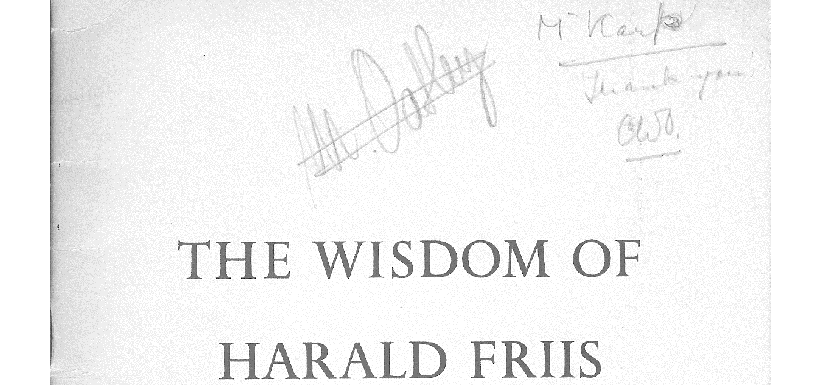
In the world of radio communication, we often marvel at the ability to transmit voices, music, and data across vast distances, seemingly through thin air. But behind this seemingly magical feat lies a fundamental component, often overlooked but absolutely essential: the antenna. Antennas are the crucial bridge between the invisible realm of radio waves and the electronic circuits that make wireless communication possible. Today, as part of our "Pioneers of Radio" series, we'll delve into the life and work of Harald T. Friis, a Danish-American radio engineer whose contributions to antenna design and the understanding of radio wave propagation were pivotal in shaping the modern wireless world. While names like Marconi and Armstrong may be more familiar to the general public, Friis' work at Bell Labs provided the essential foundations upon which much of modern radio technology is built.
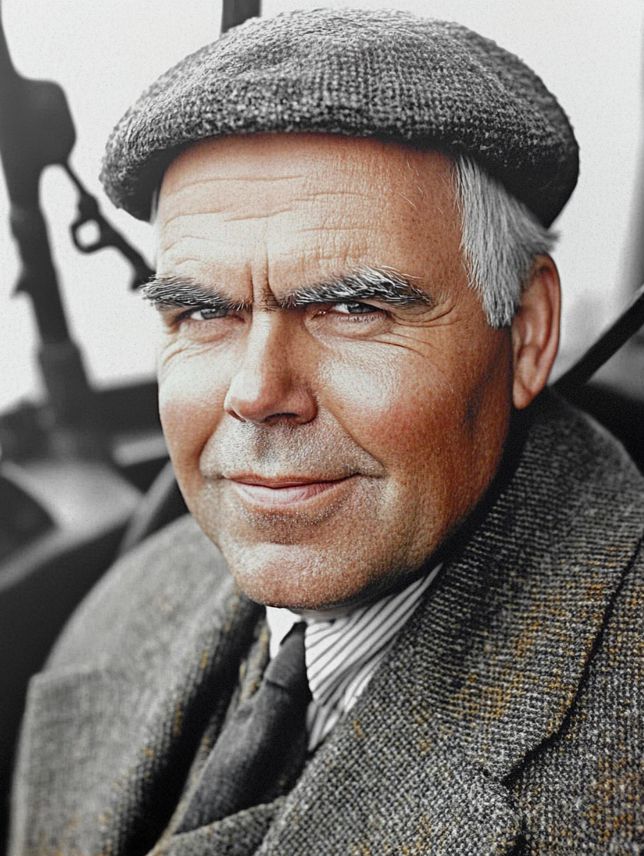
Harald Trap Friis
Early Life and Education
Harald Trap Friis was born in Næstved, Denmark, on February 22, 1893. Details about his early family life are not widely documented, but his clear aptitude for science and engineering led him to the Royal Technical College in Copenhagen. There, he immersed himself in the study of electrical engineering, graduating in 1916. This was a time of rapid advancements in radio technology, with the pioneering work of Marconi and others capturing the imagination of young engineers like Friis. His early career included a stint at the Danish Inspectorate of Telegraphs, then, seeking greater opportunities in the burgeoning field of radio, he made a crucial decision that would shape the rest of his life: he emigrated to the United States in 1919.
Bell Labs and Antenna Research
In the United States, Friis secured a research position at the Western Electric Engineering Department, before securing a position with Bell Telephone Laboratories in 1919, later working for its successor, Bell Labs, an institution that would become synonymous with innovation in communication technology. He would remain there for most of his long and illustrious career. Bell Labs, during this period, was a hotbed of research, attracting some of the brightest minds in physics and engineering. Friis found himself at the heart of this dynamic environment, initially focusing his research on radio receivers and the challenges of signal reception.
It wasn't long before Friis turned his attention to what would become his defining area of expertise: antennas. He quickly recognized that the antenna was not just a passive piece of metal; it was a crucial component that could be optimized to dramatically improve the performance of radio systems. His research in this area led to one of his most enduring contributions: the Friis transmission formula, published in 1946.
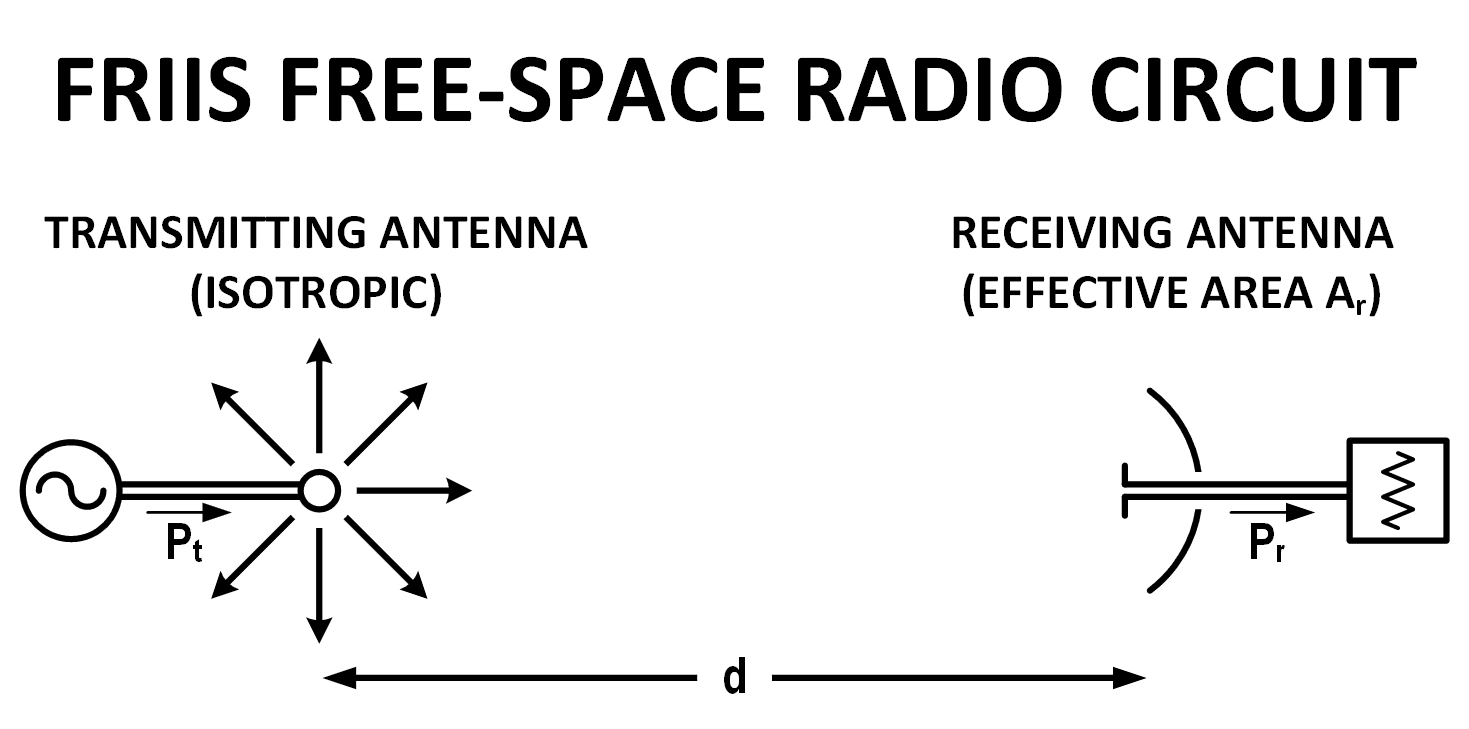
This elegant formula describes the power received by one antenna from another, under idealized conditions, and it remains a cornerstone of radio engineering to this day. In simple terms, the formula states:
Pr/Pt = (λ/(4πd))2 * Gt * Gr
Where:
- Pr is the received power.
- Pt is the transmitted power.
- Gt is the gain of the transmitting antenna.
- Gr is the gain of the receiving antenna.
- λ is the wavelength of the radio wave.
- d is the distance between the antennas.
The Friis transmission formula highlights the importance of antenna gain in maximizing received power. It also demonstrates how signal strength decreases with the square of the distance, a fundamental principle in radio communication. This formula provided engineers with a powerful tool for designing and analyzing radio links, allowing them to predict signal strength and optimize system performance.
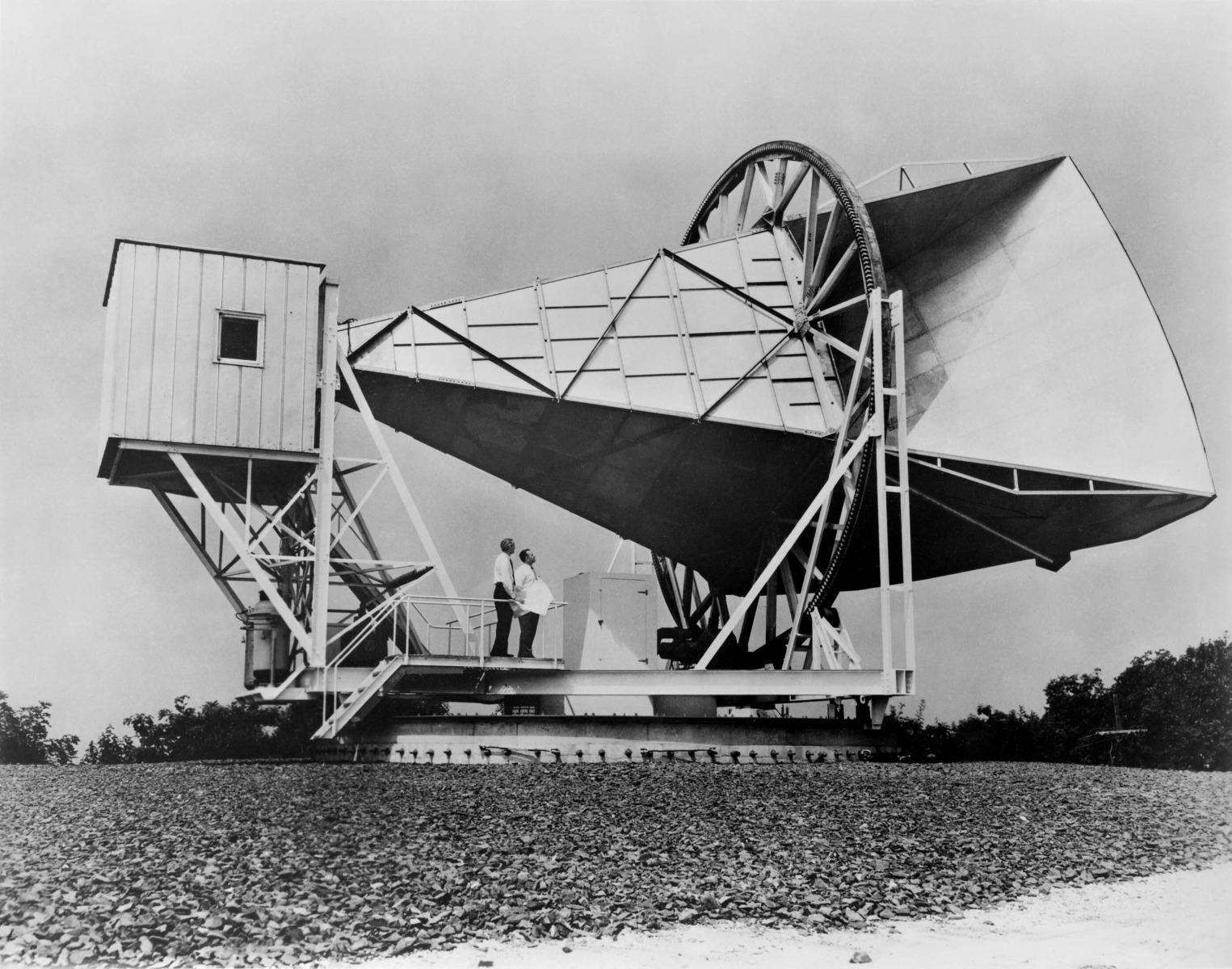
Horn Antenna - Designed and invented by Herald Friis and Alfred C. Beck, Source - Wikipedia
But Friis was not just a theoretician. He was also a practical engineer who understood the importance of developing new antenna designs. Along with his colleague Alfred C. Beck, he developed the horn antenna, a significant advancement in microwave technology. Prior to the horn antenna, microwave communication was limited by the lack of efficient antennas capable of handling these higher frequencies. The horn antenna, with its flared, horn-like shape, provided a way to efficiently radiate and receive microwaves, opening up new possibilities for communication and radar. He was also involved in the development of the rhombic antenna, a diamond-shaped antenna known for its wide bandwidth and directional properties. This antenna was well-suited for long-distance, high-frequency communication, making it a valuable tool for both military and commercial applications.
Beyond antenna design, Friis also made crucial contributions to the understanding of radio wave propagation. He conducted extensive research on how radio waves travel through the atmosphere, are reflected by the ionosphere, and are affected by factors like terrain and weather. This knowledge was essential for designing reliable radio communication systems, particularly for long-distance links that relied on skywave propagation.
Contributions to Microwave Technology
As radio technology advanced, the push towards higher frequencies became inevitable. Microwaves, with their shorter wavelengths, offered the potential for greater bandwidth and more directional communication. Friis was at the forefront of this new frontier.
His work on the horn antenna proved instrumental in the development of practical microwave systems. During World War II, these advancements played a vital role in the development of radar, which relied heavily on microwave technology. The ability to generate, transmit, and receive microwaves efficiently, thanks in part to Friis' contributions, was a key factor in the success of radar systems. His 1947 "Noise Figures of Radio Receivers" paper also had a major impact. His "Friis" formula for noise allowed engineers to calculate the overall noise figure of a receiver or amplifier, allowing for accurate predictions of performance.
Following the war, the development of microwave technology continued at a rapid pace, leading to the expansion of telecommunications networks and the advent of satellite communication. Friis' work laid the groundwork for many of these advancements, demonstrating his far-reaching impact on the field.
Legacy and Lasting Impact
Harald T. Friis' contributions to radio engineering were widely recognized during his lifetime. He was a Fellow of the Institute of Radio Engineers (IRE) and received its prestigious Medal of Honor in 1955 "for his outstanding technical contributions to the radio art, especially in the fields of antennas, wave propagation and noise measurements, and for his able direction of research work." He was also awarded the IEEE Medal of Honor in 1967, cementing his place among the giants of radio engineering. He retired from Bell in 1958.
His legacy extends far beyond the awards and accolades he received. The Friis transmission formula remains a fundamental tool for radio engineers, used in the design of everything from cellular networks to satellite communication systems. His work on the horn antenna and other antenna designs paved the way for advancements in microwave technology, radar, and radio astronomy. He was also a dedicated mentor, and passed his knowledge on to many younger engineers at Bell Labs.
Conclusion
Harald T. Friis may not be as well-known as some of the other "Pioneers of Radio," but his contributions were no less significant. He was an antenna architect, a visionary engineer who understood the crucial role of antennas in shaping the performance of radio systems. His work at Bell Labs, spanning several decades, helped to transform radio communication from a nascent technology to the ubiquitous and essential part of modern life that it is today. His legacy serves as a reminder that progress in technology often depends on the combined efforts of many brilliant minds, each contributing their unique expertise to the advancement of the field. So, the next time you make a phone call, browse the internet wirelessly, or look up at a satellite dish, take a moment to remember Harald T. Friis, the antenna architect who helped make it all possible.
For more information please visit our online store or contact us, our team will be happy to assist you!
What are your thoughts on Harald T. Friis and his contributions to antenna technology? Are there any other unsung heroes of radio engineering that you think deserve recognition? Share your thoughts in the comments below!