
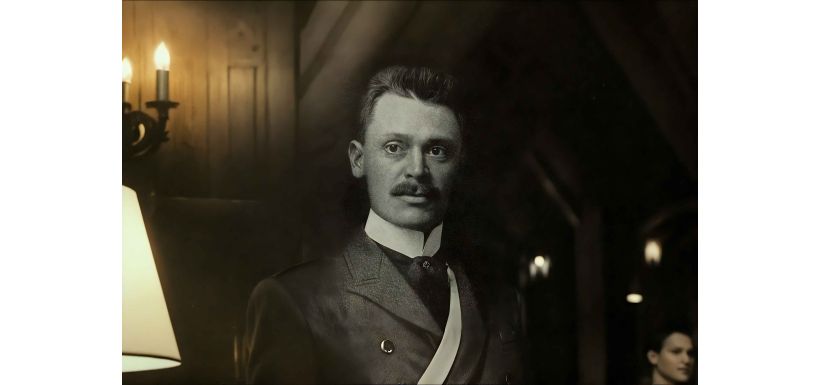
Before the internet connected us all, there was another global network, built not by corporations, but by passionate individuals driven by curiosity, a love for tinkering, and the sheer magic of wireless communication. This was the world of amateur radio, also known as ham radio, and one man, Hiram Percy Maxim, played a pivotal role in bringing it to life. As we continue our "Pioneers of Radio" series, we'll meet the man who organised the airwaves, championed the rights of amateur operators, and helped build a community that continues to thrive today. While he might not have invented a groundbreaking circuit or discovered a new type of wave, Hiram Percy Maxim's contribution to radio is no less significant. He's the guy who helped give a voice to the countless enthusiasts who were eager to explore the exciting new frontier of wireless.
Early Life, Education, and the Inventive Gene
Hiram Percy Maxim was born in Brooklyn, New York, in 1869. Now, if you're thinking that the name "Maxim" rings a bell, you'd be right. His father was Hudson Maxim, a prolific inventor of explosives and ballistic weaponry, and his uncle was none other than Hiram Stevens Maxim, the inventor of the Maxim machine gun. It's safe to say that young Hiram Percy grew up surrounded by invention. You could almost say it was in his DNA!
He followed in the family footsteps, at least in the inventive sense, graduating from the Massachusetts Institute of Technology (MIT) in 1886 with a degree in mechanical engineering. Now, MIT in the 1880s wasn't exactly handing out degrees for basket weaving. This was serious engineering, and it provided Maxim with a solid foundation for his future endeavours. He worked for various electric companies, including the American Projectile Company of Lynn, Massachusetts, on the development of gun carriages.
But Maxim wasn't just about theory. He had a practical, hands-on approach to problem-solving. This is perhaps best illustrated by his invention of the Maxim silencer for firearms, patented in 1909. He later adapted this technology to create mufflers for petrol engines, and even air compressors, showing his versatility as an inventor. I can't help but chuckle when I imagine his neighbours' reaction to a quieter firearm, given the Maxim family's line of work!
And let's not forget his earlier escapades. Before he became a household name in radio circles, he designed and built one of the first operational petrol-powered tricycles, showcasing his love for all things mechanical. He was a keen motoring enthusiast, which might seem a world away from radio, but both involve a fascination with technology and a desire to push boundaries.
The Call of the Wireless: Maxim's Entry into Amateur Radio
So, how did a mechanical engineer with a penchant for silencers become the "father of amateur radio"? Well, like many engineers of his time, Maxim was captivated by the emerging field of wireless communication. In the early 1900s, radio was still in its infancy. Marconi had made his famous transatlantic transmission, but the airwaves were largely unregulated and chaotic.
Maxim, with his engineering background, saw the potential of radio, and he wasn't alone. A growing community of hobbyists, experimenters, and tinkerers – the early "hams" – were building their own radio equipment, often from scratch, and exploring the possibilities of wireless communication. They were a passionate bunch, eager to learn, experiment, and connect with each other through the airwaves. Maxim, with his call sign 1WH, quickly became one of them. He would later adopt the call signs 1ZM, and then W1AW, the latter becoming the call sign of the ARRL's headquarters' amateur radio station.
But early amateur radio was a bit like the Wild West. There was a lot of interference between stations, the range of transmitters was limited, and there was no real organization or coordination among operators. Maxim, with his characteristic organizational skills, recognized the need for change. He envisioned a more structured and effective amateur radio community, one that could not only pursue technical experimentation but also provide a valuable public service.
The American Radio Relay League: Organizing the Airwaves
One of the biggest challenges faced by early radio amateurs was the limited range of their transmitters. Most stations could only communicate with others within a few hundred miles, at best. The solution, as any ham radio operator today will tell you, is message relaying. By passing messages from one station to another, it was possible to cover much greater distances.
And this is where Maxim's organizational genius came into play. In 1914, together with Clarence D. Tuska, a young radio enthusiast and entrepreneur, he proposed the creation of a national organization of amateur radio operators. The idea was to create a network of stations that could efficiently relay messages across the country, overcoming the limitations of individual transmitters.
And so, the American Radio Relay League (ARRL) was born. Maxim became its first president, and Tuska became its secretary. They also established QST, the ARRL's official magazine, which is still published today and is a must-read for any serious ham. I can still remember poring over copies of QST as a kid, dreaming of building my own radio station.
The ARRL quickly became a vital force in the amateur radio world. It established trunk lines for relaying messages, developed operating procedures and standards, and perhaps most importantly, it gave amateur radio operators a unified voice. The ARRL advocated for the rights of amateurs to access the radio spectrum, ensuring that they wouldn't be squeezed out by commercial or government interests. It also promoted technical experimentation and self-training, encouraging hams to improve their equipment and operating skills.
Amateur Radio's Contributions: Public Service and Technological Advancement
Under Maxim's leadership, the ARRL helped to demonstrate the value of amateur radio, not just as a hobby, but as a vital public service. Hams played a crucial role in providing emergency communications during natural disasters like floods and earthquakes, often when other communication systems failed. During these emergencies, amateur radio operators would use their skills and equipment to relay messages, coordinate relief efforts, and provide a lifeline to affected communities. For example, during the Great Mississippi Flood of 1927, amateur radio was the only means of communication in and out of many of the impacted areas.
But the contributions of amateur radio weren't limited to emergencies. Hams were also at the forefront of technical innovation. They experimented with new circuit designs, built more efficient antennas, and explored new modes of communication. Many of the advancements in radio technology, including the development of single-sideband (SSB) modulation, were driven, at least in part, by the experimentation and ingenuity of amateur radio operators. This is a testament to the power of a dedicated community of enthusiasts, empowered to explore and innovate.
Legacy and the Spirit of Amateur Radio
Hiram Percy Maxim passed away in 1936, but his legacy lives on. The ARRL, which he co-founded, is still going strong today, with over 160,000 members. It continues to be the leading organization representing amateur radio operators in the United States, advocating for their interests, providing technical support, and promoting the many benefits of amateur radio.
And amateur radio itself, often referred to as "ham radio," remains a vibrant and relevant hobby in the 21st century. Sure, we have the internet and smartphones, but ham radio still offers a unique blend of technical challenges, community spirit, and public service. It's a way to connect with people around the world, learn about radio technology, and contribute to emergency preparedness.
Conclusion: The Father of a Global Community
Hiram Percy Maxim's story is a testament to the power of community and the importance of grassroots movements in shaping technology. He was more than just an inventor; he was an organiser, an advocate, and a visionary who saw the potential of amateur radio to connect people and contribute to society. He's often called the "father of amateur radio," and for good reason. He took a disparate group of enthusiasts and helped to mold them into a respected and influential community. His legacy lives on in every amateur radio transmission, in every emergency communication drill, and in the continued spirit of experimentation and public service that defines the ham radio world. So next time you hear about hams assisting in a disaster, or read about a new technical achievement by an amateur radio operator, remember Hiram Percy Maxim, the man who helped make it all possible.
For more information please visit our online store or alternatively contact us and our team will be happy to assist you!
What are your thoughts on Hiram Percy Maxim and the role of amateur radio in the development of radio technology? Do you have any experience with ham radio yourself? Let me know in the comments below! And, as always, if you have suggestions for other "Pioneers of Radio" that you'd like to see featured, don't hesitate to share.