
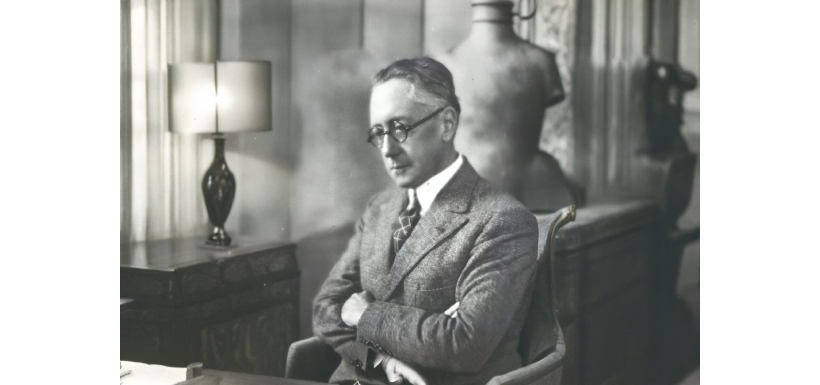
Imagine trying to listen to a single violin in a stadium full of brass bands, all playing different tunes at the same time. Chaos, right? You'd struggle to pick out the delicate notes of the violin amidst the blaring cacophony. In the very early days of radio, that's pretty much what it was like trying to receive a specific signal. The airwaves were a jumble of overlapping transmissions, and receivers were often overwhelmed by interference. It was a technological free-for-all. As we continue our Pioneers of Radio" series, we'll meet a man who brought order to that chaos, an American physicist, inventor, and engineer named John Stone Stone. He may not be a household name like Marconi, but his contributions to the art of tuning radio circuits were absolutely fundamental to making wireless communication practical and reliable.
Early Life, Education, and a Telephone Connection
John Stone Stone was born in Dover, Virginia, in 1869, to a rather distinguished family. His father, General Charles Pomeroy Stone, had a varied career including serving as Chief of Staff during the American Civil War, and after the war he worked in the service of the Khedive of Egypt. I can only imagine the stories young John must have heard growing up!
Stone's path, however, led him towards science and engineering. He studied mathematics and physics at Columbia University and then at Johns Hopkins University. Johns Hopkins, in particular, was a hotbed of scientific research at the time, and Stone was exposed to the cutting edge of electrical theory and experimentation. He didn't immediately jump into radio, though. His early career, starting in 1890, was spent at the American Bell Telephone Company in Boston. This might seem like a detour, but it was actually crucial to his later work. At Bell, Stone delved deep into the intricacies of wired telephone circuits, gaining expertise in areas like impedance matching and signal transmission. Little did he know that this knowledge would prove invaluable in the emerging field of wireless communication. I find it fascinating how seemingly unrelated experiences can often converge to shape a person's career. It's a reminder that all knowledge is interconnected, in a way.
The Problem of Selectivity: Tuning the Wireless
In the late 1890s and early 1900s, radio, or "wireless telegraphy" as it was then called, was still in its infancy. Marconi had made his famous transatlantic transmissions, proving that wireless communication was possible, but the technology was still very crude. One of the biggest limitations was the lack of selectivity.
Early radio receivers were essentially broadband devices. They picked up signals over a wide range of frequencies, making them highly susceptible to interference. Imagine trying to listen to a specific conversation in a crowded room where everyone is talking at once. That was the challenge faced by early radio operators.
The solution, as Stone and other engineers realized, was tuning. Just as a musical instrument can be tuned to resonate at a specific frequency, a radio circuit could be designed to respond most strongly to a particular frequency, while rejecting others. This would allow receivers to select the desired signal and filter out unwanted interference. It was a simple concept in theory, but surprisingly difficult to achieve in practice, especially with the relatively primitive components available at the time.
this is where John Stone Stone made his mark. He wasn't the first to think about tuning, but he was arguably the most successful in developing and refining the technology in the early days of radio. He approached the problem with a deep understanding of electrical theory and a meticulous, experimental approach.

Stone's key contributions revolved around the use of resonant circuits. A resonant circuit is a combination of an inductor (a coil of wire) and a capacitor (two conductive plates separated by an insulator). When these components are properly chosen, the circuit will oscillate at a specific frequency, its resonant frequency. This is analogous to a tuning fork, which vibrates at a specific frequency when struck.
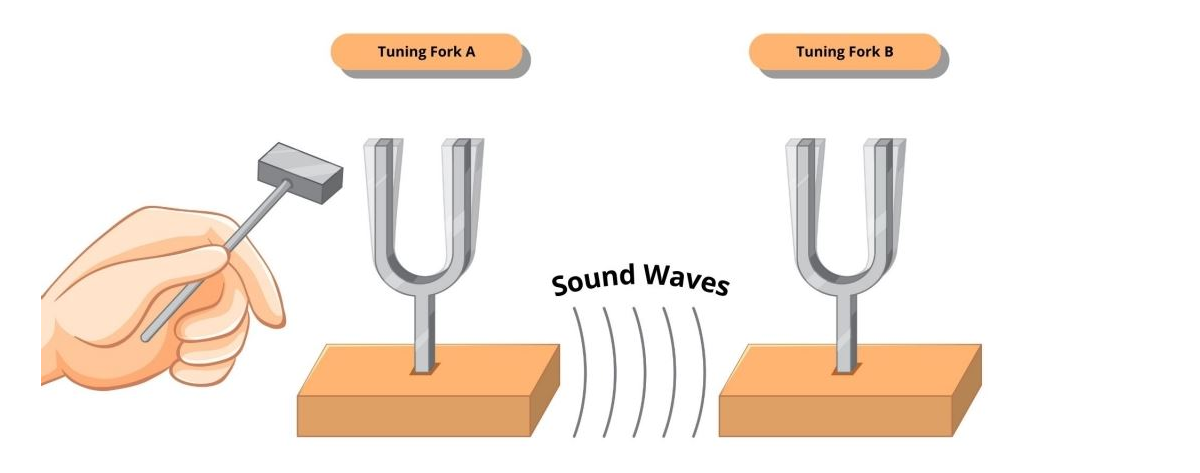
Stone developed improved methods for designing and constructing resonant circuits for radio transmitters and receivers. He emphasized the importance of loose coupling between the antenna circuit and the detector circuit in a receiver. In a loosely coupled circuit, the antenna circuit, which picks up the radio waves, is only weakly connected to the detector circuit, which extracts the information from the signal. This might seem counterintuitive – wouldn't a stronger connection be better? But Stone realized that loose coupling actually improved selectivity. It made the receiver more sensitive to the specific frequency to which it was tuned and less responsive to signals at other frequencies. It was like narrowing the focus of your attention to hear that single violin in the stadium.
He meticulously documented his work, and between 1900 and 1915 he would file more than 70 US patent applications, and over 50 foreign patents.
The Stone Telegraph and Telephone Company
Unlike some inventors who preferred to remain in academia or work within established companies, Stone was an entrepreneur. In 1900, he resigned his position from Bell and set up shop on his own to begin testing his inventions. His business was backed by a group of wealthy financiers, and by 1907, he was ready to formally launch his business.
The company would have many early successes, with contracts with the US Navy. Their business grew, however, the Poulsen system became a major competitor. Stone's company would go through a range of mergers, eventually ceasing trading in 1911.
Stone would continue to work, moving into the field of broadcasting. He would become a consultant, working on a range of projects involving tuning, antennae, and transmitters.
The Patent Disputes with Marconi: A Clash of Titans
The early days of radio were marked by intense competition and numerous patent disputes. Inventors and companies fiercely guarded their intellectual property, and the courts were often called upon to settle claims of priority and infringement. John Stone Stone found himself embroiled in one of these disputes with none other than Guglielmo Marconi.
The core of the dispute revolved around the concept of tuned circuits. Marconi had obtained patents for a system of tuned wireless telegraphy, but Stone argued that his own work on resonant circuits and loose coupling predated Marconi's. The legal battles were complex and protracted, involving multiple court cases and appeals. The courts would eventually find that, although Marconi had made significant advancements, Stone's patents had predated his, and had priority.
These patent disputes, while often tedious and frustrating, were a crucial part of the early development of radio. They helped to define the intellectual property landscape and determine who could claim ownership of key technologies.
Contributions to Standards and Legacy: Shaping the Future of Radio
Beyond his inventions and patent battles, John Stone Stone also played a significant role in shaping the broader development of the radio industry. He was a strong advocate for technical standards and professional collaboration.
In 1902, he would help in the founding of the Society of Wireless Telegraph Engineers (SWTE). This organisation would merge with another in 1912 to become the Institute of Radio Engineers (IRE), and Stone was a driving force behind the merger. He was a founding member of the IRE. He served as its president in 1915, and was on the committee for standardization. He understood that the future of radio depended on cooperation and the establishment of common technical standards.
For his contributions to the development of radio, in 1923, the IRE awarded him its Medal of Honor, "In recognition of his valuable pioneer work in the art of radio communication."
Conclusion: The Tuner of the Airwaves
John Stone Stone may not be as famous as some of the other "Pioneers of Radio", but his contributions were essential to making radio a practical and usable technology. He was a master of tuning, a meticulous engineer who understood the subtle intricacies of resonant circuits and their importance in achieving selectivity. He brought order and precision to a field that was initially characterized by interference and chaos. He was, quite literally, a tuner of the airwaves. His work laid the foundation for all subsequent developments in radio receiver design, and his legacy lives on every time we effortlessly tune our radios to a specific station, filtering out the noise and enjoying a clear, crisp signal. So, next time you're listening to your favourite radio programme, spare a thought for John Stone Stone, the man who helped make it all possible.
What are your thoughts on John Stone Stone and the importance of tuning in radio technology? Do you know of any other unsung heroes who contributed to the early development of wireless communication? Share your thoughts and suggestions in the comments below!
For more information please visit our online store or alternatively contact us and our team will be happy to assist you!