
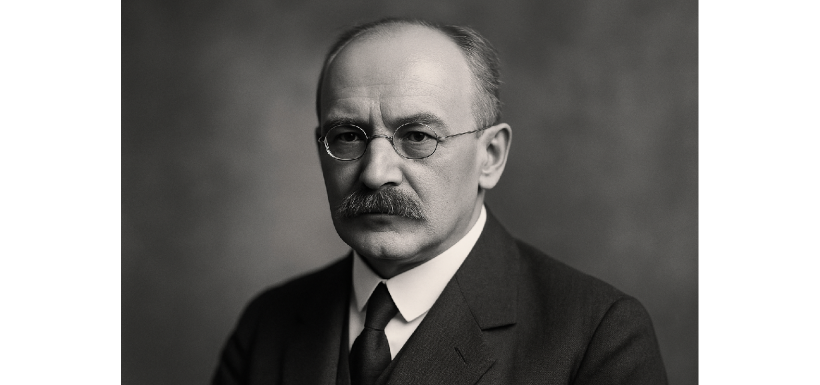
When Marconi first sent those faint signals across the Atlantic, it wasn't just a triumph of engineering; it was a profound puzzle for physicists. How on earth did those radio waves actually travel so far, seemingly clinging to the curve of our planet? It was a question that baffled many and sparked intense scientific debate. One of the key figures who dedicated himself to unravelling this mystery, to understanding the intricate dance between radio waves and the Earth itself, was Jonathan Zenneck, a German physicist and electrical engineer. As we continue our "Pioneers of Radio" series, we'll explore the life and work of this meticulous researcher, whose theoretical insights and influential writings helped to shape our understanding of how those invisible signals make their journey.
Early Life and Academic Foundations: From Zoology to Physics
Jonathan Adolf Wilhelm Zenneck was born in Ruppertshofen, Württemberg, Germany, in 1871. His early academic path took a rather interesting, and perhaps unexpected, turn. He studied mathematics and natural sciences at the University of Tübingen, and his doctorate, awarded in 1894, was actually in zoology – for research on embryos of a particular snail! It's a fascinating reminder that scientific curiosity can lead down many paths, and sometimes a grounding in one discipline can bring a unique perspective to another. I often wonder if his early work in the natural sciences gave him a particular appreciation for careful observation and the complexities of the physical world.
Whatever the reason, Zenneck soon shifted his focus squarely to physics. A pivotal moment in his early career was his time as an assistant to Ferdinand Braun in Strasbourg. Now, Braun is another giant on our list of pioneers, famous for his work on the cathode ray oscilloscope and his contributions to early radio transmitters (sharing the Nobel Prize with Marconi). Working alongside Braun would have been an incredible learning experience, immersing Zenneck in the cutting edge of electrical and wave physics. It was during this formative period that his lifelong interest in wireless telegraphy truly ignited.
The Enigma of Ground Wave Propagation: The Zenneck Wave
By the early 1900s, radio was a reality, but the how and why of its long-distance capabilities were still being fiercely debated. How did signals travel beyond the horizon? The problem of explaining radio wave propagation around the Earth's curvature was a major challenge.
Jonathan Zenneck dived headfirst into this enigma. He conducted detailed theoretical analyses of how electromagnetic waves behave when they travel along the interface between two different media – for example, between the air and the conductive surface of the Earth or seawater.
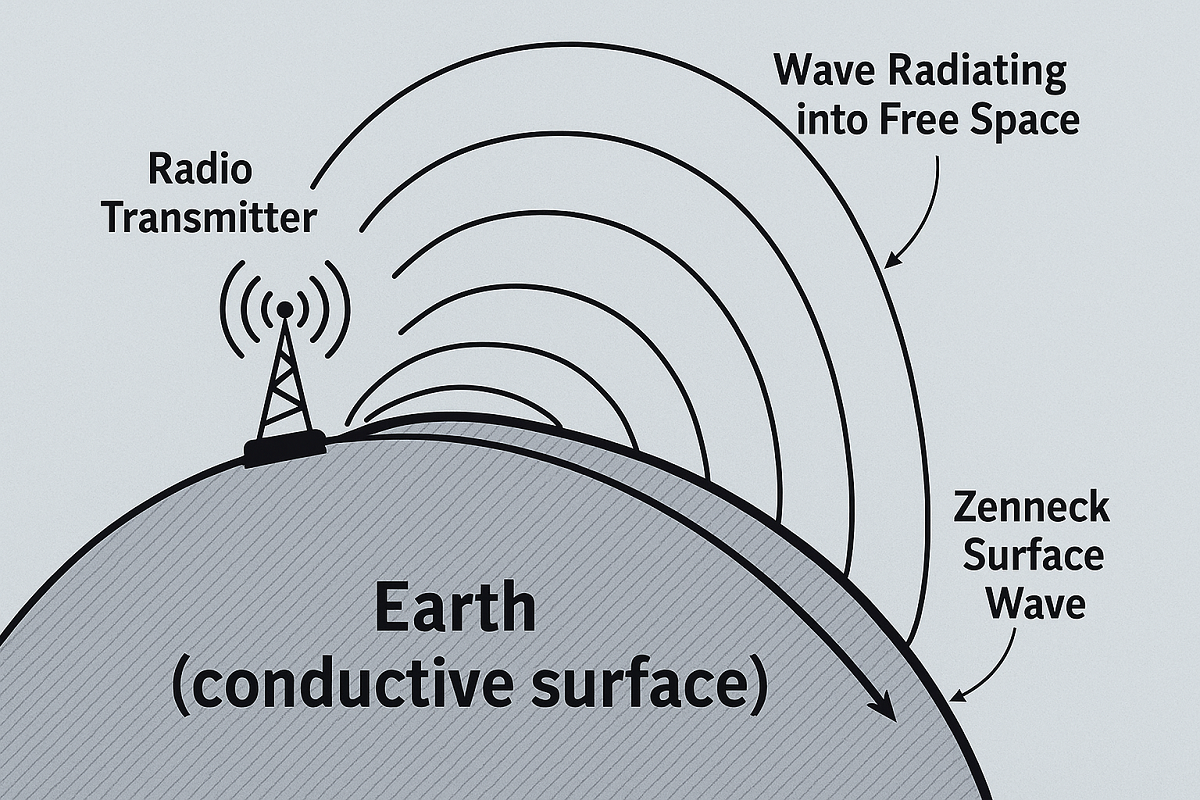
In 1907, he published a significant theoretical paper predicting the existence of a specific type of electromagnetic wave that could be guided along such an interface. This became known as the "Zenneck surface wave". Unlike waves that radiate freely into space, the Zenneck wave, as he described it, was a non-radiating wave, tightly bound to the surface, almost "clinging" to it. Theoretically, under certain ideal conditions (like a perfectly flat, highly conductive surface), this type of wave could propagate efficiently over long distances with less attenuation than a wave travelling through space.
It's important to note that Zenneck's theoretical surface wave was distinct from the more general and comprehensive analysis of ground wave propagation over a finitely conducting Earth that Arnold Sommerfeld would publish a couple of years later, in 1909 (we covered Sommerfeld in a previous post). They were contemporaries, both tackling the same fundamental problem, but with different mathematical approaches and focusing on slightly different aspects of the wave behaviour.
Zenneck didn't just theorise; he also conducted experiments to try and verify the existence and properties of these surface waves. However, the practical excitation and definitive identification of a pure Zenneck wave as the dominant mode for long-distance radio communication has been a subject of considerable scientific debate and re-interpretation over many decades. The interaction of radio waves with the Earth is incredibly complex, involving ground waves, skywaves (reflections from the ionosphere), and various surface effects. It turns out that unravelling it all isn't always straightforward! The debate itself shows how science progresses – through theory, experiment, discussion, and refinement.
Influential Author and Educator: Spreading the Wireless Word
Beyond his specific research on wave propagation, Jonathan Zenneck played an absolutely crucial role as an educator and author. In 1901, he published what would become a hugely influential textbook: Leitfaden der drahtlosen Telegraphie (which translates to Handbook or Guide to Wireless Telegraphy).
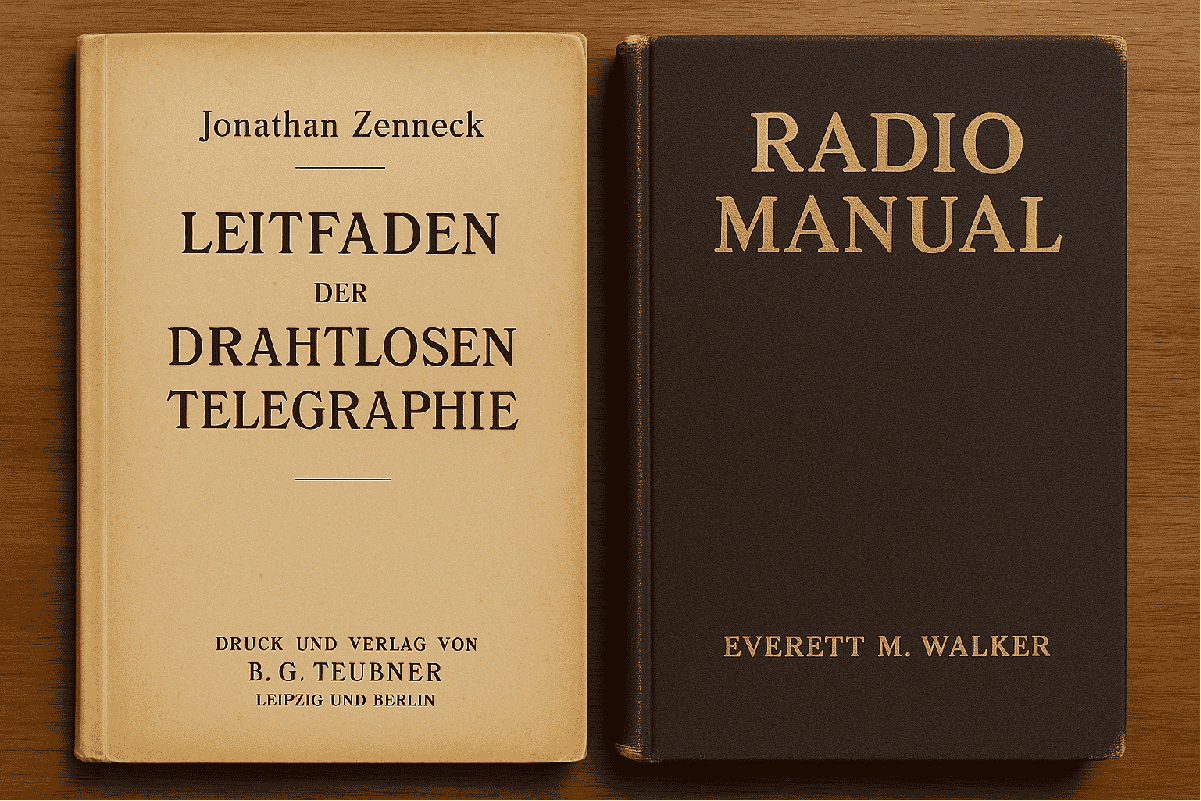
This book was a landmark publication. In the early days of radio, knowledge was often fragmented, held by individual inventors or scattered across various scientific papers. Zenneck's Leitfaden was one of the very first comprehensive, systematic, and authoritative textbooks covering the principles and practice of wireless technology. It brought together the theory of electromagnetic waves, the design of transmitters and receivers, antenna systems, and practical measurement techniques.
The impact of this book cannot be overstated. It was translated into English (as "Wireless Telegraphy") and other languages, becoming a standard reference work for students, engineers, and researchers around the world. I bet many early radio amateurs and budding wireless engineers poured over its pages, absorbing the foundational knowledge they needed to understand and contribute to this exciting new field. It helped to codify the existing knowledge and disseminate it widely, accelerating the development of radio technology.
Zenneck's influence as an educator extended throughout his long and distinguished academic career. He held professorships at various prominent technical universities in Germany, including Braunschweig, Danzig (now Gdańsk, Poland), and later, in 1913, he succeeded the legendary Wilhelm Röntgen as Professor of Experimental Physics at the University of Munich. He was known as an excellent lecturer and mentored a generation of German radio engineers and physicists, further spreading his expertise and passion for the subject.
Contributions to Cathode Ray Tubes and Other Areas
Given his early work as an assistant to Ferdinand Braun, it's no surprise that Zenneck also made contributions to the development and application of cathode ray tubes (CRTs). Braun, as you'll recall, adapted the CRT into the first cathode ray oscilloscope, a vital tool for visualising electrical waveforms.
Zenneck continued to work with CRTs, exploring their use for various measurements and demonstrations. This could have included improvements to deflection systems, the development of more sensitive fluorescent screens, or innovative ways to use the CRT as a measuring instrument in radio research. For instance, being able to visually observe the waveform of a radio signal was a huge step forward in understanding and optimising transmitters and receivers.
His broad expertise also touched upon other important areas of early radio. He conducted research on radio direction finding (RDF), a critical application that allowed ships and, later, aircraft to determine their location using radio signals. And, like many radio pioneers, he would have been involved in early studies of the ionosphere, the electrically charged layers in the upper atmosphere that reflect radio waves and enable long-distance shortwave communication. Understanding the ionosphere was becoming increasingly important as radio operators pushed for greater and greater communication ranges.
Synergies with Ham Radio: Understanding the Path
Jonathan Zenneck's work, though often highly theoretical, has several important connections and resonances with the world of amateur radio:
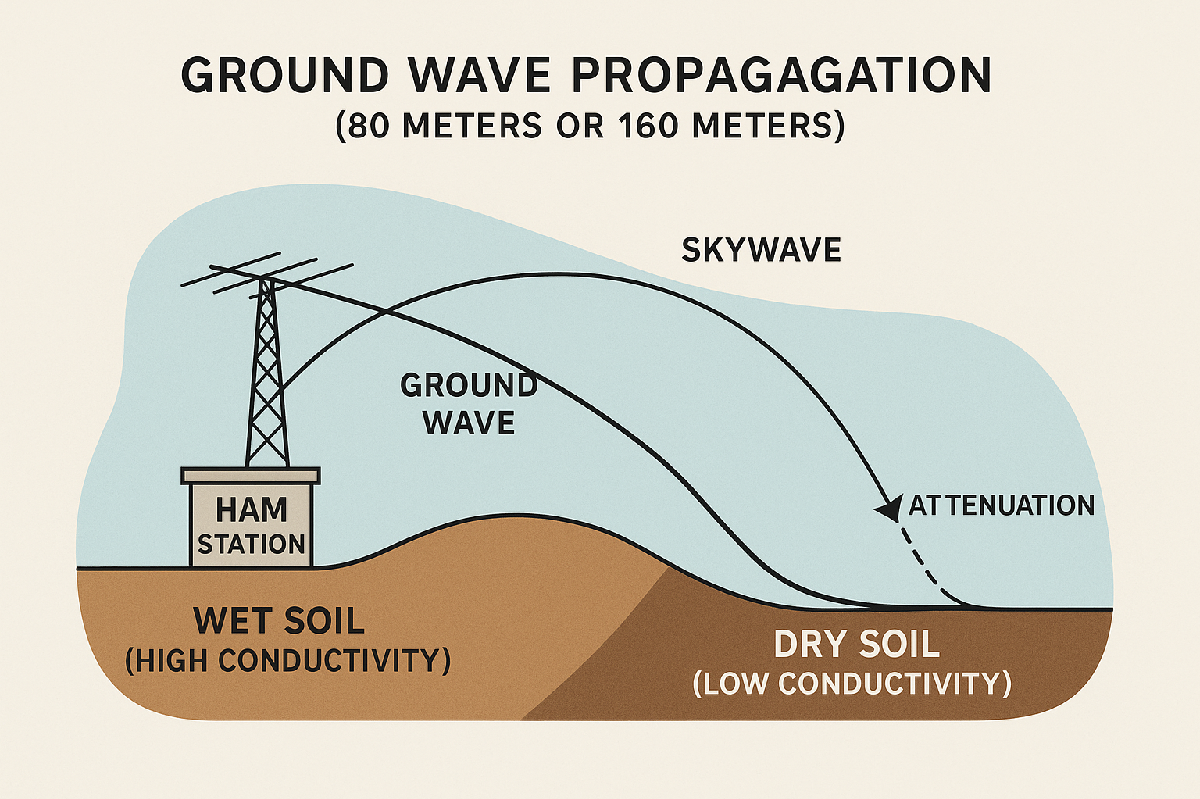
- Ground Wave Importance: His research into how radio waves interact with the Earth's surface is directly relevant to hams, especially those operating on the lower frequency bands like 160 metres, 80 metres, and the Top Band. On these frequencies, the ground wave is a primary mode of propagation for reliable regional communication, day or night. Understanding how ground conductivity affects these signals is crucial.
- The Earth's Influence: Zenneck's work underscores a fundamental truth that every ham who has ever set up an antenna knows: the ground beneath your aerial matters! Its electrical properties significa ntly affect your antenna's performance, its radiation pattern, and how well your signals travel.
- Textbook Knowledge: His influential Leitfaden helped to educate the very first generation of radio engineers and experimenters. Some of these individuals would undoubtedly have been among the earliest amateur radio operators, and Zenneck's book would have provided them with the foundational knowledge they needed to build their own equipment and understand the principles of wireless.
- The Ongoing Quest: The scientific debates and evolving understanding surrounding concepts like the Zenneck surface wave illustrate that even fundamental aspects of radio propagation can be complex and subject to ongoing scientific inquiry. This spirit of investigation, of wanting to understand how things really work, is something that many hams share deeply.
Later Life, World Events, and Legacy
Jonathan Zenneck's long career spanned a tumultuous period in German and world history. His work would inevitably have been impacted by World War I and World War II. Interestingly, he was actually on a research visit to the United States when World War I broke out and was briefly interned as an enemy alien before being allowed to return to Germany.

A significant chapter in his later life was his role as Director of the Deutsches Museum in Munich. He took on this prestigious position in 1925 and led the museum, one of the world's oldest and largest science and technology museums, for many years, navigating it through the difficult period leading up to and during the Second World War, and overseeing its post-war reconstruction. This demonstrates his deep commitment to science education and the preservation of technological heritage. It's quite a shift from pure research to museum directorship, but it speaks to his broad vision.
Zenneck received numerous honours and awards for his scientific contributions throughout his life. He passed away in Munich in 1950, leaving behind a rich legacy of research, teaching, and public service.
Conclusion: Unravelling Radio's Earthly Path
Jonathan Zenneck was one of those essential figures who didn't just build the radios, but helped us understand exactly how those invisible signals made their journey across the Earth. His theoretical and experimental work on radio wave propagation, particularly his investigations into ground waves and surface waves, provided crucial insights during the formative years of wireless technology. His hugely influential textbook, Leitfaden der drahtlosen Telegraphie, educated a generation and helped to establish a common body of knowledge for the new field of radio engineering. While the precise nature of the "Zenneck wave" remains a topic of nuanced scientific discussion, his overall contribution to unravelling the complexities of how radio waves interact with our planet is undeniable. He was a meticulous researcher, a dedicated educator, and a true pioneer who helped chart the path for the wireless age.
What are your thoughts on Jonathan Zenneck's work? How important do you think these detailed theoretical investigations are compared to the more famous "invention" moments? Let me know in the comments below! And, as always, if you have suggestions for other "Pioneers of Radio" that you'd like to see featured, don't hesitate to share.
For more information please visit our online store or alternatively contact us and we'll be happy to assist you!