
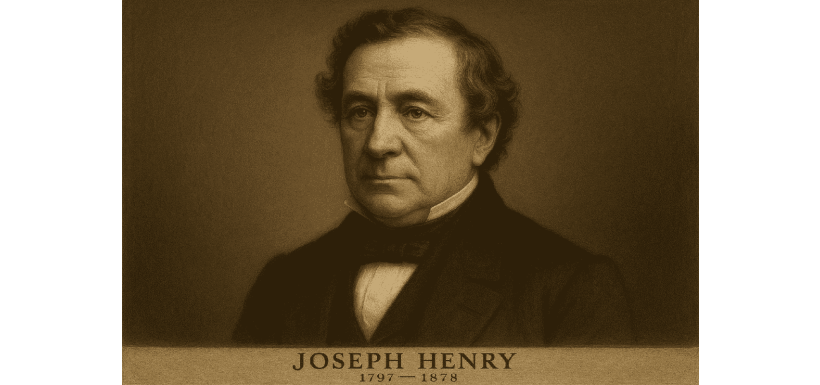
Every piece of radio equipment we use, from the simplest crystal set to the most advanced software-defined transceiver, is a marvel of engineering. But beneath the complex circuits and clever software lies a foundation of pure physics – a deep understanding of coils, magnets, and the invisible dance of electricity. Before anyone could dream of sending a signal across the airwaves, someone first had to master the mysterious force of electromagnetism itself. Today in our 'Pioneers of Radio' series, we meet Joseph Henry, an American scientist whose fundamental discoveries in this field were so crucial that he's often been called 'America's Faraday'. He wasn't a "radio" inventor in the modern sense, but his work on inductance and electromagnetism is the absolute bedrock upon which all radio frequency (RF) engineering is built.
Early Life and the Spark of Curiosity
Joseph Henry was born in Albany, New York, in 1797 to a humble family of Scottish immigrants. His early life was marked by hardship; his father passed away when he was young, and he was sent to live with relatives. He began an apprenticeship as a watchmaker and silversmith, a trade that, while he didn't pursue it for long, likely gave him excellent practical skills and an appreciation for fine, detailed work.
His path towards becoming one of America's foremost scientists began, charmingly, by complete accident. The story goes that as a teenager, while chasing a rabbit, he found a hole under the floorboards of a village church. Peeking inside, he discovered a collection of books. One of them, titled Lectures on Experimental Philosophy, Astronomy, and Chemistry, captured his imagination completely. That chance encounter with a book, found while chasing a rabbit, ignited in him a lifelong passion for knowledge and set him firmly on a scientific path. I just love that story; it’s a wonderful reminder that inspiration can strike in the most unexpected of places!
Driven by this newfound passion, he enrolled at The Albany Academy, where he excelled. He later became a professor of mathematics and natural philosophy at the same institution, setting up a laboratory where he would conduct the experiments that would make his name.
Mastering Magnetism: The Powerful Electromagnet
In the 1820s, electromagnetism was the hottest topic in science. It was known that an electric current could create a magnetic field, but the early electromagnets were incredibly weak, little more than scientific curiosities. This is where Henry made his first major breakthrough.
Building on the work of the English scientist William Sturgeon, Henry dramatically improved the electromagnet. His key innovation was brilliantly simple but transformative: he used insulated wire. At the time, experimenters were using bare copper wire, which meant they could only wrap a single, spaced-out layer around an iron core before the current would short-circuit. Henry, using silk from his wife's petticoats to insulate the wire, was able to wrap hundreds, even thousands, of tightly packed turns around the core. This multiplied the effect of the current, creating electromagnets of unprecedented power.
He also made a crucial theoretical distinction between two types of magnets:
- "Quantity" magnets:
- "Intensity" magnets:
These used a few turns of thick wire (or several thick wires connected in parallel) and were powered by a single large battery cell. They were designed for maximum magnetic lifting power right next to the battery.
These used a single, long, thin wire of many turns and were powered by a multi-cell battery (a "trough" battery). Henry realised this design was perfect for being activated by a weak current sent over a very long wire.
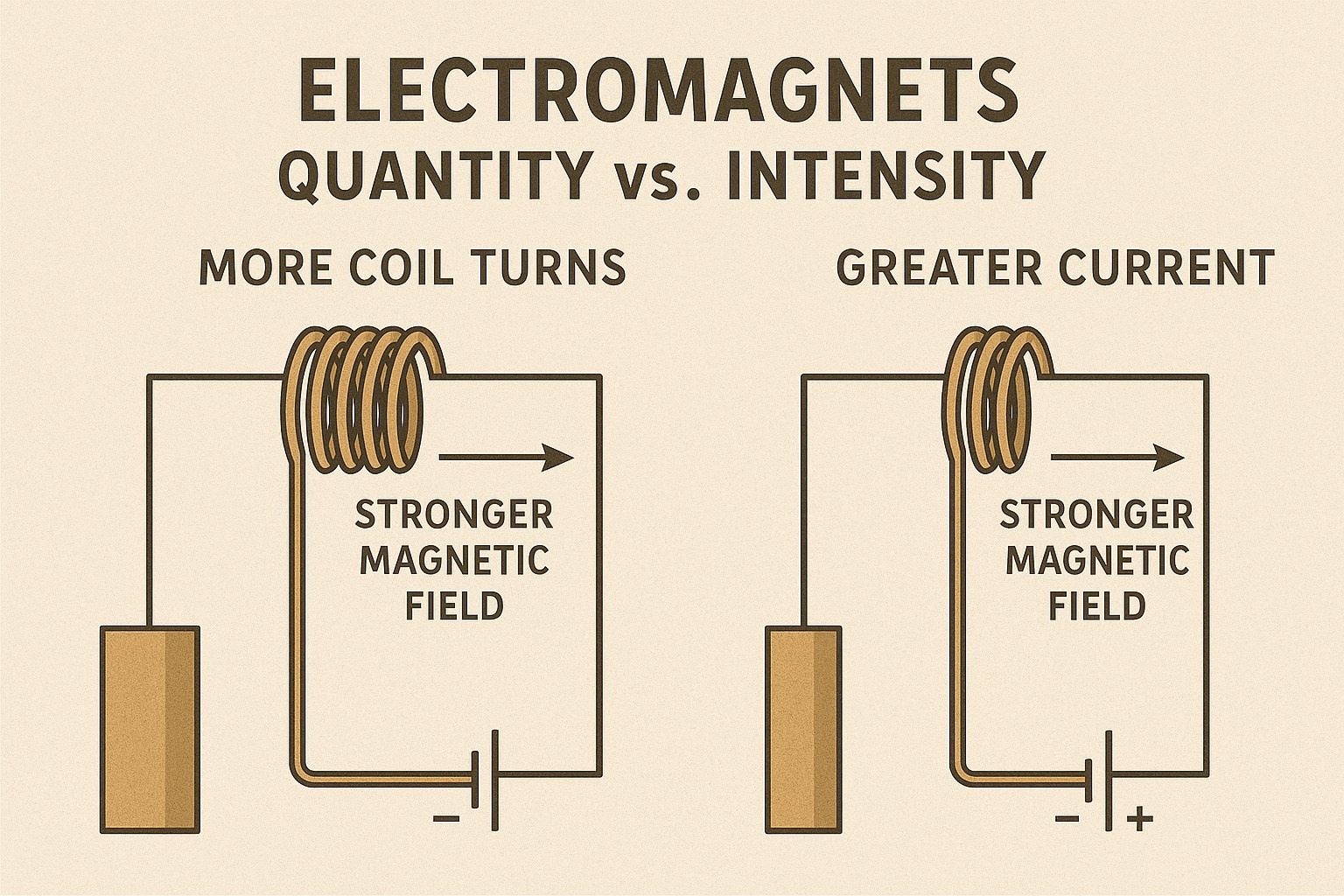
To demonstrate his work, in 1831 he built a colossal electromagnet for Yale University that could lift over 2,000 pounds (nearly a ton!). This wasn't just about building a bigger magnet; it was a powerful demonstration of a new principle of design that made him a scientific celebrity.
The Telegraph and the Discovery of Inductance
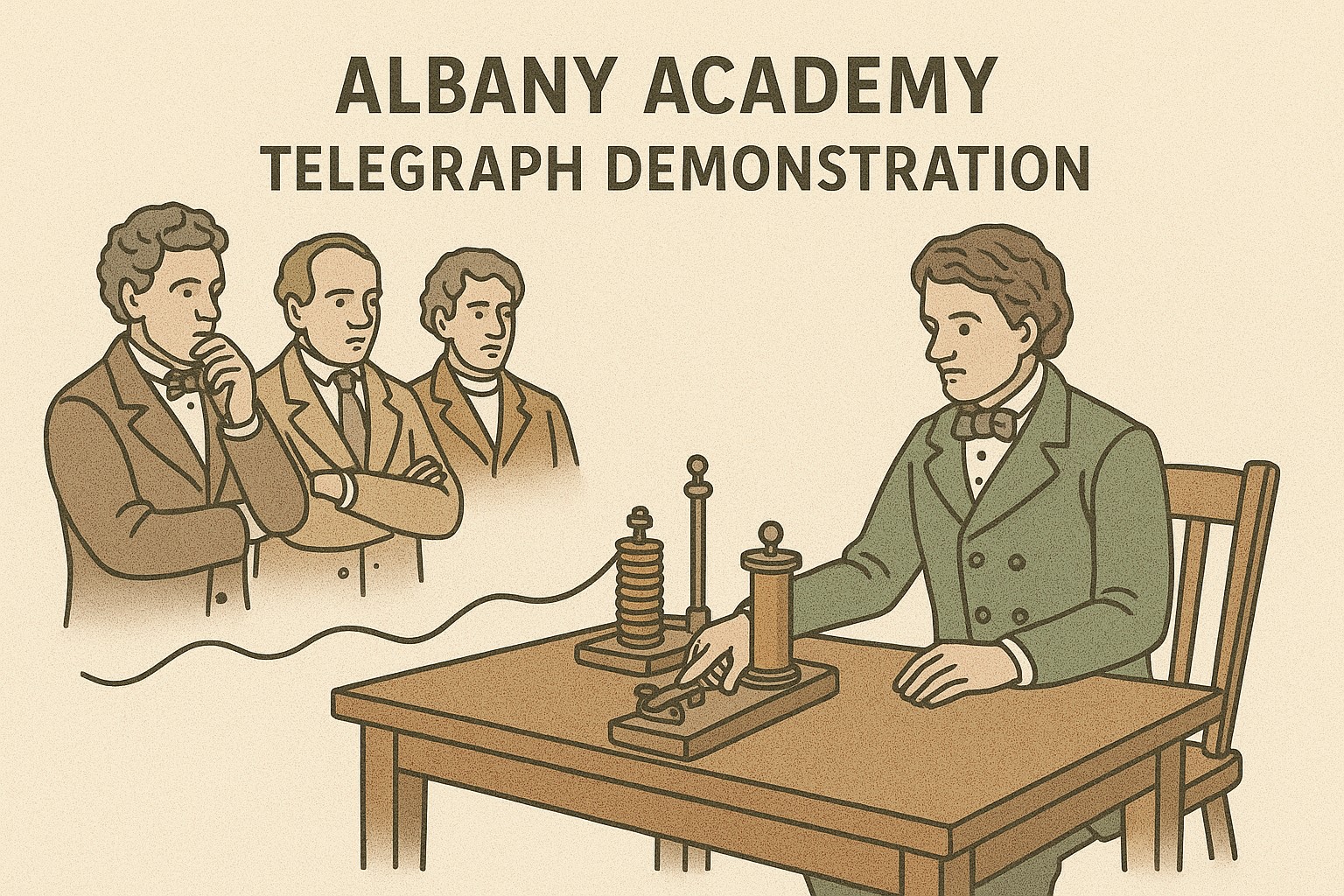
That "intensity" magnet was the key to his next great achievement. In 1831, years before Samuel Morse entered the scene, Joseph Henry demonstrated the first practical electromagnetic telegraph. At The Albany Academy, he strung over a mile of wire around a large lecture hall. He sent a small current down this long wire, which activated his "intensity" electromagnet at the other end. The magnet, when energised, caused a small steel bar to pivot and strike a bell. He had successfully sent a signal over a long distance and used it to create an audible sound.
This is a crucial point in his story. Henry was a pure scientist. His goal was to discover and demonstrate the principles of nature. He published his findings freely for the benefit of the scientific community and made no attempt to patent his telegraph. Samuel Morse, who later consulted with Henry, was the savvy inventor and entrepreneur who took these principles, developed a practical code, and commercialised the technology. It's a classic tale in the history of science, isn't it? The pure researcher makes the breakthrough, and the savvy inventor turns it into a commercial success.
It was during these telegraph experiments that Henry made the discovery that is most fundamental to radio theory. He observed that when he disconnected a long coil of wire from a battery, it produced a much brighter and more dramatic spark than when he disconnected a short wire. He deduced, with brilliant insight, that the coil's own magnetic field, created by the current flowing through it, induced a "back-voltage" in the wire that tried to keep the current flowing. This property, where a coil of wire resists any change in the current flowing through it, he called self-inductance.
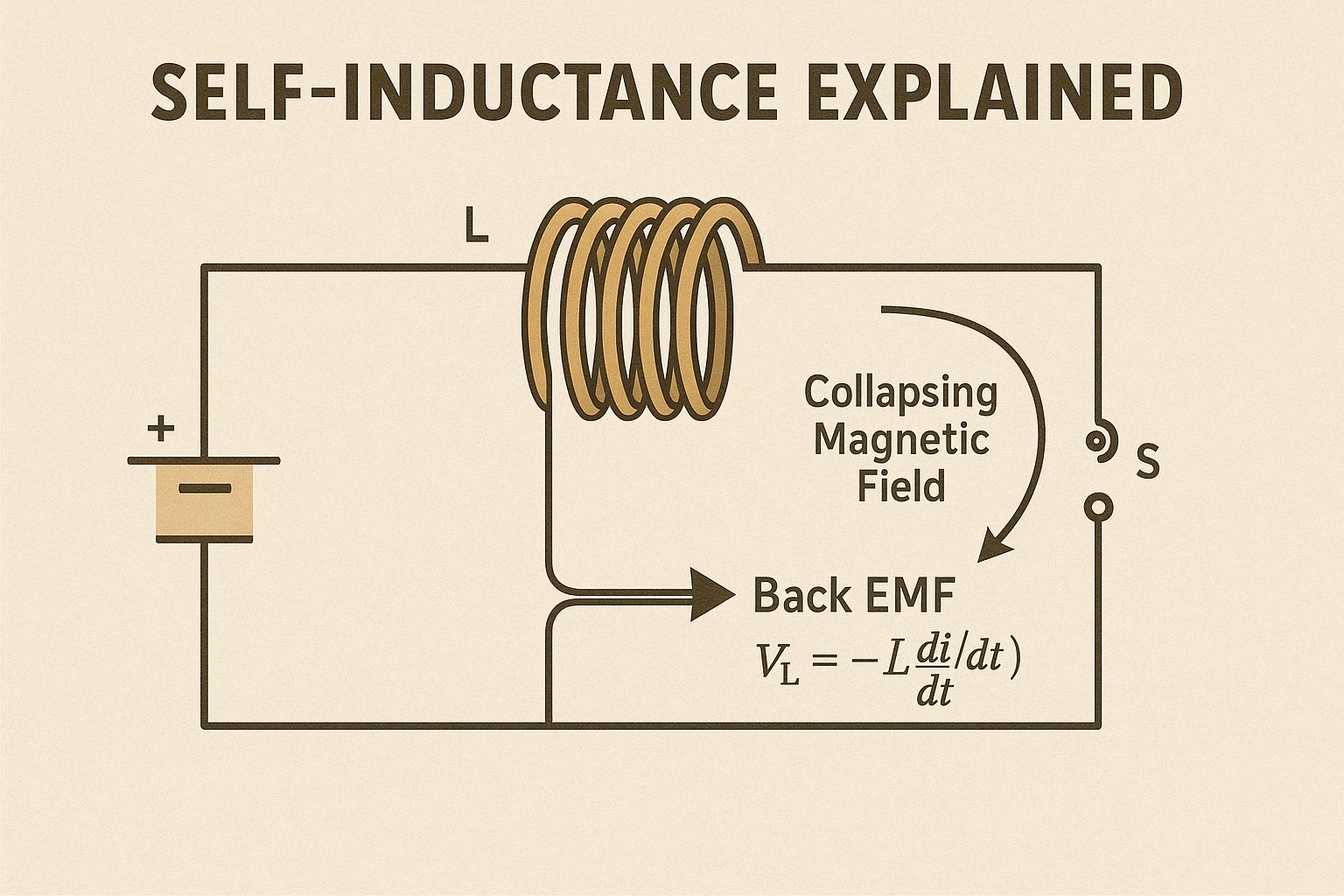
This discovery was monumental. Self-inductance is one of the fundamental properties of electrical circuits, alongside resistance and capacitance. In recognition of his foundational work, the standard unit of inductance is named the Henry (H) in his honour.
Mutual Inductance and Transformers
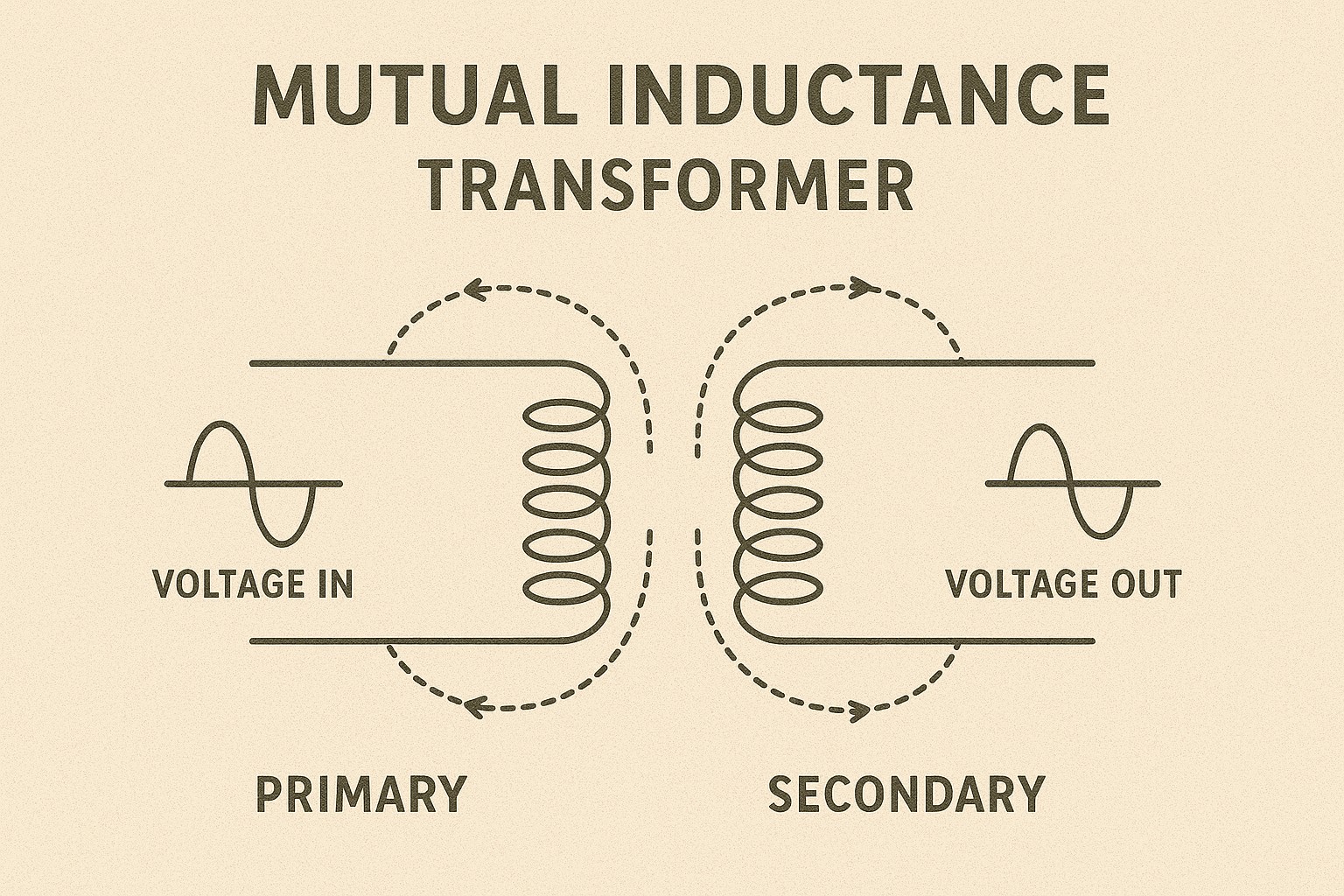
Henry's deep dive into electromagnetism didn't stop there. Around the same time, he also independently discovered the principle of mutual inductance. He showed that a changing current in one coil of wire could induce a current in a second, completely separate coil placed nearby, with no physical connection between them. The English scientist Michael Faraday made the same discovery around the same time and published his results first, so he generally gets the credit, but it's clear Henry had also mastered the concept.
This principle of mutual inductance is, of course, the fundamental operating principle of the electrical transformer. Henry built early devices that could use one coil to induce a higher or lower voltage in another, a technology that is essential for everything from national power grids to the power supply in every radio rig.
The Smithsonian Institution: A Leader of American Science
In 1846, Henry's reputation as America's foremost scientist was so great that he was appointed the first Secretary of the newly founded Smithsonian Institution in Washington, D.C. He shaped the institution's mission, envisioning it not just as a museum to house curiosities, but as a major centre for scientific research and the dissemination of knowledge for the public good.
In one of his most remarkable projects at the Smithsonian, he established a vast network of volunteer weather observers across the country. These observers would telegraph their daily weather data to the Smithsonian, where it was used to create the first national weather maps. This system was the direct forerunner of the U.S. National Weather Service.
Synergies with Ham Radio: The DNA of RF
Joseph Henry's work is not just a historical footnote for radio amateurs; it is the very DNA of the technology we use every day. The concept of inductance, which he discovered and named, is absolutely fundamental to everything we do.
- Tuned Circuits:
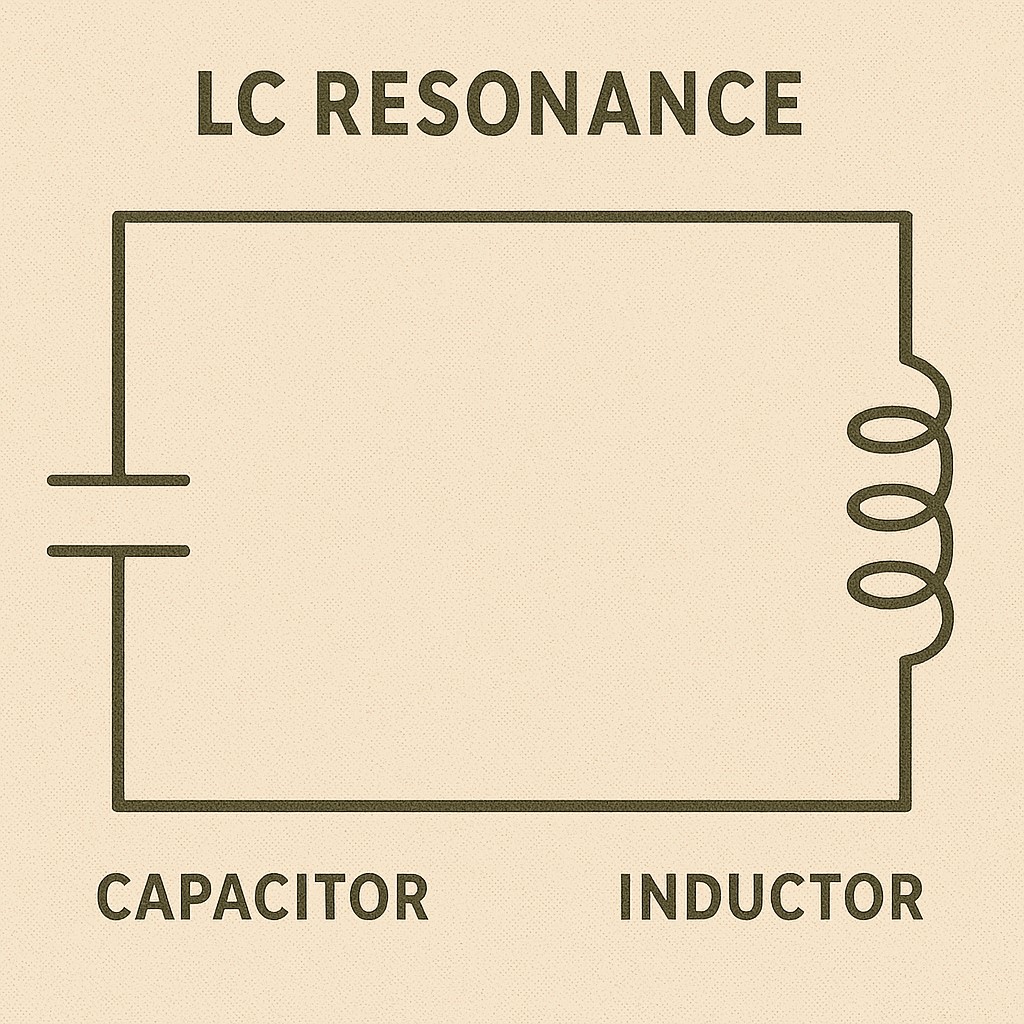
Every tuned circuit (LC circuit) in a radio, from the VFO that sets our frequency to the sharp filters that give us selectivity, is a partnership between an inductor (a coil) and a capacitor. The very concept of resonance in radio circuits depends on inductance.
- Antenna Tuners:
- RF Chokes:
- Antennas:
The heart of most antenna tuners, the component that allows us to match our transmitter to our antenna, is a variable inductor.
An RF choke, used to block radio frequency currents from going where we don't want them, is simply an inductor.
The electrical properties of many antennas, particularly wire antennas and verticals, are defined by their inherent inductance and capacitance.
Furthermore, the principles of mutual inductance he explored are at work in the power supply transformers that run our equipment, the RF transformers used for impedance matching, and the baluns that connect our feedlines to our antennas. Even the simple electromagnetic relay, which he pioneered with his telegraph demonstration, is a component still used in countless aspects of ham radio, from antenna switching to amplifier keying. He was the man who discovered and explained the properties of the very components that are the basic building blocks of every radio circuit.
Legacy and Conclusion: The Unsung Giant
Joseph Henry passed away in 1878. His legacy is that of one of America's greatest 19th-century scientists, a man often and rightly compared to Michael Faraday for his foundational work in electricity and magnetism. He was a champion of pure research and the open, free sharing of scientific knowledge, a philosophy that stood in contrast to the more commercial, patent-focused approach of many inventors of his era.
Joseph Henry wasn't trying to invent the radio; he was trying to understand the universe. But in his quest to understand the fundamental relationship between electricity and magnetism, he discovered the very principles that make radio possible. Every coil in every rig, every tuner on every desk, every relay in every amplifier owes a debt to his pioneering work. He is a true giant of science, upon whose shoulders every radio engineer and enthusiast stands.
What are your thoughts on Joseph Henry's legacy? How important is the work of pure scientists in paving the way for practical inventions? Let me know in the comments below! And, as always, if you have suggestions for other "Pioneers of Radio" that you'd like to see featured, don't hesitate to share.
For more information please visit our online store or alternatively contact us and our team will be happy to assist you!