
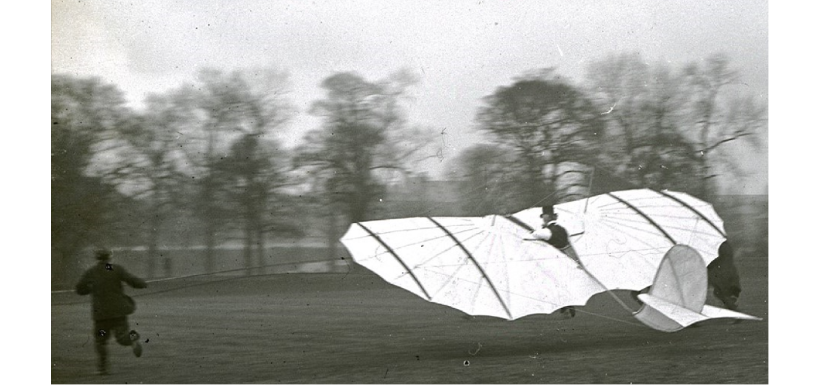
The Pioneers of Radio: Karl Ferdinand Guthe – The Radio Wave Measurer
Before radio waves could be harnessed for communication, they had to be understood. And understanding meant measurement. In the early, experimental days of wireless telegraphy, scientists and engineers were grappling with a mysterious, invisible phenomenon. They needed ways to quantify its properties, to measure its frequency, its wavelength, its speed. One of the pioneers who dedicated himself to this crucial task was a German-American physicist named Karl Ferdinand Guthe. As we continue our "Pioneers of Radio" series, we'll meet a man whose name might not be as familiar as Marconi or Tesla, but whose meticulous work on measurement and his contributions to early receiver design were absolutely essential for laying the groundwork for the radio age.
Early Life and Education: A Transatlantic Journey
Karl Eugen Guthe (who later anglicized his name to Karl Ferdinand) was born in Hanover, Germany, in 1866. Details about his family life are relatively scarce, but his academic path clearly indicates a strong aptitude for science. He embarked on a rigorous course of study, attending the universities of Strasbourg, Berlin, and Marburg. In 1892, he received his Ph.D. from the University of Marburg, with a dissertation focusing on a topic that, in hindsight, seems almost prophetic: the properties of electrical discharges. This was a field that was intimately connected to the emerging understanding of electromagnetic waves.
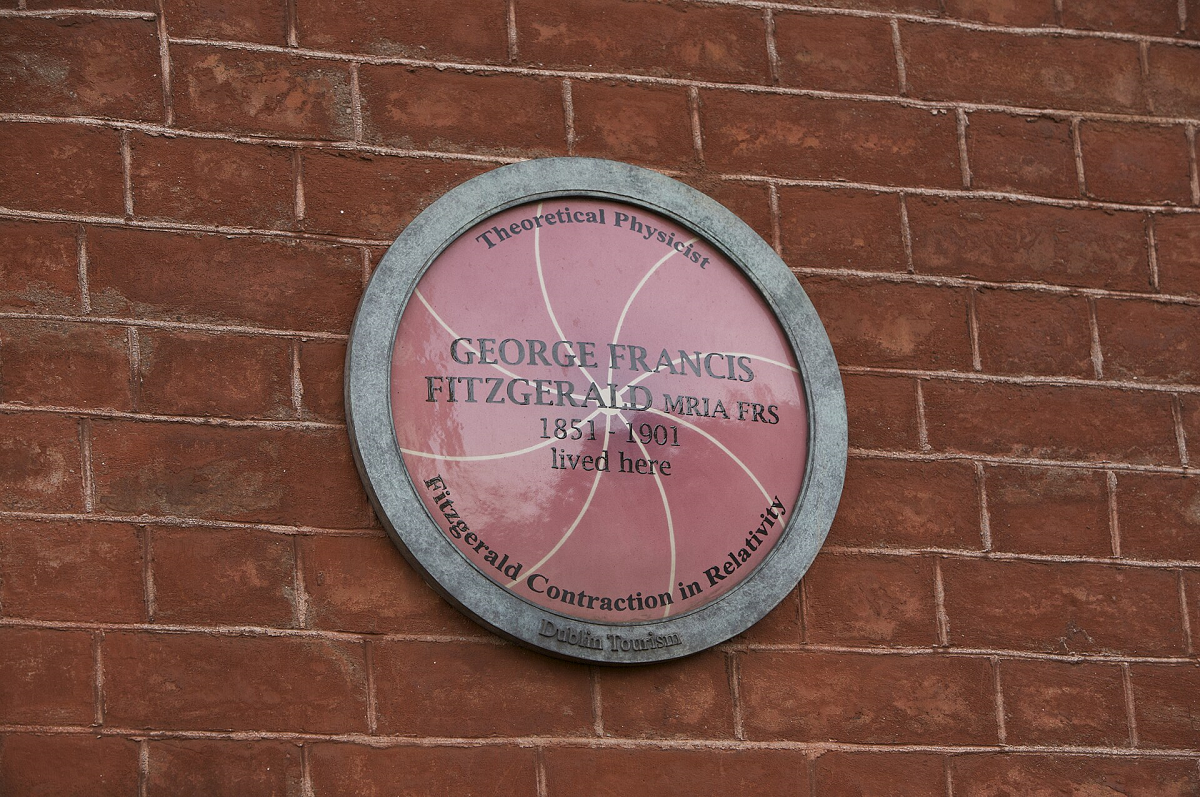
Image: George Francis Fitzgerald Plaque, Dublin
Like many ambitious young scientists of the time, Guthe made the transatlantic journey to the United States, seeking opportunities in a nation that was rapidly becoming a hub of technological innovation. This move would prove to be a defining moment in his career, placing him at the heart of the developing radio scene.
Academic Career and the National Bureau of Standards: A Life Dedicated to Precision
Guthe's early career in the United States was marked by a series of academic appointments. He served as an instructor and later as a professor of physics at the University of Michigan, where he established a reputation as a dedicated teacher and a meticulous experimentalist. He then moved to the State University of Iowa, further solidifying his academic credentials.
But in 1903, Guthe made a move that would significantly shape his contributions to the field of radio. He joined the newly established National Bureau of Standards (NBS) in Washington, D.C. (now known as the National Institute of Standards and Technology, or NIST). The NBS was created with a crucial mission: to develop and maintain national standards of measurement. In a rapidly industrializing nation, accurate and reliable standards were essential for everything from manufacturing to scientific research.
At the NBS, Guthe became a key figure in the Electrical Division. He focused on developing and maintaining standards for electrical quantities like resistance, capacitance, and inductance. This might sound a bit dry, but it was foundational work. Imagine trying to build a complex electronic device without precise standards for these basic components. It would be like trying to build a house without a reliable measuring tape! Guthe's work at the NBS ensured that engineers and scientists across the country had a common, accurate framework for their measurements.
Measuring the Invisible: Guthe's Contributions to Radio Wave Research
As radio technology emerged, the NBS recognized the need to extend its standardization efforts to this new field. And Karl Guthe, with his expertise in electrical measurement, was perfectly positioned to take on this challenge.
One of the most fundamental tasks in early radio research was to measure the frequency or wavelength of radio waves. Remember, these waves are invisible; you can't see them or hear them directly. You need specialized instruments to detect and measure their properties.
Guthe became a leading figure in the development and improvement of wave meters. A wave meter, in its simplest form, is a resonant circuit – a combination of an inductor and a capacitor – whose resonant frequency can be adjusted and calibrated. When the wave meter is brought near a source of radio waves, it will resonate (show a strong response) when its resonant frequency matches the frequency of the waves. By carefully calibrating the wave meter, engineers could determine the frequency of an unknown radio signal.
Guthe's contributions to wave meter design were significant. He worked on improving their accuracy, stability, and ease of use. He also developed methods for calibrating wave meters against known standards, ensuring that measurements made in different laboratories could be compared and trusted. This work was essential for the orderly development of radio communication. Without accurate frequency measurements, it would have been impossible to allocate frequencies to different users, to avoid interference, and to design receivers that could be tuned to specific stations. He also, importantly, conducted experiments to measure the velocity of radio waves, working to confirm the theoretical predictions made by James Clerk Maxwell decades earlier.
Beyond wave meters, Guthe also contributed to other areas of radio wave measurement. He investigated methods for measuring signal strength, antenna characteristics, and the properties of different materials used in radio circuits. His work was characterized by a meticulous attention to detail and a commitment to accuracy. He understood that reliable measurements were the foundation upon which the entire edifice of radio technology would be built.
Early Radio Receivers: From Coherers to Crystals
Guthe's expertise wasn't limited to measuring radio waves; he also contributed to the development of early radio receivers. In the early days of wireless telegraphy, the most common type of detector was the coherer, a device that relied on the change in electrical resistance of metal filings when exposed to radio waves.
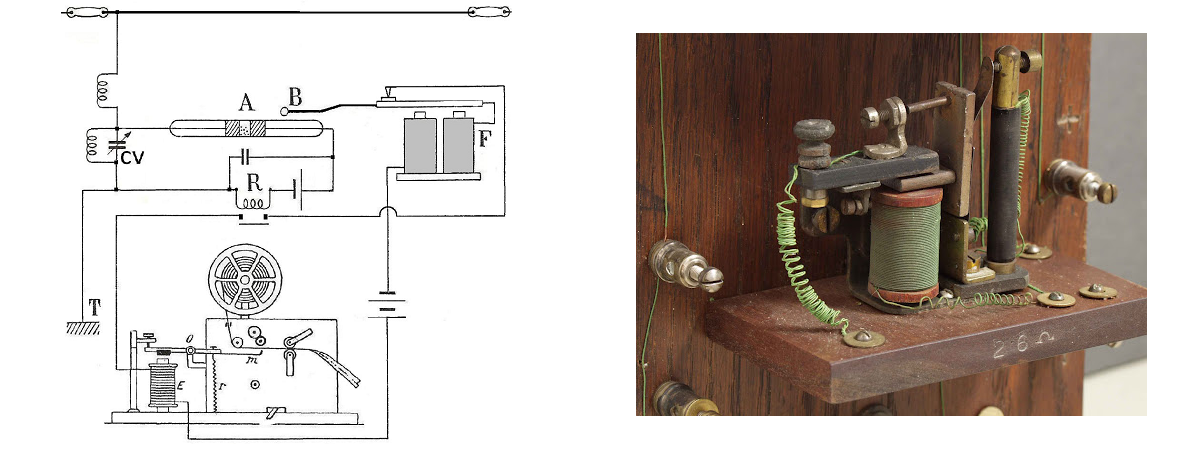
Image: Coherer (Source)
He published a paper in 1903 on a modified form of the coherer. Guthe's version used aluminium and mercury, and was considered to be an improvement on existing coherer designs.
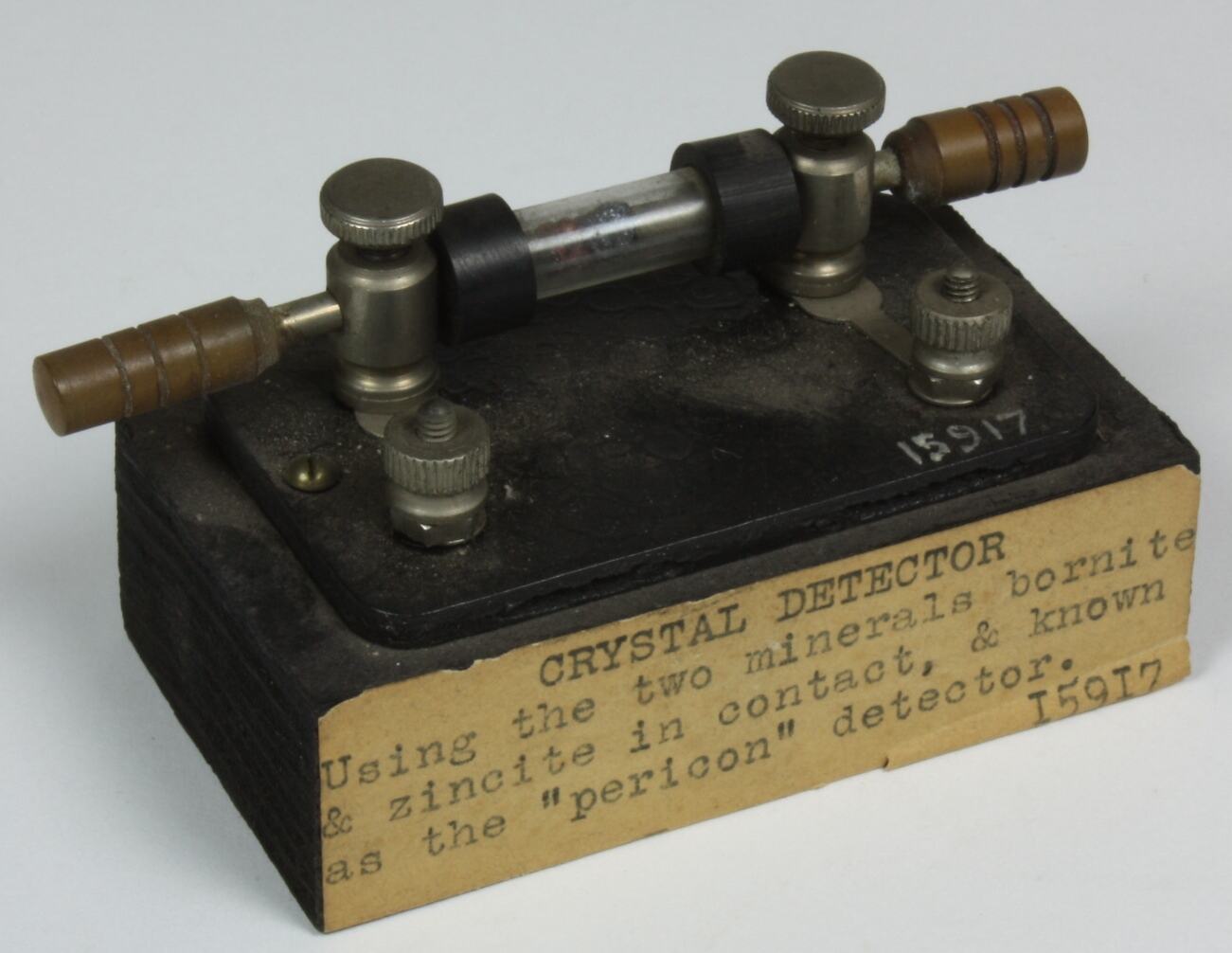
Image: Crystal Detector (Source)
Guthe also recognised the limitations of the coherer. They weren't very reliable, and they were not good at picking up weaker signals. As a result, he would also work on the development of crystal detectors. He was involved in the testing of early crystal detectors, working with materials like silicon and carborundum. These detectors, while not capable of amplification, were more sensitive and stable than coherers, and they played a crucial role in the transition to more sophisticated receiver designs.
Legacy and the Foundations of Radio Science
Karl Ferdinand Guthe passed away in 1914, at the relatively young age of 48, cutting short a career that had already made significant contributions to the burgeoning field of radio. His early death meant that he didn't witness the full flowering of radio broadcasting and the many technological advancements that followed.
But his legacy is undeniable. His work on the precise measurement of radio waves, his contributions to the development of electrical standards, and his involvement in early receiver design helped to lay the groundwork for the radio age. He was a pioneer in bridging the gap between theoretical physics, as established by Maxwell and Hertz, and the practical application of radio technology.
He published extensively, and was active in the scientific community, presenting his research at conferences and collaborating with other researchers. He was highly respected by his peers for his meticulous experimental work and his deep understanding of electrical phenomena.
Conclusion: The Importance of Getting the Fundamentals Right
Karl Ferdinand Guthe's story is a reminder that scientific and technological progress often depends on the unsung heroes, the individuals who work diligently behind the scenes, focusing on the fundamental principles and the essential details. He was a measurer, a standardizer, a meticulous experimentalist. He wasn't driven by a desire for fame or fortune, but by a passion for understanding and quantifying the physical world.
His work may seem abstract and technical to the casual observer, but it was absolutely crucial for the development of radio. Without accurate measurements of frequency, wavelength, and signal strength, the early pioneers of wireless communication would have been working in the dark. Guthe helped to bring light to that darkness, providing the precise measurements and the reliable standards that were needed to transform radio from a scientific curiosity into a practical and powerful technology. He made the invisible visible, and in doing so, he helped to lay the foundation for the radio age.
What are your thoughts on Karl Ferdinand Guthe and the importance of measurement in science and technology? Do you know of any other unsung heroes who contributed to the early development of radio? Share your comments below! And, as always, if you have suggestions for other "Pioneers of Radio" that you'd like to see featured, don't hesitate to let me know.
For more information please visit our online store or alternatively contact us, our team will be happy to assist you.