
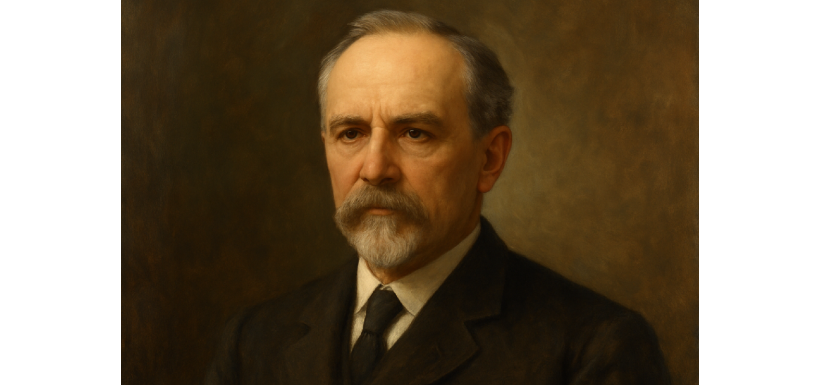
When Marconi first startled the world by sending signals across the Atlantic, it wasn't just a triumph of engineering; it was a gauntlet thrown down to the physicists and engineers of the day. How exactly did those signals travel so far? Was it just luck? What factors affected their strength? While some delved into pure theory, others rolled up their sleeves and started measuring, meticulously collecting data to understand the often-capricious nature of radio waves. Today in our "Pioneers of Radio" series, we meet Louis Winslow Austin, an American physicist who became a leading figure in empirically understanding and predicting long-distance radio wave propagation. His work provided the essential practical knowledge that engineers desperately needed in the early days of global wireless communication.
Early Life and Scientific Grounding: From Vermont to Strasbourg
Louis Austin was born in Orwell, Vermont, in 1867. His academic journey took him from Middlebury College in his home state to the prestigious University of Strasbourg in Germany, where he earned his Ph.D. in physics in 1893. Strasbourg, at that time, was a significant centre for scientific research in Europe, and studying there would have exposed Austin to rigorous experimental methods and the latest thinking in physics. I always admire those who travel far for their education; it shows a real dedication to their chosen field.
After his doctorate, Austin spent some time as an instructor at the University of Wisconsin and then undertook further research at the Physikalisch-Technische Reichsanstalt in Berlin, a leading German national institution for science and technology. This period in Germany, working alongside some of Europe's top physicists, undoubtedly honed his experimental skills and deepened his understanding of electrical phenomena.
The National Bureau of Standards and the Call of the Navy
In 1904, Austin returned to the United States and joined the National Bureau of Standards (NBS) in Washington, D.C. The NBS, as we've seen with other pioneers like Karl Guthe, played a crucial role in establishing accurate measurement standards, which were vital for the burgeoning electrical and radio industries. At the NBS, Austin was involved in radio research, likely focusing on standardising measurement techniques and investigating the properties of radio waves.
However, a really significant chapter in his career began in 1908 when he was appointed head of the U.S. Naval Radio Telegraphic Laboratory. He would remain associated with naval radio research for the rest of his career, eventually becoming the Director of a special laboratory dedicated to radio transmission research. The US Navy, like navies worldwide, had an urgent need for reliable, long-distance wireless communication for its fleet. This practical imperative provided the driving force and the resources for much of Austin's most important work. It’s often these real-world needs that push scientific boundaries, isn't it?
Charting the Airwaves: Long-Distance Propagation Studies
This is where Louis Austin truly made his mark. He wasn't so much an inventor of new devices, but a meticulous, systematic investigator of how radio waves actually behave over long distances. At the time, the theory of radio wave propagation, especially around the curvature of the Earth and through the atmosphere, was still developing and incomplete. Engineers needed practical, reliable data to design effective long-distance radio links.
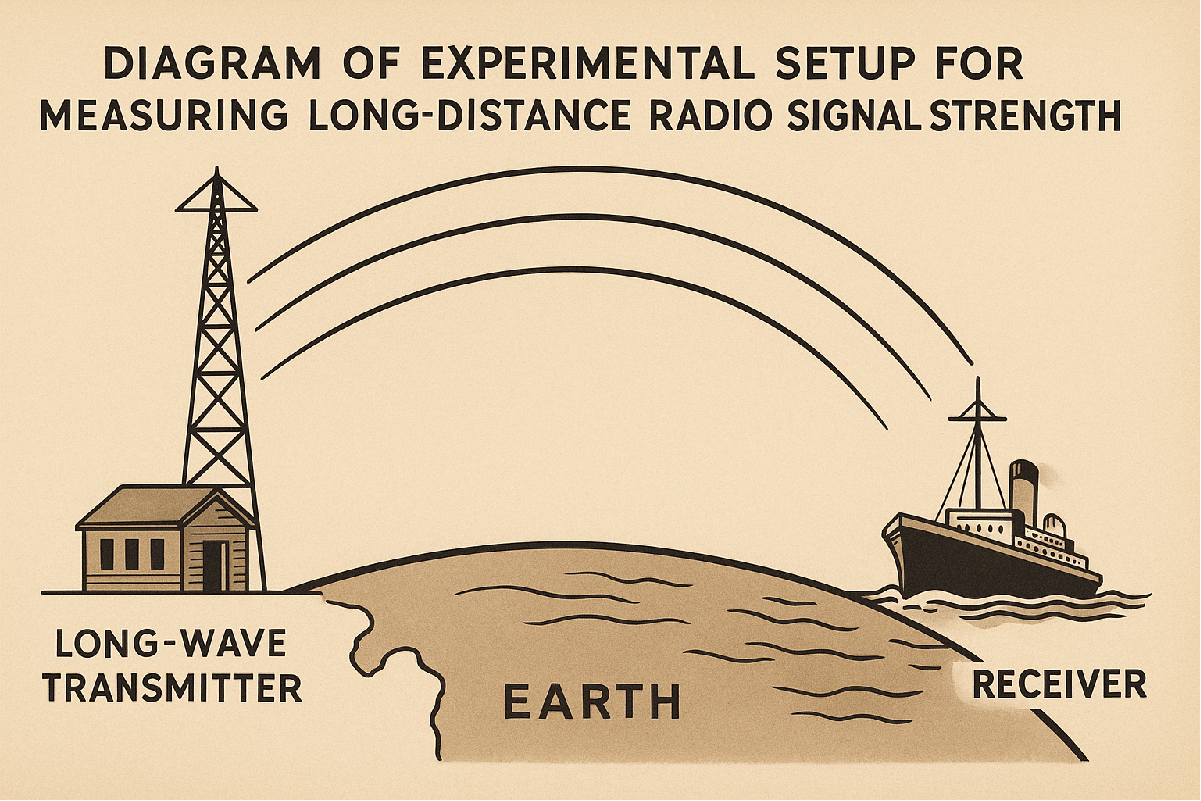
Austin embarked on an extensive series of experiments to measure the strength of radio signals received from distant transmitters. This wasn't just a case of setting up a receiver and seeing what came in; it involved careful calibration of equipment, systematic recording of data over long periods, and painstaking analysis.
He conducted crucial experiments receiving signals across the Atlantic from powerful longwave stations like Nauen in Germany and even the Eiffel Tower in Paris. To gather more data, he equipped US Navy ships with receiving apparatus and had them take signal strength measurements at various distances from transmitting stations as they sailed across the ocean. Can you imagine the logistics? Coordinating these experiments, ensuring accurate measurements at sea – it must have been a monumental undertaking in the early 1900s.
The Austin-Cohen Formula: A Practical Guide for Engineers
From this wealth of experimental data, Austin, working with his assistant Dr. Louis Cohen, developed what became known as the Austin-Cohen formula. First proposed around 1911 and refined in subsequent years, this was an empirical formula. That means it was derived from observed data rather than purely from theoretical first principles.
The Austin-Cohen formula allowed engineers to predict the received signal strength over long distances, taking into account factors such as:
- The power of the transmitter.
- The heights of the transmitting and receiving antennas.
- The distance between the transmitter and receiver.
- The frequency (or wavelength) of the radio waves.
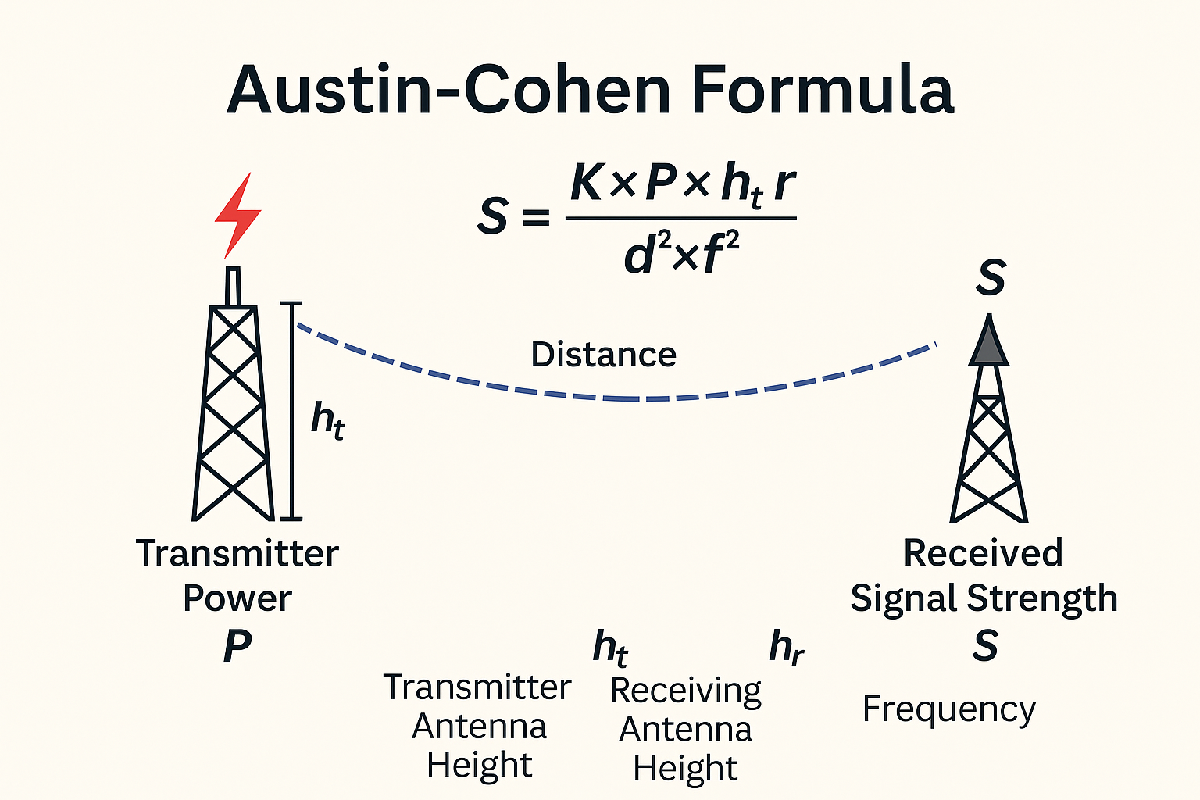
This might not sound as revolutionary as inventing a new vacuum tube, but for the radio engineers of the day, it was incredibly important. Purely theoretical models were often too complex or didn't fully account for all the real-world factors affecting propagation. The Austin-Cohen formula, while an approximation, provided a practical, usable tool for designing transmitter powers, antenna heights, and predicting the reliable range of long-wave radio stations. It was one of the first widely accepted methods for engineering long-distance radio links. For anyone trying to build a reliable communication system spanning hundreds or thousands of miles, this formula was gold.
Understanding Atmospherics and Solar Effects
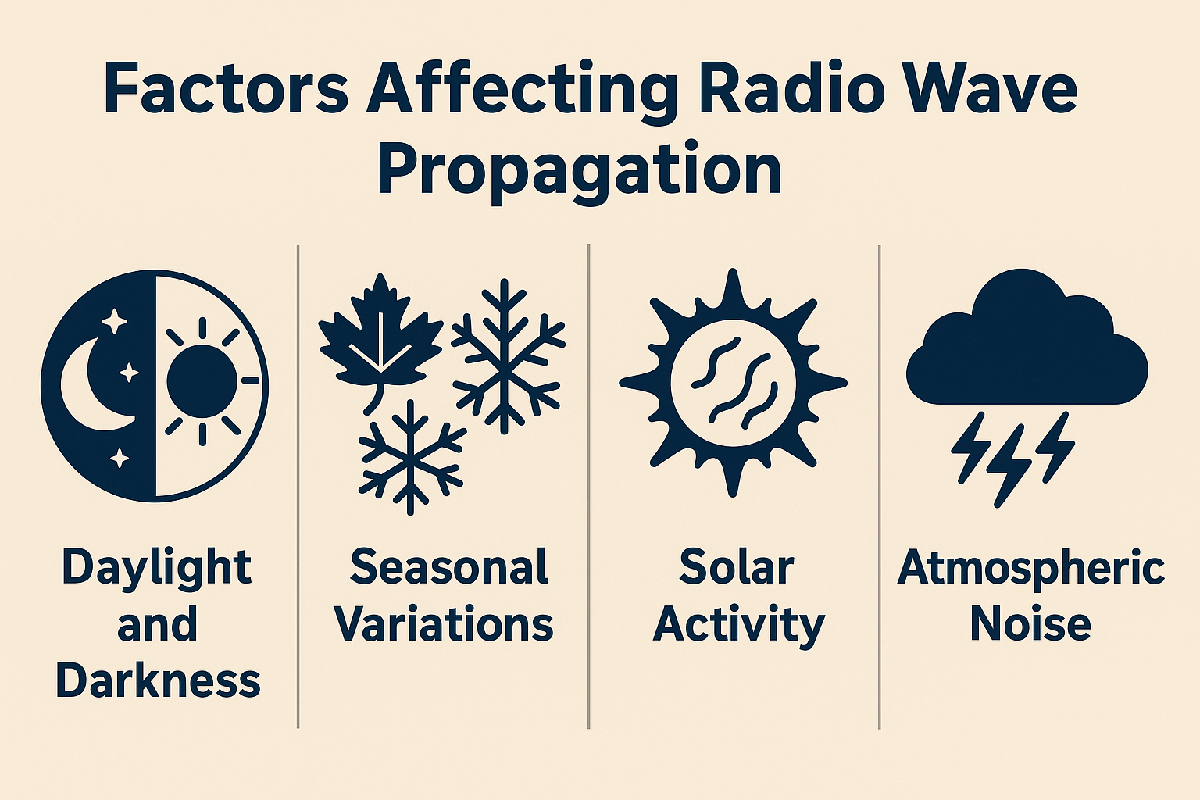
Austin's meticulous measurements didn't just lead to a formula; they also provided valuable insights into the various factors that affect radio wave propagation. He systematically studied the influence of:
- Daylight and Darkness: He observed the well-known phenomenon that radio signals, particularly at lower frequencies, often travel further at night.
- Seasonal Variations: He noted how signal strengths could change with the seasons.
- Solar Activity: He investigated the correlation between solar activity (like sunspots) and changes in radio propagation conditions.
- Atmospheric Noise ("Static"): He also studied the nature and intensity of atmospheric noise, which was a major limiting factor for early radio reception.
This systematic collection and analysis of data helped to build a much clearer picture of the complex interplay between radio waves, the Earth's surface, and the atmosphere. It was pioneering work in what we now call radio propagation science.
Leadership and International Influence
Louis Austin was a respected figure in the international radio community. He served as President of the Institute of Radio Engineers (IRE) in 1914, a testament to his standing among his peers. He was also actively involved in international radio conferences, contributing his expertise to discussions on frequency allocation, standards, and the scientific understanding of radio phenomena. His work was not just confined to the laboratory; he played a role in shaping the global framework for radio communication.
Synergies with Ham Radio: The Propagation Pioneers
For us radio amateurs, Louis Austin's work holds particular relevance:
- Propagation is Everything: As any DXer knows, understanding radio wave propagation is fundamental to making those long-distance contacts. Austin was one of the first to systematically study and quantify these effects. His dedication to understanding "how signals get there" is something every ham can appreciate.
- The Empirical Approach: Hams are often great experimenters. We build antennas, try different setups, and observe what works. Austin's empirical approach – meticulously measuring, collecting data, and deriving practical formulas – mirrors the way many hams learn about and optimize their own stations.
- LF/VLF Interest: The low frequencies (LF) and very low frequencies (VLF) that Austin primarily studied are still used by some amateur radio experimenters today for unique propagation challenges and Earth-Moon-Earth (EME) communication. His work provides historical context for these fascinating parts of the radio spectrum.
Legacy: The Empirical Pioneer
Louis Austin passed away in 1932. His legacy is that of an empirical pioneer, a scientist who provided the crucial experimental data and practical formulas that were essential for the engineering of early long-distance radio communication. At a time when pure theory couldn't always provide all the answers, Austin's meticulous measurements and data-driven approach filled a critical gap. He helped to transform radio from a somewhat unpredictable art into a more predictable engineering discipline.
His work, particularly the Austin-Cohen formula, remained a standard tool for radio engineers for many years, especially for designing long-wave systems. While later theoretical advancements (like our understanding of the ionosphere) provided more complete explanations for long-distance propagation, Austin's empirical findings were foundational.
Conclusion: Charting the Invisible Paths
Louis Austin may not have invented a specific radio component that bears his name, but his contribution was no less vital. He was one of the first "radio surveyors," meticulously charting the invisible paths that radio waves travel across the globe. He provided the data, the formulas, and the practical understanding that allowed engineers to build reliable long-distance communication systems, shrinking our world and connecting continents. His story is a powerful reminder of the crucial role that systematic experimental investigation plays in scientific and technological progress. It’s not always about the flashiest invention; sometimes, it’s about patiently understanding the world around us.
What are your thoughts on the importance of empirical research in radio? Do you have any experiences with long-distance propagation on the lower bands? Share your insights in the comments below! And, as always, if you have suggestions for other "Pioneers of Radio" that you'd like to see featured, don't hesitate to let me know.
For more information please visit our online store or alternatively contact us and our team will be happy to assist you!