

We often think of Marconi as the undisputed 'father of radio,' a single, heroic figure who magically pulled wireless communication out of the ether. But the real history of invention is rarely so simple. It’s a far more complex and fascinating story, filled with brilliant minds exploring different avenues, sometimes hitting technological dead ends, and often being forgotten by the history books. What if I told you that in the rolling hills of Kentucky, a melon farmer and self-taught inventor was transmitting the human voice without wires years before many of the famous names we associate with radio? The story of Nathan Stubblefield is one of the most intriguing and ultimately tragic tales in the history of communication; a story of genuine innovation, missed opportunities, and a fierce, ongoing debate over who truly invented wireless telephony.
The Melon Farmer from Murray: A Self-Taught Inventor
Nathan B. Stubblefield was born in Murray, Kentucky, in 1860. He wasn't a formally trained physicist from a prestigious European university; he was a practical man of the earth, a farmer and a fruit grower. He was, by all accounts, a bit of an eccentric, but also possessed an insatiable curiosity and a remarkable inventive spirit. While his neighbours were tending their crops, Stubblefield was tinkering in his workshop, establishing a private telephone network that connected homes and businesses around the town of Murray. He wasn't just using existing technology; he was constantly trying to improve it.
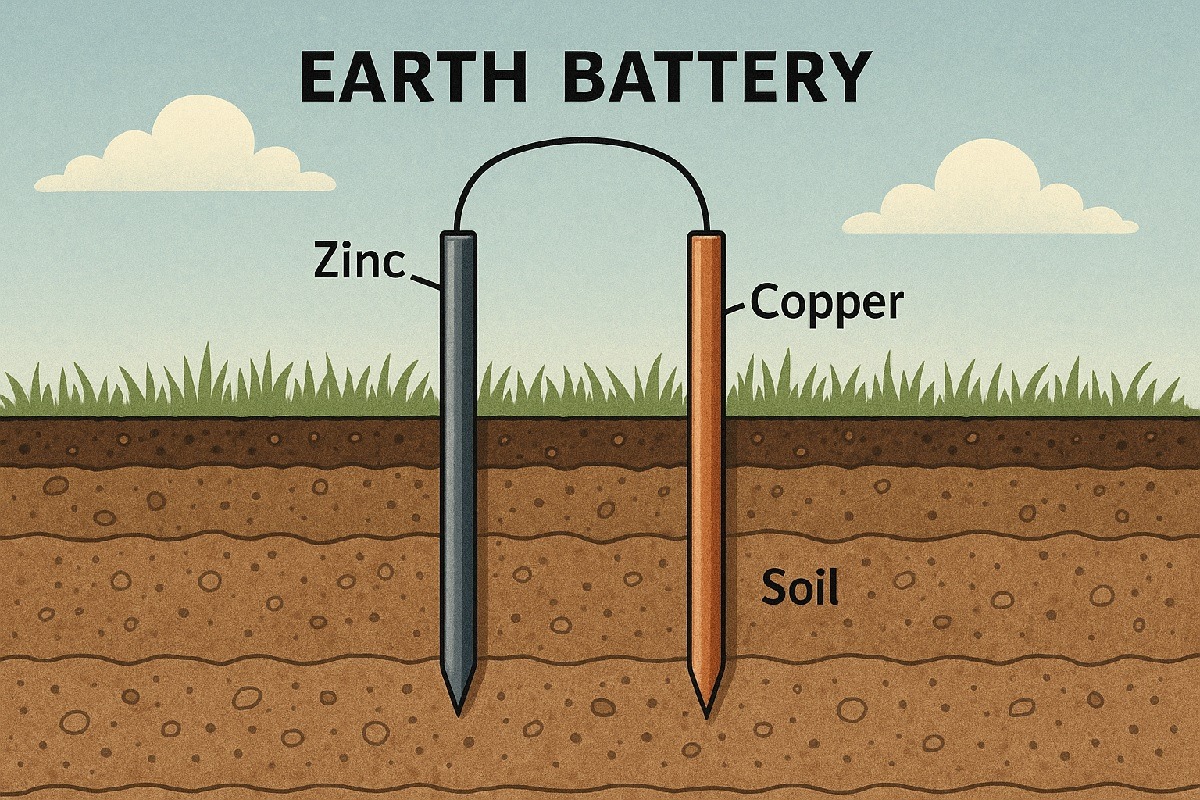
One of his foundational, and frankly quite ingenious, inventions was a unique type of battery. Often called an "earth battery" or "ground cell," it drew a continuous electrical current directly from the moisture and minerals in the soil. He would bury coils of wire and let the natural electrolytic action of the damp earth do the work. This battery was crucial, as it powered his wireless devices without any obvious external power source, adding an air of real mystery to his demonstrations. To onlookers, it must have seemed like he was pulling power directly from the ground itself.
The Wireless Telephone: Speaking Through the Earth
Stubblefield’s primary ambition was clear and far ahead of its time: he wanted to transmit the human voice without wires. He wasn't content with the dots and dashes of telegraphy; he wanted to send speech and music through the air.
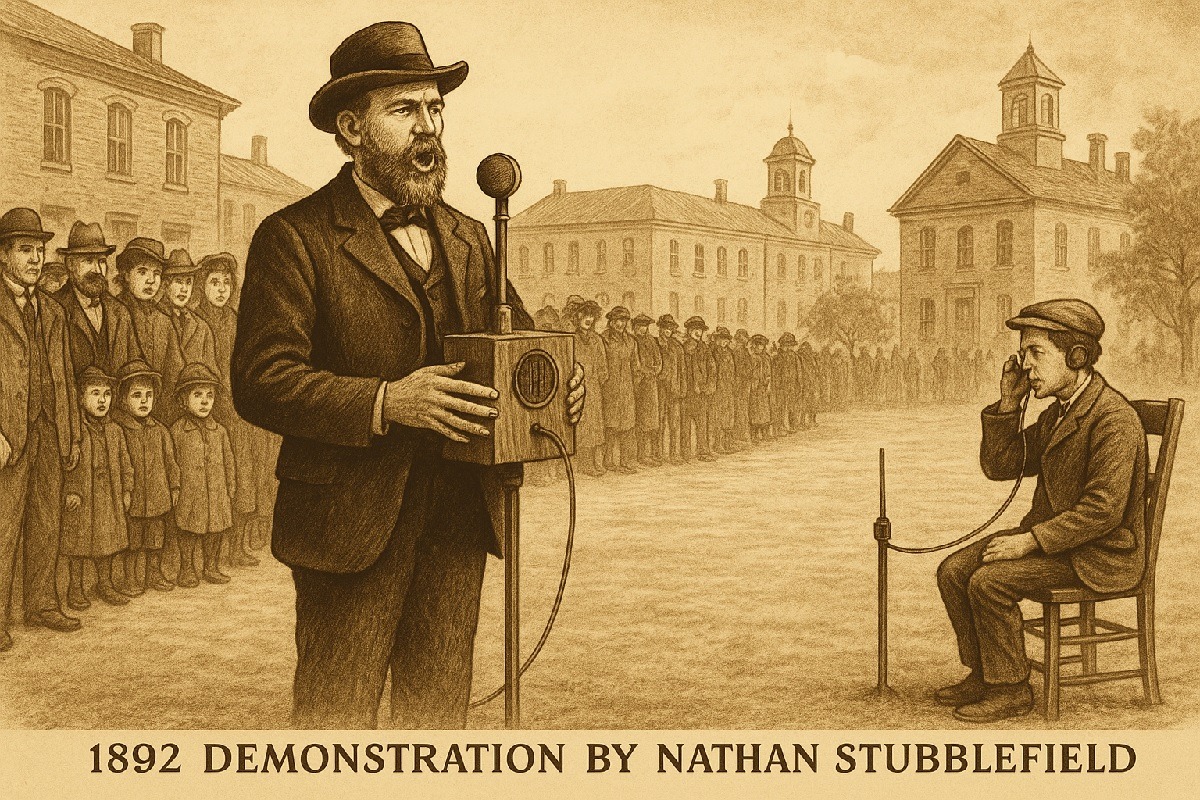
In 1892, he gave a remarkable public demonstration in the town square of Murray. This event is the cornerstone of the claim that he was the true father of broadcasting. According to contemporary accounts, he set up his transmitting device and, to the amazement of the gathered crowd, his son Bernard, positioned several hundred feet away with a receiver, could clearly hear his father's words. It was an astonishing achievement for a self-taught inventor working in rural Kentucky.
But how did it actually work? This is the crucial distinction that separates Stubblefield's work from modern radio. His system did not use Hertzian radio waves that radiate through space. Instead, he relied on two other physical principles:
- Conduction: His primary method involved driving metal rods or coils into the ground. The transmitter would send an audio-frequency electrical current through the soil to the receiver's ground rods. The Earth itself was acting as the transmission medium. Think of it less like a broadcast and more like using the entire planet as a giant, albeit very inefficient, wire.
- Induction: He also patented a system in 1908 that used large induction coils. The transmitter coil would generate a rapidly changing magnetic field, which would then induce a corresponding current in the receiver coil. This is an inductive, or "near-field," effect. It's the same principle used in modern wireless charging pads, but it only works over very short distances.
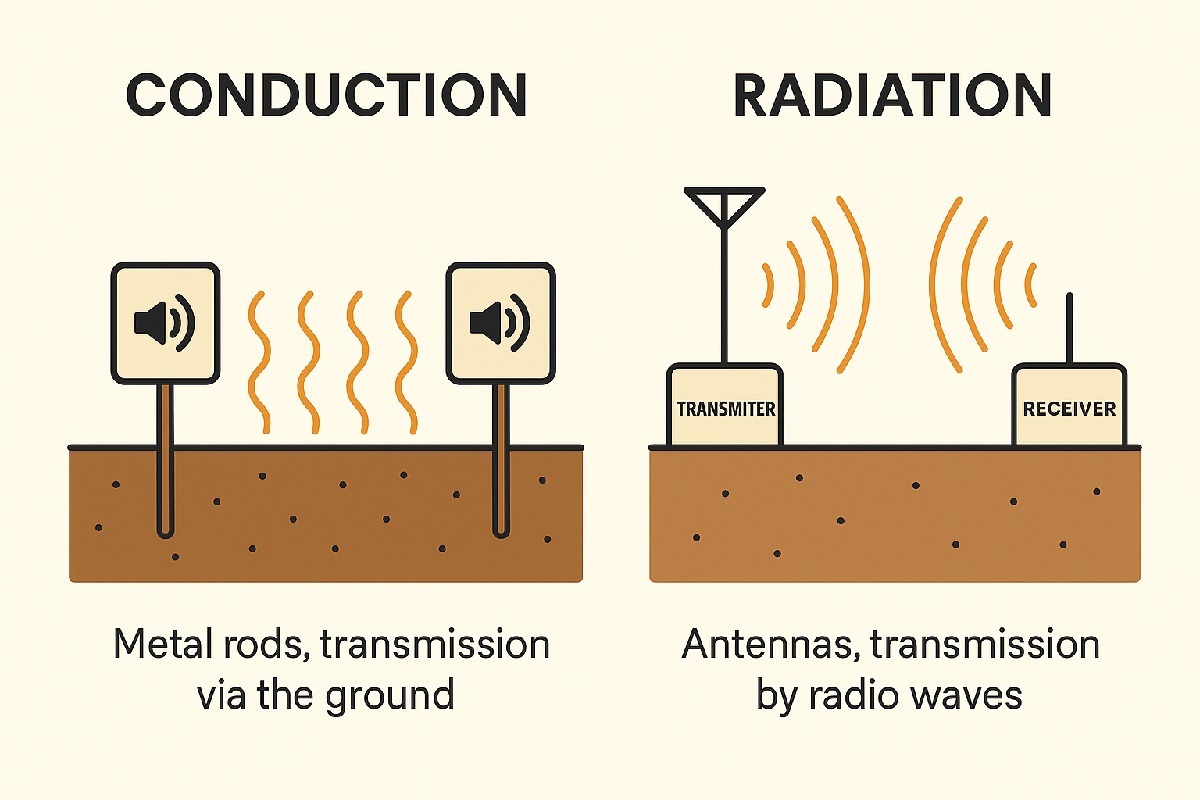
So, while he achieved wireless voice transmission, the technology was fundamentally different from the radio wave propagation pioneered by Marconi, Fessenden, and others. Stubblefield was, quite literally, speaking through the earth.
A Brush with Fame: The Washington and Philadelphia Demonstrations
For a brief period, it seemed that Nathan Stubblefield was on the verge of fame and fortune. In 1902, he took his invention on the road to demonstrate its potential to the wider world.
In March of that year, he held an impressive demonstration in Washington, D.C. He transmitted voice wirelessly from a steamboat, the Bartholdi, moving along the Potomac River, to a receiver on the shore. The event generated significant newspaper coverage, with headlines trumpeting the arrival of wireless telephony. Scientists and potential investors were intrigued. He followed this with another successful demonstration in Philadelphia, transmitting from a ferry on the Delaware River.
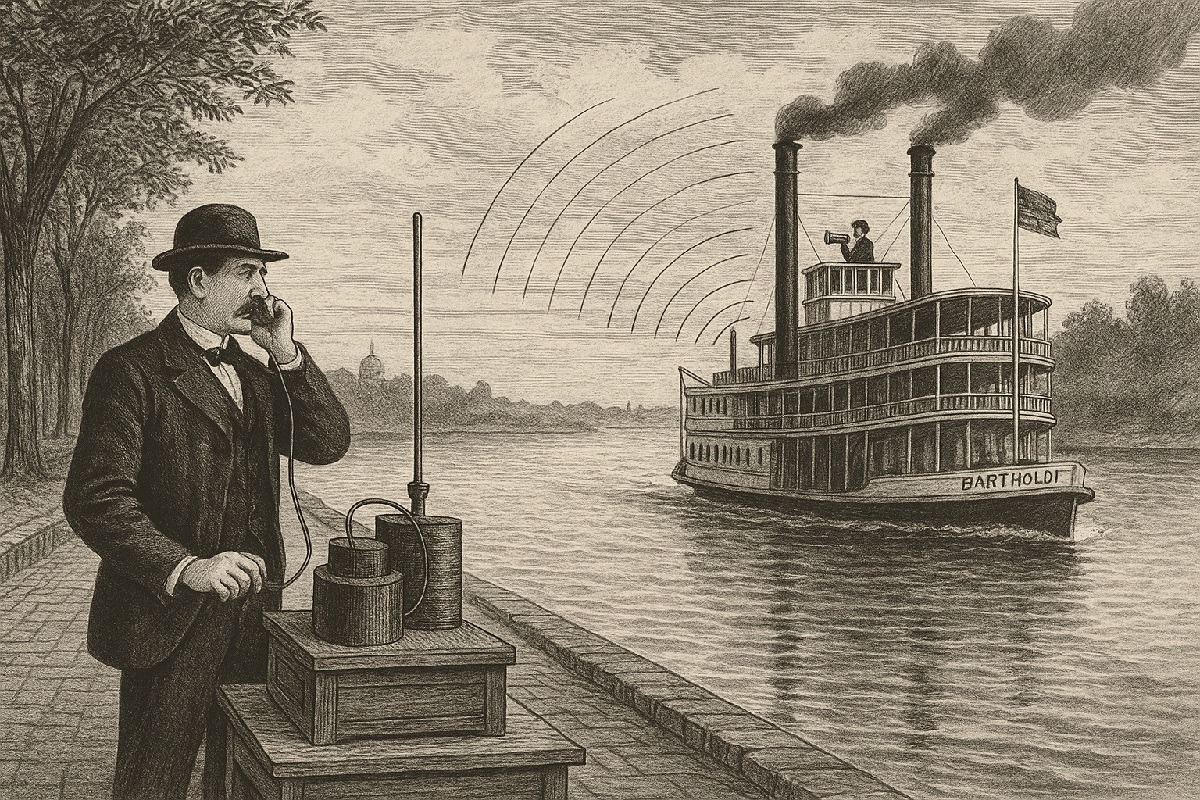
For a moment, Stubblefield was a media sensation. The popular press hailed him as the inventor of the wireless telephone, often without grasping the technical distinction between his system and Marconi's. To the public, "wireless" was a magical new concept, and the nuances of induction versus radiation were lost in the excitement. It seemed that the melon farmer from Kentucky was about to change the world.
The Failed Venture and Tragic Decline
Following the publicity from his demonstrations, the "Wireless Telephone Company of America" was formed in 1902 to commercialise his inventions. Stubblefield was offered a large block of shares, and it looked as though his years of hard work were finally going to pay off. But this is where his story takes a tragic turn.
Stubblefield was, by nature, an intensely private and secretive man. He became deeply distrustful of his business partners, consumed by the fear that they would steal his inventions. This paranoia, whether justified or not, paralysed the venture. He refused to fully cooperate, held back key details of his technology, and the company, lacking its star inventor's full participation, quickly collapsed. He reportedly turned down substantial offers for his patents, convinced they were worth far more. I can't help but feel for the man; he had a world-changing idea but perhaps lacked the trust or the business acumen to see it through in the cut-throat commercial world.

After this brush with fame, Stubblefield retreated from society. He returned to Kentucky, becoming a recluse, living in a crude, isolated shack near Murray. He became obsessed with the idea that everyone, from his former partners to his own neighbours, was trying to steal his secrets. He surrounded his shack with warning signs, living in self-imposed isolation, constantly tinkering but never again sharing his work with the world.
His end was heartbreaking. In 1928, he was found dead in his remote shack, having apparently starved to death. He died a lonely, impoverished, and forgotten figure, a stark contrast to the brief fame he had experienced just a couple of decades earlier.
The Legacy and Controversy: "The Father of Radio"?
After his death, Stubblefield's story might have been lost to history completely. However, his family, particularly his son Bernard, and local Kentucky historians began to champion his cause. They advocated fiercely for his recognition as the true inventor of wireless telephony and radio broadcasting, pointing to his successful 1892 demonstration as undeniable proof.
Their efforts had a significant local impact. The state of Kentucky officially recognises Nathan Stubblefield as the inventor of radio, and the town of Murray proudly calls itself the "Birthplace of Radio." There are memorials and a local museum dedicated to his memory.
However, the broader historical consensus is more nuanced. Historians of science and technology acknowledge Stubblefield's genuine and remarkable early achievements. He absolutely did transmit voice wirelessly years before many others. But they also draw that critical distinction: his technology was a different, and ultimately less scalable, path. It was a technological cul-de-sac. While brilliant, his induction and conduction methods were limited to very short ranges and could never have achieved the global reach of radio communication based on Hertzian waves.
So, his legacy is carefully framed. He was a true pioneer of early wireless communication, but not the pioneer of radio as we know it today.
Synergies with Ham Radio: The Outsider Inventor
Nathan Stubblefield's story resonates deeply with the spirit of amateur radio, particularly its independent and experimental side.
- The Lone Wolf Inventor: He is the archetypal "lone wolf," the tinkerer working away in his shed or garage, driven by pure curiosity. This is a figure that countless hams can relate to, people who build their own gear not because they have to, but because they want to understand it from the ground up.
- Alternative Paths: His story is a great example of exploring alternative technologies. Hams are always experimenting with different antenna designs, strange propagation modes, and unconventional methods, just to see if they work. Stubblefield reminds us that there's always more than one way to approach a problem.
- A Cautionary Tale: His life is also a powerful cautionary tale. It underscores the importance of not just having a great idea, but also being able to collaborate, to trust others, and to navigate the complexities of bringing an invention to the world. His secrecy and distrust ultimately became his undoing.
Conclusion: The Voice from the Kentucky Hills
Nathan Stubblefield's story is one of heartbreaking genius. He truly did make a device that let him speak through the earth and air long before many of his more famous contemporaries. His 1892 demonstration was a remarkable feat of independent invention, a testament to his unique and brilliant mind. But his chosen path was a technological dead-end, and his own secretive nature prevented him from achieving the success his ingenuity deserved. He remains a powerful and poignant symbol of the brilliant outsider, a reminder that history is filled with forgotten pioneers whose contributions, though not part of the final, victorious design, were nonetheless remarkable achievements in their own right. He was, and always will be, the mysterious voice from the Kentucky hills.
What are your thoughts on Nathan Stubblefield's legacy? Should he be more widely recognised as the inventor of radio, or is the distinction between his methods and Hertzian waves a crucial one? Let me know in the comments below! And, as always, if you have suggestions for other "Pioneers of Radio" that you'd like to see featured, don't hesitate to share.
For more information please visit our online store or alternatively contact us, and our team will be happy to assist you.