
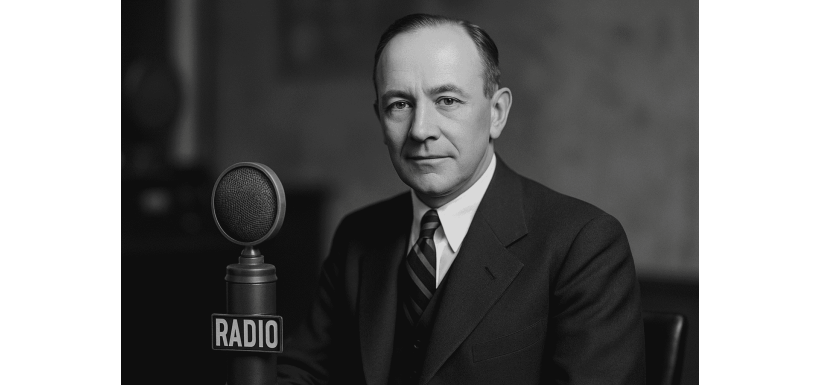
In the dawn of the 1920s, the magic of radio was reserved for the wealthy. A simple receiver, a box of wires and valves that could pull voices from the ether, could cost more than a month's wages, placing it firmly out of reach for the average family. It was a luxury item, a novelty for those with deep pockets. But one man, an energetic and endlessly ambitious entrepreneur from Cincinnati, Ohio, looked at this new 'toy' and saw not a plaything for the rich, but a universal appliance for every home in the nation. As we continue our "Pioneers of Radio" series, we meet Powel Crosley Jr., a man whose contribution was not in fundamental invention, but in the democratisation of technology. He was the industrialist who put a radio in every living room, and his story is a whirlwind of automobiles, broadcasting, refrigerators, and even professional baseball.
Early Life and the Drive to Build
Powel Crosley Jr. was born in Cincinnati, Ohio, in 1886. From a young age, he was utterly fascinated by the automobile. While other boys might have been playing with toy soldiers, young Powel was dreaming of engines and assembly lines. He even dropped out of university to pursue his dream of building his own car company. His early attempts, like the "Marathon Six," were ambitious but ultimately failed to secure funding. It’s a story many entrepreneurs can relate to – big dreams meeting the harsh reality of financial backing.
But Crosley was nothing if not persistent. After several failed attempts at car manufacturing, he found his footing in the booming world of car accessories. In 1916, he co-founded the American Automobile Accessory Company. Here, his knack for identifying what consumers wanted at a price they could afford truly shone. His company sold millions of dollars worth of gadgets, including a best-selling tyre liner of his own invention.
It was during this time that the crucial partnership with his younger brother, Lewis M. Crosley, was solidified. This relationship was key to the entire Crosley empire. Powel was the visionary, the marketing genius, the man with a hundred ideas a minute, brimming with infectious enthusiasm. Lewis, on the other hand, was the quiet, practical engineer and operations manager, the man who could actually run the factories and turn Powel's grand visions into a marketable, reliable product. It was a perfect partnership of dreamer and doer.
The "Aha!" Moment: A Radio for a Boy
The story of how Powel Crosley Jr. entered the radio business is the stuff of legend, a perfect anecdote that captures his entire business philosophy. Around 1921, his young son asked for one of the new marvels of the age: a radio set. Crosley, ever the indulgent father, took him to a local department store. He was absolutely shocked by what he found. Even a basic crystal set, which he viewed as little more than a toy, cost over $100. In today's money, that's well over £1,000. It was an outrageous price for the average family.
Crosley's reaction was typical of his practical, can-do attitude. Instead of buying the expensive set, he bought a 25-cent booklet titled "The ABC of Radio." He and his son went home, gathered the necessary parts, and built their own crystal radio. The experience was a revelation. He immediately recognised that the high price of radios was the only thing holding back a massive, untapped market.
His vision was simple and powerful, neatly summed up in his later motto: to produce for "the masses, not the classes." He believed he could apply the same mass-production techniques he'd learned in the car parts business to build and sell radios for a fraction of the prevailing cost. He saw a future where every family could afford to gather around a wireless set in their living room, and he was determined to make that future a reality.
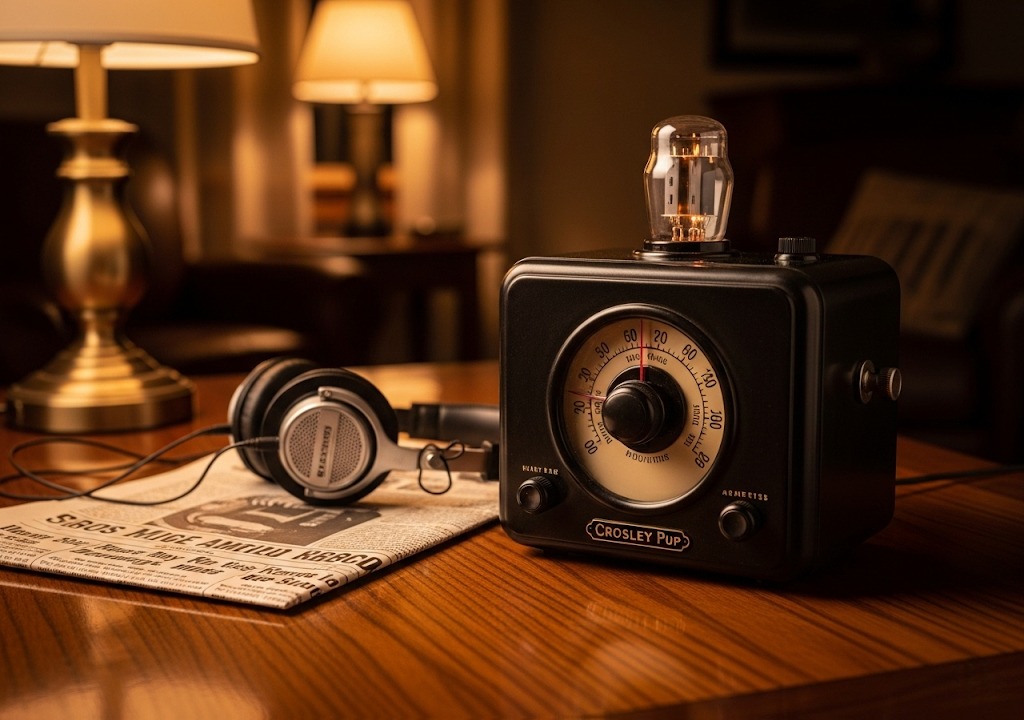
His first commercial radio was the "Harko," a simple crystal set that sold for around $7. It was a roaring success. But the product that truly cemented his reputation as "The Henry Ford of Radio" was the iconic Crosley Pup. This was a small, single-valve regenerative receiver that was incredibly cheap – selling for under $10. It was simple, it worked, and crucially, it was affordable. The Crosley Pup was the radio that truly brought broadcasting into the homes of working-class families across America.
Building an Audience: The Power of WLW
Powel Crosley Jr. possessed a brilliant and intuitive understanding of vertical integration. He quickly realised a simple business truth: "To sell more radios, I need to give people something exciting to listen to." It wasn't enough to just sell the hardware; he needed to provide the content that would make people want to buy it in the first place. And so, in 1922, he founded his own radio station in Cincinnati: WLW.
WLW started, like many stations of the era, with a mere 50 watts of power. But Crosley was never one to think small. He embarked on a relentless quest for more power, driven by the belief that a stronger, clearer signal meant that people could use his cheaper, less sensitive radios to listen in from further away. It was a brilliant synergy: his station drove sales of his radios, and the affordability of his radios created a bigger audience for his station.
The power race at WLW is legendary in broadcasting history. From 50 watts, he quickly upgraded to 500 watts, then 5,000 watts, and by 1928, WLW was blasting out a massive 50,000 watts, making it one of the most powerful stations in the country. But Crosley still wasn't satisfied.
Between 1934 and 1939, he achieved something that has never been duplicated in the United States. Operating under a special experimental license, WLW began broadcasting with an incredible 500,000 watts of power. This "superstation" was an engineering marvel, a collaboration between Crosley and the giants of the industry like RCA, GE, and Westinghouse. The transmitter was a behemoth, requiring its own building and a huge outdoor pond for water cooling.

The folklore surrounding the 500kW signal is fantastic. Stories abound of lights flickering in nearby homes in time with the audio modulation, of gutters and bedsprings rattling with the powerful RF energy, and of the station's signal being picked up clearly on barbed-wire fences. Its reach was awesome. It truly became "The Nation's Station," with its signal heard regularly across North America and, on good nights, even in Europe.
WLW wasn't just about power, either. It became a major producer of content, launching the careers of stars like Red Skelton and Doris Day. It was also the birthplace of some of the very first "soap operas," sponsored by the Cincinnati-based consumer goods giant, Procter & Gamble.
The Crosley Empire: Cars, Fridges, and Baseball
Crosley's ambition and inventiveness couldn't be contained by radio alone. He built a diverse industrial empire based on his core philosophy of affordable innovation.
One of his most clever and successful ventures was the "Shelvador" refrigerator. In the 1930s, he had the simple but brilliant idea of putting shelves in the refrigerator door. It seems completely obvious to us now, but at the time, no one else was doing it. This single, practical feature dramatically increased the usable storage space and was a huge commercial success. It helped his company not just survive, but thrive during the difficult years of the Great Depression.
He also never gave up on his first love: cars. In 1939, he finally realised his lifelong dream and introduced the first Crosley compact car. It was small, lightweight, and incredibly fuel-efficient, boasting up to 50 miles per gallon. It saw a brief period of success, especially after the Second World War when larger cars were scarce, but eventually, the American public's renewed demand for bigger vehicles led to the end of production in 1952.
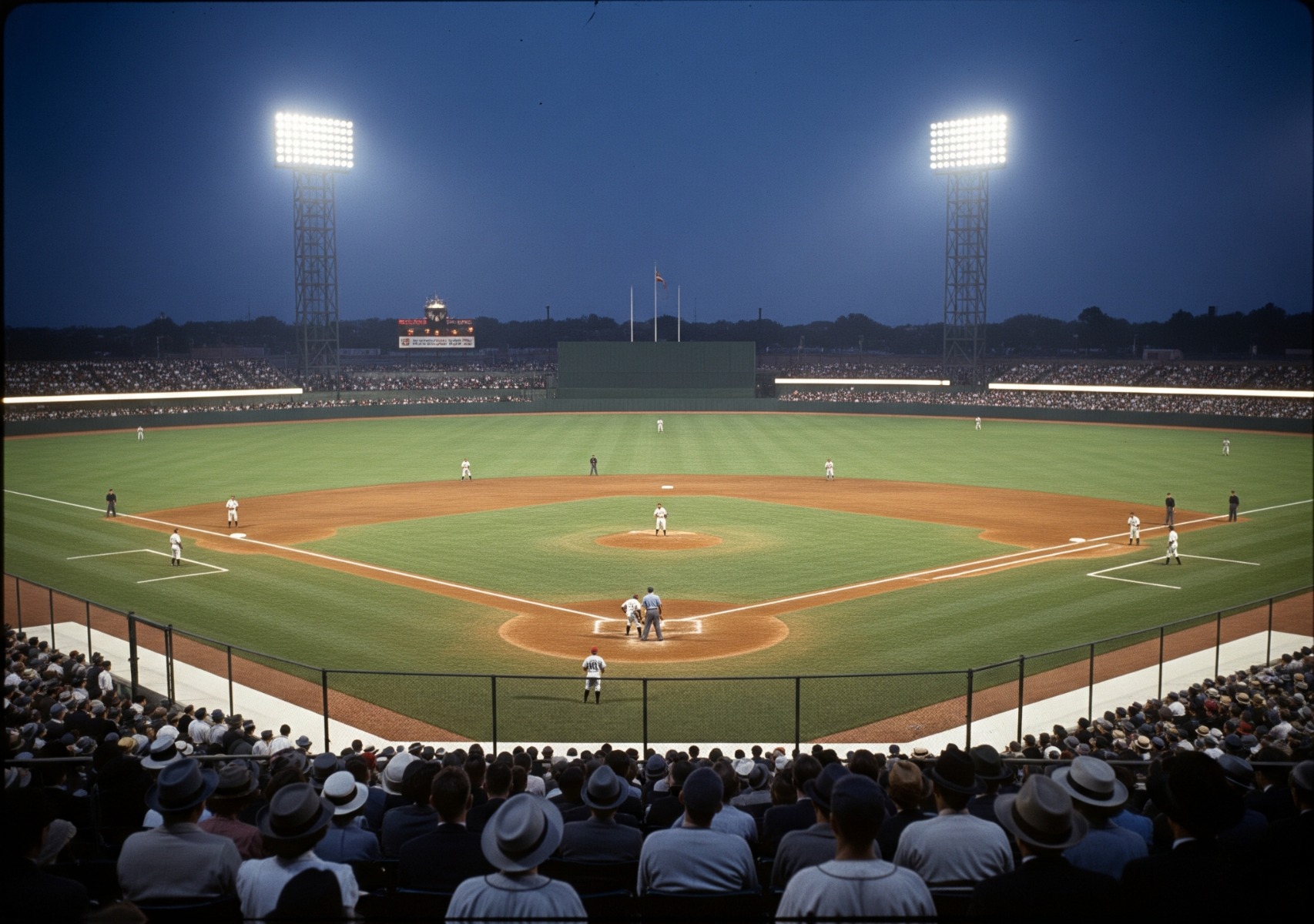
And then there was baseball. In 1934, in the depths of the Depression, Crosley bought his struggling hometown baseball team, the Cincinnati Reds. He immediately set about making the game more accessible. His most famous contribution was pioneering night baseball in 1935. He convinced the league to let him install powerful lights at Crosley Field (as the stadium was renamed). His reasoning was simple: working people couldn't attend games during the day, but they could in the evening. It was a revolutionary and democratic change that transformed the sport forever.
Synergies with Ham Radio: The Democratiser
Powel Crosley Jr.'s work had a significant, if indirect, impact on the amateur radio community.
- Affordable Components:
- The Regenerative Circuit:
- Inspiration of WLW:
- A Shared Spirit:
His mass production of radios meant that the components inside them – variable capacitors, coils, valves, and dials – became much cheaper and more widely available. This was a massive boon for the "home-brewers" and early hams who were building and modifying their own gear.
The cheap and cheerful Crosley Pup receiver used a simple regenerative circuit. This was a circuit that hams loved to experiment with, and Crosley's products put that technology, and the valves to make it work, into thousands of hands.
The sheer power and legendary reach of WLW was an inspiration to the entire radio community. It was the ultimate "big signal," something every ham, in their own way, aspires to have. It demonstrated what was possible with high power and efficient antenna systems.
And let's not forget, Crosley's entire radio empire started with him, a curious enthusiast, building a simple radio from a 25-cent booklet. That is the very same starting point for countless radio amateurs over the decades, a shared origin story that connects the industrialist to the hobbyist.
Later Life and Legacy
After the Second World War, in 1945, Powel Crosley Jr. sold his broadcasting and appliance manufacturing empire to The Aviation Corporation (Avco), although he continued with his car company for several more years. He passed away from a heart attack in 1961.
His legacy is unique in its breadth. He is one of the very few individuals to be inducted into both the National Radio Hall of Fame (in 2013) and the Automotive Hall of Fame (in 2010). It's a fitting tribute to his diverse passions and achievements.
Conclusion: The Henry Ford of Radio
Powel Crosley Jr. wasn't a theoretical physicist who discovered new laws of nature. He was a practical visionary, an industrialist with an uncanny sense of what the public wanted and how to deliver it at a price they could afford. He understood people, he understood manufacturing, and he understood that the true power of a technology like radio was only unleashed when it was placed in the hands of everyone. He truly was "The Henry Ford of Radio," a man who built an empire by serving the masses, not the classes, and in doing so, changed the sound of the 20th century.
What are your thoughts on Powel Crosley Jr.? Do you remember any old Crosley radios or appliances? Let me know in the comments below! And, as always, if you have suggestions for other "Pioneers of Radio" that you'd like to see featured, don't hesitate to share.
For more information please visit our online store or alternatively contact us and our team will be happy to assist you.