
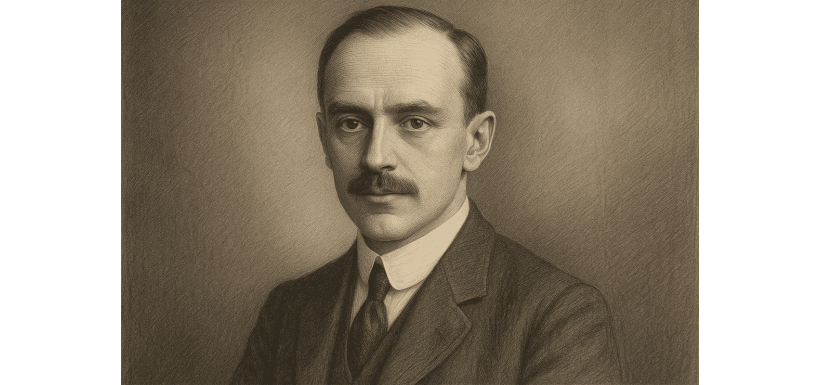
Every radio enthusiast, from the casual listener to the most dedicated DXer, knows the struggle against noise – that ever-present hiss, crackle, and pop that can swallow a weak signal whole. It’s the constant, invisible adversary in our quest for clear communication, the static-laced fog that we're always trying to peer through. But have you ever stopped to wonder what that noise is at its most fundamental level? What causes that inescapable hiss in even the most perfectly built amplifier? Today in our "Pioneers of Radio" series, we meet Walter Schottky, a German physicist who not only provided a profound answer to that very question but also invented new vacuum tubes to overcome their inherent instability and laid the theoretical groundwork for key semiconductor devices we still use every single day. He was a physicist's physicist, a man who bridged the gap between the age of the glowing valve and the dawn of the solid-state era with breathtaking intellectual clarity.
From Relativity to Electronics: An Academic Powerhouse
Walter Hermann Schottky was born in Zurich, Switzerland, in 1886 to German parents. His father, Friedrich Schottky, was a distinguished professor of mathematics, so it’s fair to say that an academic and scientific mindset was part of his upbringing. This wasn't a home where scientific curiosity would be a surprise; it would have been the norm. The family moved back to Germany, and young Walter pursued his education with a vigour that would define his entire career.
His academic lineage is nothing short of astonishing. He studied physics at the University of Berlin, and his doctoral supervisor was none other than Max Planck, the legendary father of quantum theory. Imagine that for a moment! Your PhD supervisor is the man who fundamentally changed our understanding of energy and matter. Schottky completed his doctorate in 1912 with a thesis on Einstein's Special Theory of Relativity, which itself was only seven years old at the time. This tells you that his initial training was at the absolute pinnacle of theoretical physics, grappling with the deepest and most revolutionary questions about space, time, and energy.
However, after his postdoctoral work, Schottky made a pivotal move that would direct his immense theoretical talent towards more practical ends. In 1914, he joined the research laboratories of Siemens & Halske, a major German industrial firm. This transition from the lofty heights of pure theory to the practical challenges of industrial research would prove incredibly fruitful. It was here that Schottky would apply his profound understanding of physics to solve real-world engineering problems, particularly in the rapidly advancing field of electronics, where fundamental understanding was desperately needed to guide invention.
Improving the Valve: The Screen-Grid Tetrode
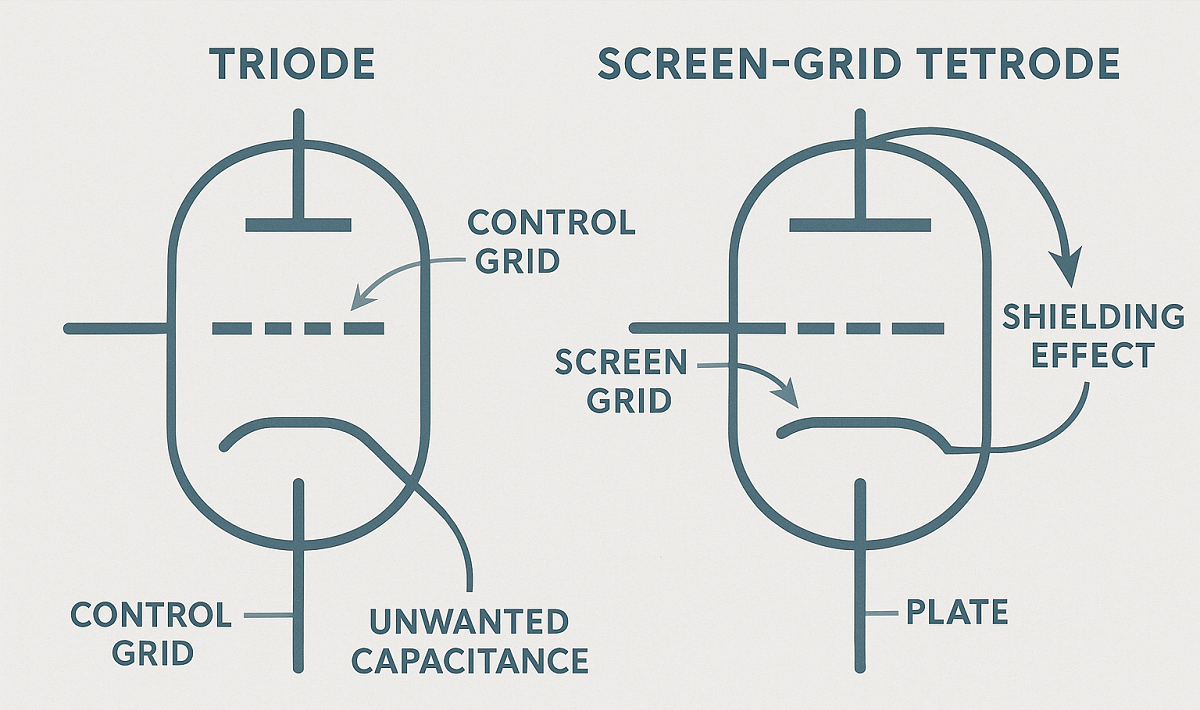
One of the most pressing problems in early radio was the instability of the triode vacuum tube. The triode, as invented by Lee de Forest, was a revolutionary device because it was the first to provide electronic amplification. However, it had a critical, and incredibly frustrating, flaw. At higher radio frequencies, the natural capacitance that exists between the anode (the plate) and the control grid created an unwanted feedback path. This internal capacitance fed a little bit of the amplified signal from the output (the anode) back into the input (the grid), causing the amplifier to become unstable and break into uncontrollable self-oscillation, producing ear-splitting whistles and howls. This pesky phenomenon, known as the Miller effect, was a major headache for radio designers trying to build sensitive and stable high-frequency receivers for the shortwave bands.
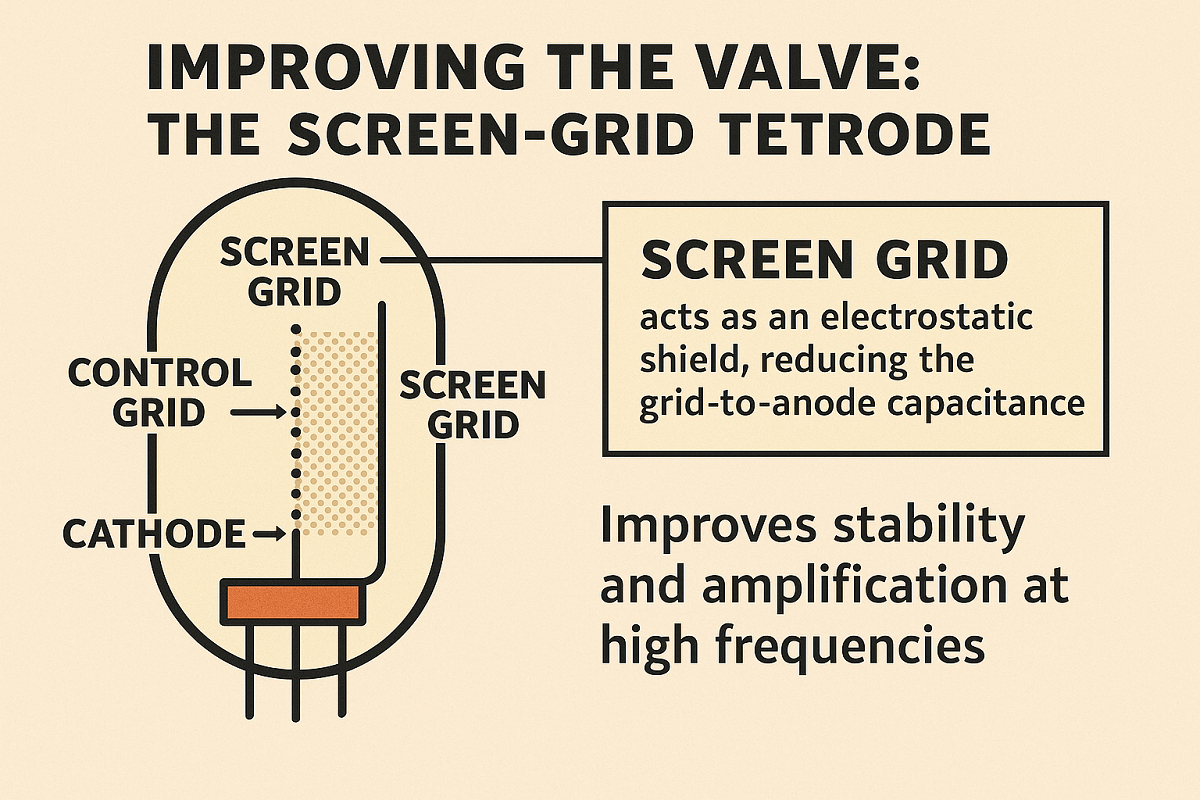
Schottky tackled this problem head-on with pure intellectual elegance. Between 1915 and 1919, he came up with a brilliant and highly effective solution: the screen-grid tube or tetrode. He theorised that if he could place an electrostatic shield between the control grid and the anode, he could break this feedback loop. He introduced a second grid – the screen grid – into the valve, placing it in this critical position.
This new grid was held at a steady positive voltage, but it was bypassed to ground for AC signals with a capacitor. This meant it acted as an effective electrostatic shield, preventing the AC signal voltage on the anode from affecting the control grid. It dramatically reduced the grid-to-anode capacitance and, in doing so, tamed the Miller effect. The result was a valve that was far more stable at high frequencies and could provide much higher amplification without bursting into unwanted oscillation. The tetrode was a massive leap forward, making the design of reliable shortwave radio receivers and transmitters far more practical. It was a classic example of deep physical understanding leading to a brilliant and indispensable engineering solution.
Understanding the Noise: The Schroteffekt (Shot Noise)
What is the ultimate limit of amplification? How faint a signal can we possibly detect before it's drowned out by the noise inherent in our own equipment? This fundamental question led Schottky to one of his most profound discoveries. In 1918, while working at Siemens, he developed the theory for a type of electronic noise he called the Schroteffekt, which translates brilliantly as the "small shot effect." Today, we know it as shot noise.
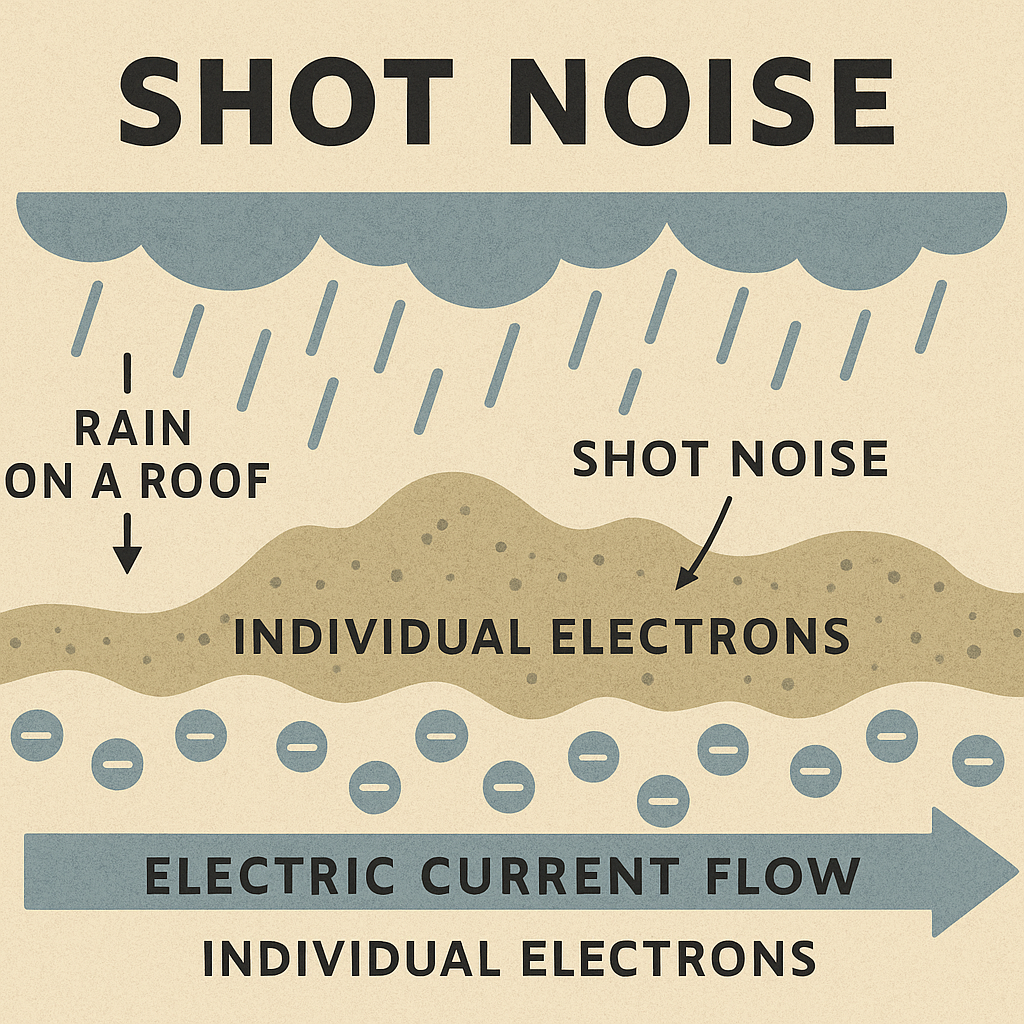
To explain this concept, Schottky used a wonderfully intuitive analogy that perfectly captures the idea. Imagine standing in the rain, with hailstones or lead shot falling onto a tin roof. Even if the rain is falling at a steady average rate, you don't hear a continuous, smooth hum. You hear the discrete "patter" of individual pellets striking the roof at random, unpredictable moments.
Schottky realised that an electric current flowing through a vacuum tube behaves in exactly the same way. A current isn't a smooth, continuous fluid; it's a flow of individual, discrete particles – electrons. Even in what we think of as a perfectly steady DC current, these electrons are emitted from the cathode and arrive at the anode as individual particles at random moments. This random fluctuation in the arrival time of the electrons is shot noise. It's not a flaw in the circuit's construction; it's a fundamental consequence of the fact that electricity is granular, that it is carried by individual charge carriers. The 'hiss' you hear from an amplifier with no signal is, in part, the sound of the electrons themselves.
This was an incredible insight. It directly linked the quantum, particle-like nature of electricity to a very practical engineering problem that limited the performance of every radio receiver. More than just a concept, Schottky developed a formula to calculate the magnitude of this noise. For the first time, engineers had a way to predict the absolute minimum noise floor of an amplifier. It told them the ultimate limit of sensitivity, the point at which any real signal would be lost in the fundamental, unavoidable 'patter' of the electrons themselves. For any of us involved in weak-signal work or DXing, this is a concept we grapple with every day, and it was Walter Schottky who first explained it with such clarity.
From Valves to Semiconductors: A Bridge to the Future
What truly sets Schottky apart from many of his contemporaries is his incredible foresight. While he was an undisputed master of the vacuum tube, his work also began to lay the theoretical foundations for the semiconductor age that would eventually supplant it. He seemed to have one foot firmly in the present and the other already stepping into the future.
In his 1929 book Thermodynamik, he was one of the very first physicists to discuss the concept of electron "holes" within the energy band structure of a semiconductor. The idea of a "hole" – the absence of an electron in a crystal lattice that behaves like a mobile positive charge carrier – is an absolutely central concept in how transistors and most modern semiconductor devices work. For him to be theorising about this in such detail, decades before the transistor was invented by Bardeen, Brattain, and Shockley, is simply remarkable.
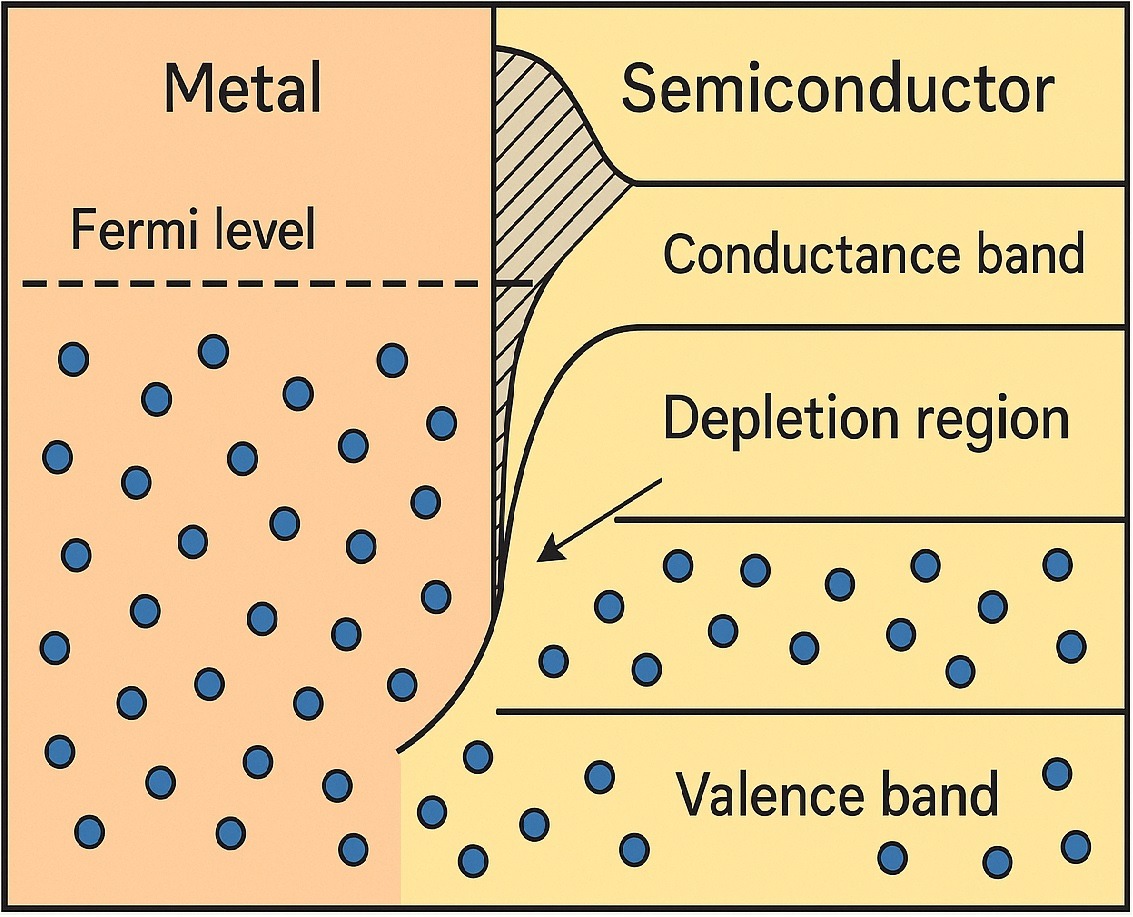
His most famous and enduring contribution to this field came in 1938 with his theory explaining the rectifying (one-way) action of a metal-semiconductor junction. He theorised that when a suitable metal is brought into contact with a semiconductor material, a potential energy barrier forms right at the interface. This barrier, now known around the world as the Schottky barrier, controls the flow of electrons, allowing them to flow easily in one direction but strongly opposing their flow in the other.
This theory led directly to the development of the device that bears his name: the Schottky diode. Unlike a standard P-N junction diode, which joins two types of semiconductor material (P-type and N-type), the Schottky diode uses a metal-semiconductor junction. This fundamental difference gives it some very special and highly desirable properties:
- Low Forward Voltage Drop:
- Extremely Fast Switching Speed:
It requires much less voltage to "turn on" and begin conducting than a standard silicon diode (typically 0.15-0.45 volts, compared to 0.6-0.7 volts). This makes it much more efficient in applications like power supplies, where every fraction of a volt lost as heat matters.
This is its killer feature. In a standard P-N diode, when you switch it off, there's a delay as the "minority carriers" (electrons in the P-type material and holes in the N-type) have to clear out of the junction. This limits its switching speed. The Schottky diode, however, is a "majority carrier" device. It doesn't rely on that slow recombination process, so it can switch from on to off incredibly quickly, with recovery times measured in picoseconds.
This isn't just a historical curiosity. The Schottky diode is an essential, high-performance component that is used everywhere in modern electronics, a direct result of Schottky's deep theoretical insights from nearly a century ago.
Synergies with Ham Radio: From Valves to Diodes
Walter Schottky's influence is woven throughout the fabric of amateur radio technology, from the vintage gear of yesteryear to the state-of-the-art rigs of today.

- Better Receivers and Transmitters:
- Understanding Receiver Limits:
- Modern Ham Radio Components:
The stable, high-gain amplification made possible by the screen-grid tetrode was a huge step forward for early ham radio equipment. It allowed for more sensitive receivers that could pick up weaker signals and more stable transmitters that could operate effectively on the higher shortwave bands, opening up new possibilities for long-distance communication.
His theory of shot noise is fundamental to the concept of a receiver's "noise floor." Every DXer chasing a faint signal on a noisy band, every EME operator trying to pull a signal out of the cosmic background, is in essence, battling against the fundamental physical limits that Schottky first explained. Understanding this helps us appreciate what makes a low-noise amplifier so important.
The Schottky diode is a workhorse component in modern ham radio. Because of its fast switching speed and low noise characteristics, it's used in high-performance radio frequency mixers and detectors. Its efficiency also makes it ideal for use in modern, compact, efficient switched-mode power supplies that power our rigs. Hams are using his invention every single day, whether they realise it or not.
Legacy: A Giant of Two Eras
Walter Schottky passed away in 1976. He was honoured with many prestigious awards during his lifetime, including the Royal Society's Hughes Medal in 1936 and the Werner von Siemens Ring in 1964. His name is permanently etched into the language of physics and electronics: the Schottky effect, shot noise, the Schottky barrier, the Schottky defect, and of course, the Schottky diode. Institutions like the Walter Schottky Institute in Germany continue to honour his legacy.
What makes him so remarkable is his unique position as a giant of two distinct technological eras. He was a master of the vacuum tube, inventing new types and explaining their fundamental behaviour in a way that pushed the technology to its limits. But he also possessed the theoretical foresight to lay the groundwork for the semiconductor revolution that would follow. It’s a truly rare and impressive scope of contribution, showcasing a mind that was comfortable with both the established technology of his day and the nascent physics of the future.
Conclusion: The Physicist Who Explained Electronics
Walter Schottky was a physicist's physicist. He possessed the rare ability to see deep into the fundamental workings of electronics, from the random patter of individual electrons in a valve to the quantum behaviour at a metal-semiconductor interface. His work provided the crucial theoretical understanding that allowed engineers to build quieter, more stable, and faster electronic devices. While other pioneers were building the systems, Schottky was explaining why they worked and defining the ultimate limits of their performance. His profound insights have shaped the technology we use every single day, and for that, he is unquestionably one of the most important Pioneers of Radio.
What are your thoughts on Walter Schottky? How important is it for practical radio enthusiasts to understand these fundamental physical principles? Let me know in the comments below! And, as always, if you have suggestions for other "Pioneers of Radio" that you'd like to see featured, don't hesitate to share.
For more information please visit our online store or alternatively contact us and we'll be happy to assist you!