Introduction
In the world of radio antennas, achieving optimal signal reception is crucial. However, the process is not as straightforward as connecting the antenna elements to the radio. To fully understand the complexities involved, we must delve into the concept of baluns. In this blog, we will explore what baluns are, their significance, and how they work.
What is a Balun?
A balun, short for "balanced to unbalanced," is a device used to convert a balanced signal to an unbalanced one. But what exactly does that mean? When an antenna receives a signal, it absorbs radio waves from the surrounding environment. As this signal accumulates at the ends of each antenna element, it creates charges at the feed point nodes. These charges contain the desired signals that we want to transmit to the radio.
The Challenge of Signal Imbalance
However, the signals at the feed point nodes are often in opposite phases, forming what is known as a balanced signal. While this is ideal for the antenna, it poses a challenge when connecting it to the radio. The radio expects an unbalanced signal, where one conductor carries all the information and the other acts as a reference point.
The Unbalanced Solution
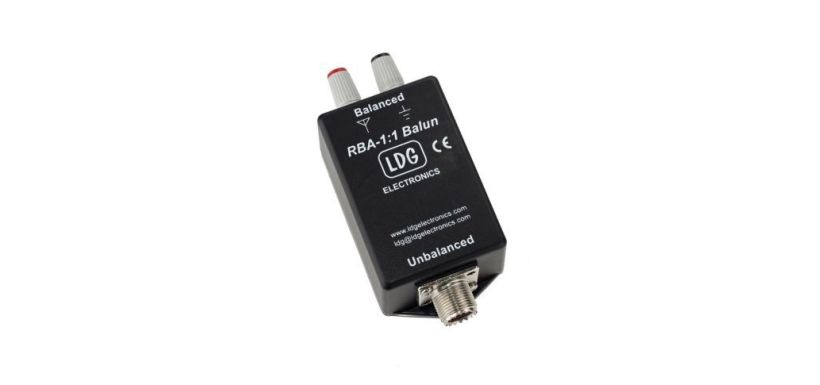
To address this imbalance, we need a way to convert the balanced signal to an unbalanced one. This is where baluns come into play. There are two commonly used designs: the coax balun and the coil balun.
The Coil Balun
In the coil balun, the feed point nodes are connected to one coil of a transformer in such a way that they act in line. This arrangement allows the current to induce in the other coil of the transformer, which is then connected to the radio. Through this process, the balanced signal is converted to an unbalanced one, allowing for seamless communication between the antenna and the radio.
The Coax Balun
In the coax balun design, one feed point node is connected to the other via a coaxial cable. The length of the cable is crucial in this setup, as it determines the delay in the signal from the first node. When the signal reaches the second node, both signals are perfectly matched in phase. This synchronised signal from both nodes is then transmitted to the radio, ensuring optimal reception.
The Importance of Baluns
Now that we understand how baluns work, let's explore their significance in radio antenna systems. Baluns play a crucial role in ensuring efficient signal transmission and reception. Without a balun, connecting the antenna directly to the radio would result in signal cancellation and noise interference.
Maximising Antenna Potential
By using a balun, we can fully utilise the antenna's potential. Connecting the antenna elements to the balun allows for the conversion of the balanced signal to an unbalanced one, ensuring that all the signals are effectively transmitted to the radio. This optimisation leads to improved signal clarity and overall performance.
Considerations and Further Exploration
While we have covered the basics of baluns, there are additional factors to consider. The frequency tolerance of baluns and impedance matching are essential aspects that impact their effectiveness. We will develop these topics in the future.
Frequently Asked Questions
Where Should a Balun Be Placed?
A balun should be positioned close to the antenna's feed point to effectively convert balanced signals to unbalanced ones. Ideally, it should be placed 10 to 20 feet from the tuner to minimise the length of the unbalanced line from the antenna to the balun.
Is a Balun Just a Transformer?
While a balun functions similarly to a transformer by converting balanced signals to unbalanced ones (and vice versa), baluns are designed specifically for radio antennas. Baluns ensure optimal signal transmission by isolating the transmission line and providing a balanced output, making them more specialised than typical transformers.
Does a Balun Reduce Noise?
A balun can significantly reduce noise by preventing common mode currents from travelling back down the coaxial cable from the antenna. Baluns also block unwanted noises picked up on the coax’s outer sleeve, effectively lowering the noise floor in your receiver for clearer signal reception.
Conclusion
Baluns are vital components in radio antenna systems. They enable the conversion of a balanced signal to an unbalanced one, ensuring optimal communication between the antenna and the radio. By understanding the principles of baluns, we can maximise the potential of our antennas and enhance our overall radio experience. We extend our gratitude to the individuals who contribute to open-source software, as their contributions play a significant role in the advancement of radio technology.