
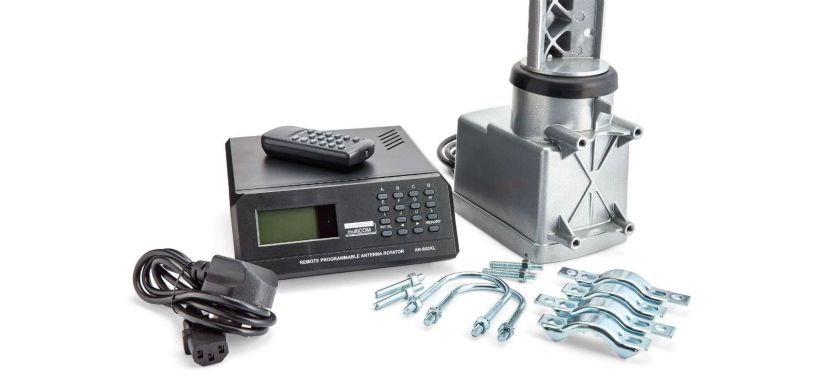
A rotator is a device used in HAM radio communication systems to adjust the orientation within the horizontal plane. It consists of a rotator unit and a controller, typically mounted on the antenna mast. The rotator can rotate the antenna clockwise or counterclockwise by receiving signals from the controller, allowing users to aim precisely towards desired signal sources. This capability optimises signal reception, making this equipment essential for HAM radio operators and enthusiasts seeking to improve communication performance.
How Does an Antenna Rotator Work?
It consists of two main parts: the rotator unit and the controller. The unit is typically mounted on the antenna mast directly below the antenna, while the controller is usually placed near the equipment to which the antenna is connected.
The unit contains a motorised mechanism that rotates, allowing it to be pointed in different directions. The controller sends signals to the rotator unit, instructing it to rotate clockwise or counterclockwise. This rotation will enable HAM radio users to adjust the direction of the equipment.
In essence, the unit works by receiving commands from the controller and translating them into mechanical movement, allowing users to position the equipment precisely to maximise signal strength.
Why Use an Antenna Rotator for Amateur Radio?
Firstly, it allows for optimised signal reception by enabling users to adjust the direction as needed. This capability proves particularly useful when attempting to pick up distant stations or weak signals, as the mast can be oriented for maximum signal strength.
Secondly, rotators provide flexibility in antenna positioning. Users can easily switch between different directions with a rotator without physically repositioning the antenna.
An antenna rotator with both rotational and elevation control is essential for HAM radio satellite communication, where signals come from above. It enables users to accurately track satellites as they move across the sky, maintaining a solid connection for communication purposes.
What To Look for in an Antenna Rotator
Durability
Durability is paramount, as you'll want a kit to withstand the elements and rigour of regular use. Look for sturdy construction materials like stainless steel or heavy-duty aluminium, which can endure outdoor conditions without corroding or deteriorating over time. Additionally, opt for models with sealed housing to protect internal components from moisture and dust, ensuring long-term reliability and performance.
A durable model will provide years of dependable service, making it a worthwhile investment for your setup.
Rotation Range
When selecting a rotator, the rotation range is a critical factor to consider. The rotation range determines the degree to which the antenna can be adjusted horizontally, allowing you to fine-tune its directionality for optimal signal reception. Look for rotators with a wide rotation range, preferably 360 degrees, as they offer maximum flexibility in positioning your antenna.
This extensive range lets you precisely aim your antenna towards the desired signal source, ensuring optimal performance across various frequencies and transmission directions. Whether tracking satellites or adjusting for changing signal conditions, a broad rotation range provides the versatility for effective antenna operation.
Compatibility
Compatibility is a crucial aspect to evaluate when considering a model. Ensure that the rotator you choose is compatible with your specific setup. This includes assessing antenna size, weight, and mounting requirements. Additionally, verify compatibility with your existing hardware, such as controllers and accessories, to ensure seamless integration and optimal performance.
Whether installing a new system or upgrading an existing one, selecting a rotator that’s fully compatible with your setup is essential for achieving reliable and efficient operation.
Final Thoughts
Looking to enhance your HAM radio setup? Consider an antenna rotator from Moonraker. Our high-quality rotators offer durability, wide rotation ranges, and compatibility with various setups. With precise control over orientation, you can optimise signal reception for better communication. Explore our selection and elevate your radio experience by shopping Moonraker today.