
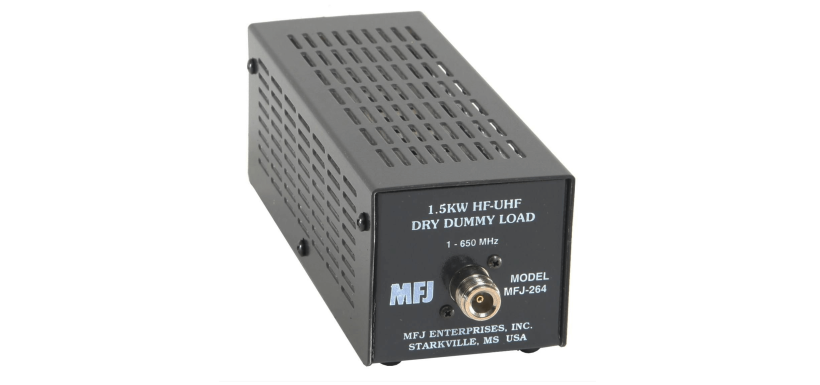
You may have heard the term “dummy load” before and wondered what it meant.
If so, you’re not alone. While the name might give you an idea of what it does, it might initially sound perplexing.
Here, we’ll take a deep dive into what dummy loads are, what they do, and how you can choose the right one for you.
What Does a Dummy Load Do?
A dummy load is a testing device for amplifiers or RF systems. It tests an amplifier’s handling capabilities without creating an intense sound, and they help diagnose problems within the amplifiers before use.
With RF devices, dummy loads are used for tuning as they simulate a perfectly tuned antenna connected to the amplifier. These devices are also called radio frequency termination or dummy antennas.
Because they create a test electrical load without producing radio waves, the device is also used instead of an antenna to adjust the transmitter.
Avoiding the creation of radio waves is important so the transmitter doesn’t interfere with other radio devices during the adjustment. A dummy avoids attaching to a live antenna and producing QRM interfering with other radio transmissions.
The ‘Q’ codes are a common Morse Code abbreviation that radio hams still use today. QRM essentially means, ‘Your transmission is being interfered with’ and isn’t something a radio operator wants to hear.
The other problem, apart from producing unwanted transmissions, is that the device could get damaged if there is no load at all.
Adjusting without a load isn’t as effective, as the device won’t operate in the same way when you do introduce a load, meaning the adjustments might not be valid.
RF devices should always be tested with a dummy load attached, as damage can occur if they’re tested without a load present. The power is reflected back into the transmitter and often overheats it.
In short, dummy loads offer accurate testing without some of the problems experienced when using a device for real, leading to damage or making it harder to identify faults.
What Does a Dummy Load Consist Of?
Dummy loads can be simple or complex, including types allowing users to choose different load resistances. For amplifiers, these devices may be anything from a single power resistor to multiple resistors.
Bench electronic loads are more specialist test equipment that handles different load testing for amplifiers.
Dummy loads for RF applications are surprisingly simple, often just connectors and resistors.
How Do You Choose a Dummy Load?
It’s actually relatively easy to build a dummy load if you fancy a bit of a DIY challenge; they’re not difficult to construct. They're remarkably straightforward for an amateur radio enthusiast to tackle. However, most people buy through a reputable outlet.
The most important thing to remember is the technical parameters rather than how it’s put together. There are no set standards for the choice of materials.
Choosing non-inductive dummy loads is essential if you’re using load resistors, especially if testing the higher frequency ratings. Most power resistors are wire-wound and have significant inductance, so select carefully.
With dummy loads for RF devices, it’s essential to pay attention to the system’s transmitting power; the resistor will need to be able to handle that. The test load should also have a similar impedance to the actual device.
A good dummy load must also tolerate the heat produced by the power.
If the resistor’s power rating is close to the output rating of the transmitter, heat production might cause problems. The way around this is to add some kind of heat sink to dissipate the power from the transmitter.
The key things to focus on when buying are the power (how many watts), the frequency (how many Hz), and the connector type (N-type, DIN-type, or another version).
Frequently Asked Questions
What Is the Purpose of Dummy Load in RF?
The purpose of dummy load in RF is twofold. First, it creates a test electrical load without producing radio waves and in place of an antenna.
Second, the dummy load protects a device that can be damaged if tested without a load present.
What Size Dummy Load Do I Need?
A good rule of thumb for amplifiers is to pick a dummy load rated at least twice the amp's output.
For RF, the dummy load must be able to handle the transmitter’s power and tolerate the heat produced.
Final Thoughts
A dummy load is an invaluable piece of kit for both RF and audio. It promotes accurate testing and fault finding and protects RF devices from damage.
Shop Moonraker, where we stock a comprehensive selection of dummy loads whether you’re an experienced radio operator or a beginner.