
PoC radios are the go-to communication device in many different industries, including hospitality, the private security sector, construction, and emergency rescue.
They are an excellent alternative to smartphones, allowing accessible communication between multiple people with a host of valuable features.
Find out why PoC radio has the head start on mobile phones but also offers features and functionality that standard radio devices can’t match, making them a massive advancement in communications capabilities.
What Is Push-To-Talk Over Cellular (PoC)?
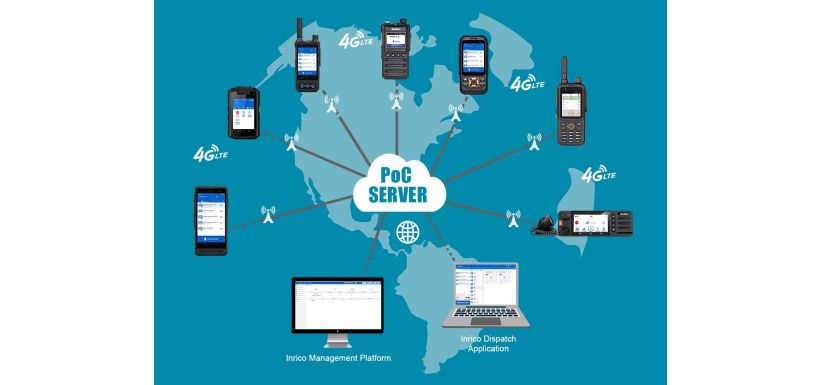
Push-to-talk Over Cellular refers to radio devices that blend push-to-talk technology with a cellular radio handset. Think two-way radio meets your mobile phone!
This technology is wireless, two-way, cellular communication, allowing instant connectivity anywhere in the world via the mobile network and with all the apps and features you’re used to on your smartphone.
PoC devices are compact for easy portability and have a very high and robust build quality resistant to dust and water, low pressure, wide-ranging temperatures, and drop. They lend themselves to professional operations and scenarios.
The History of PoC Radio
PoC radio was developed by the US telecoms giant Nextel in the late 1980s. It was the first alternative to two-way radios or walkie-talkies.
The radios came into commercial usage in 2002 following the creation of a set of specifications drawn up by the Open Mobile Alliance (OMA). Uptake in America on 2G and 3G services was sparse initially and virtually non-existent in Europe.
However, once 4G rolled out with its fast data speeds, PoC found real traction with all kinds of users, and not just commercial organisations.
How Do PoC Radios Work?
PoC radios utilise mobile technology to communicate using 3G, 4G, and Wi-Fi networks. They work in a half-duplex mode; half-duplex is bi-directional so that data can be sent both ways between numerous devices.
PoC radios have a push-to-talk button or PTT on the side and a heavy-duty speaker that limits background noise and minimises audio distortion. The display is brighter than a smartphone for ease of use in outdoor environments and low or no lighting.
What Features Does a PoC Radio Have?
If you’re curious about how much better a PoC radio is than either your smartphone or your portable radio, here’s why. These are some of the most common features you can look for in your selection.
- Compact, Lightweight, and Slim: Designed to be 100% portable for easy pick-up, put-down, and transit, with one-hand operation.
- Robust and Durable: PoC radios are designed to withstand a much tougher environment than your everyday smartphone. The construction is drop-resistant, and the device is immune to temperature extremes.
- Water and Dust Resistant: Many designs will have good water and dust resistance. For example, some products, like the Inrico T710A, may have a rating of IP54, an internationally accepted standard of ratings for protection against the ingress of dust and water developed by the International Electrotechnical Commission.
- High-Definition Display: This allows for easy viewing in light-compromised situations like disaster recovery or just at night.
- Superior Audio Output: Larger speakers and loud audio, along with transmission quality, allow users to hear and be heard.
- Emergency/SOS Button: This option is available for lone working or man-down situations.
- GPS Location Tracking: Offers accurate location mapping.
- Connectivity Options: Enjoy seamless communication anywhere via 3G, 4G, and Bluetooth.
- Generous Battery Capacity: Offers reliable, long-time operation without the interruption of charging.
Pay attention to which features your device offers, so you know what your PoC radio is capable of!
What Advantages Does PoC Radio Offer?
Multiple and Safe Communication Channels
Users can communicate with several receivers instantaneously, so messaging is real-time with no delay. The whole group receives the same message at the same time.
The network is digital and protected, so messages cannot be scanned, nor is it possible for someone to track and eavesdrop.
Wider Coverage
PoC radios can cover a wider geographical area and/or people operating in different regions with a wide dispersal range.
Extensive Choice of Channels
A PoC radio has a broader range of channels than a walkie-talkie equivalent device.
Advanced Functionality
PoC devices blend traditional radio functionality with up-to-the-minute mobile phone technology, supporting advanced features like multimedia messages and video calls.
Apps you’d expect on your smartphone are available on a PoC device. These include GPS location tracking, workflow management, and time scheduling, which are invaluable for monitoring fleet vehicles or workers on the ground.
Emergency notifications mean PoC radios are popular in remote locations and disaster zones.
Some models operate if the operator is wearing gloves and allow users to make sole or group calls at the touch of a single button, perfect in accident scenarios.
Licence Free
No licensing is required because PoC radios work off the existing mobile network.
Frequently Asked Questions
What Is PoC in Communications?
PoC in communications stands for Push-to-Talk Over Cellular and is a mobile communication system based on the user’s mobile network. These are convenient, multi-feature radio devices with no distance restrictions, making them popular both commercially and in emergency response. They combine the features of a radio and a smartphone with the disadvantages of neither.
Final Thoughts
PoC devices are a valuable and economical option for many commercial sectors and anyone needing a multi-functional, easy-to-use communication tool.
Ideal for daily use and mission-critical scenarios, their impressive list of features offers ultimate performance and safety with an affordable price tag.
Shop Moonraker for professional mobile radios for commercial and private usage.