
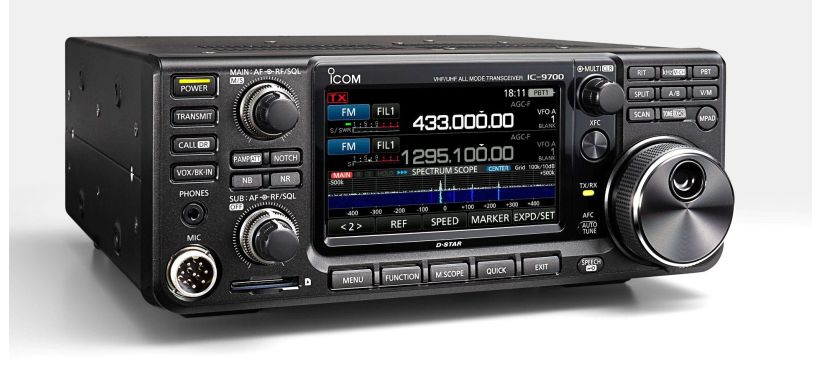
The world of radio equipment can feel a little intimidating if you're new to it. There's a lot of information, but it doesn't have to be overly complicated.
If you’ve ever wondered what a transceiver is or what it does, then you’re in the right place, as we have designed an entire guide to answer those questions! Let's get into it.
What Is a Transceiver?
A transceiver is a device capable of receiving and transmitting audio messages, all wrapped up in one singular package. Generally speaking, transceiver refers to wireless communication devices, but it may also apply to cable or optical fibre systems. Depending on your location, they can be operated independently or as part of a wider network.
Essentially, the transceiver is the cornerstone of all wireless communication. We wouldn't be able to use cell phones to broadcast and receive information without transceivers.
Transceivers are different from radios because of their ability to send out and receive information, whereas radios can only receive.
All transceivers can be separated into two categories: full duplex or half duplex. Your cell phone is an example of a full-duplex transceiver, meaning that both parties communicating through the device can speak simultaneously.
A half-duplex device, such as a walkie-talkie, allows only one individual to speak while the other is silenced. This is why you will hear ending phrases such as ‘over’ to indicate that the speaker has finished.
Types of Transceivers
Transceivers are not all built equal. There are many different varieties out there. Let us introduce you to them!
Fibre-Optic Transceivers
Sometimes referred to as optics modules or optical modules, fibre-optic transceivers are used for data transmission.
They’re an essential component of optical network devices that encode or decode information via light signals. These light signals are then converted into electrical signals, which can be read via a device with a screen, such as a computer or a smartphone.
Ethernet Transceivers
These transceivers connect directly to electronic devices, such as computers, to transmit and receive messages throughout a network. They’re sometimes also referred to as a media access unit or MAU.
Their applications vary, but as part of the ISO network model, the ethernet transceiver acts as the physical layer component and provides the main functions for converting and processing digital data.
RF Transceivers
Usable in any wireless communication system, RF transceivers are pretty widespread. To use them, you must arrange them between the baseband modem and PA/LNA.
In this context, PA is a power amplifier, whereas LNA is a low-noise amplifier. Generally speaking, RF transceivers transmit data via voice or video through wireless means. They’re commonly used for TV, radio, and satellite communication.
Wireless Transceivers
You can probably guess the unique selling point of these transceivers from their name alone; they’re a central component in any wireless communication system. The quality of this communication (including clarity and consistency) depends on how effectively the transceiver can deliver data throughout the system. They often consist of a baseband processor, an RF front, and a MAC layer for interpreting traffic controls.
GBIC Transceivers
A gigabit interface converter is a kind of transceiver that converts electrical currents into optical signals. These optical signals are then converted once again into digital electric currents. They’re often used with fibre optic or ethernet systems for high-speed networking and data transmission. A GBIC is a plug-in module that allows technicians to easily configure and adjust complex electro-optical communications networks.
SPF 28 Transceivers
The Small Form-Factor 28 transceiver is the third generation of the SFP interconnect system. It is compatible with all SFP+ ports and runs faster with better performance than its predecessors. They’re widely regarded as the superior transceivers in copper cable technology, boasting a significantly greater bandwidth than comparative models.
XFP Transceivers
Last on our list of transceivers is the XFP, which debuted before the SPF range. They’re principally used with gigabit ethernet or synchronous optical networking and are frequently used for data communication and optical links. They provide much lower power consumption than similar transceivers and possess a slightly larger module than the SPF.
What Is the Difference Between a Transmitter and a Transceiver?
Although they may sound similar, transmitters and transceivers are entirely different devices. Transmitters generate radio frequencies or waves, which can then be used to communicate audio and video.
However, transmitters can only send information out; they aren't capable of receiving information. In contrast, a transceiver can do both. They’re capable of receiving information and broadcasting it in equal measure.
What are the Applications of Transceivers?
There are a variety of applications of transceivers in the same way that there are so many different kinds of transceivers. Their primary function depends on the category they fall into. For example:
-
RF transceivers: used for baseband modems for over-the-wire (or analogue) transmissions of data. They may also be used in satellite communication.
-
Ethernet transceivers: used to link multiple electronic devices across an ethernet circuitry.
-
Optical transceivers: utilise fibre optic technology to convert electronic signals into light signals for high-speed data transmission
-
Wireless transceivers: a product of the combination of ethernet and RF transponders to improve the transmission speed of Wi-Fi signals
The end goal of your transceiver depends largely on the technology it’s made up of, so make sure to do your research before committing to a purchase.
Frequently Asked Questions
What Are Transceivers Used For?
Transceivers play an important role in facilitating bidirectional communication within wireless systems, seamlessly transmitting and receiving audio messages. Due to their specific applications, transceivers come in various types, from fiber-optic and Ethernet to RF and wireless transceivers.
Got Questions? Contact Moonraker Today!
If you're new to transceivers or simply want to understand the technology deeper, Moonraker can certainly help. We have sold radio equipment and accessories for years and are highly enthusiastic about each and every one of our products. Don't hesitate to get in touch to ask questions about the transceivers we sell or anything else we can help with.