

Whether you're a survival prepper or just an average person who wants to tune into different stations, radio scanners are a must-have. They allow you to listen to weather updates, navigation information, amateur radio, CB, aircraft, military, fire and rescue, marine and much more.
These devices are perfect for people living far in the countryside away from mainstream media. Also, they are great for preppers that want to be prepared when phone and internet lines go down.
If you're looking for the best radio scanners for home use, we've compiled a short list for you. We'll cover what makes these scanners unique and how to choose the right one for you.
| EDITOR'S CHOICE | ||||
|---|---|---|---|---|
UNIDEN SDS-200E |
AOR AR-DV1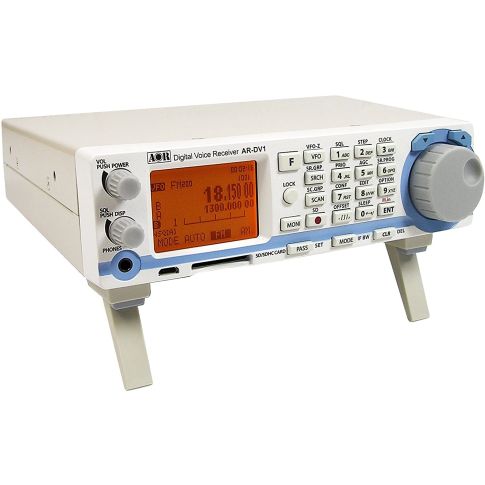 |
UNIDEN UBC-355CLT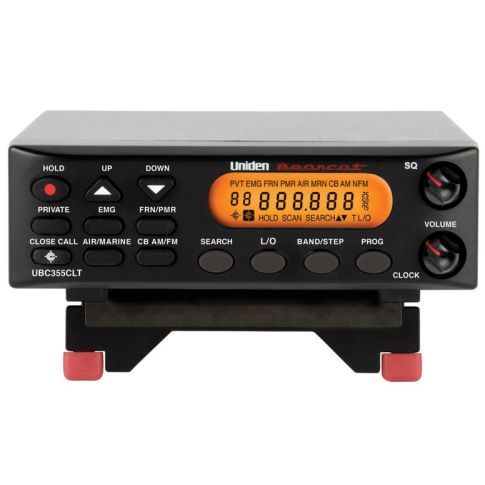 |
UNIDEN BEARCAT UBC-370CLT |
|
| Type | Handheld | Handheld | Handheld | Desktop |
| Frequency Range | 0.05-1300 MHz | 29-512 Mhz | 25-960MHZ | 100-1300 MHz |
| Digital mode | Yes | Analog | Analog | Yes |
| Channel Memory | 1200 | 400 | 500 | 200 |
| Pre-programmed | No | No | Yes | No |
| VIEW PRODUCT | VIEW PRODUCT | VIEW PRODUCT | VIEW PRODUCT |
1. Best Desktop: Uniden SDS-200 E
If you're looking for a high-end scanner, consider the Uniden SDS-200 E. This desktop scanner features the latest True I/Q receive technology, offering the best digital decode functionality even in challenging receiving environments.
The SDS-200 E has a beautiful 3.5" customisable colour display that you can display even in poorly lit conditions. Finding your local area's channels is straightforward. Although this scanner has almost unlimited options and settings, the initial setup is pretty straightforward. You can be up and running in minutes with the easy user interface.
The box includes essential equipment like a MicroSD card for channel storage, mounting hardware to bring the scanner on the go, and a far-reaching BNC-type telescoping antenna.
SPECIFICATIONS
-
Type: Desktop
-
Trunking System: TrunkTracker
-
Frequency Range: 25-1300 MHz
-
Mode: Digital
-
Channel Memory: Dynamic
-
UK Band Plan: No
PROS
-
Fast and easy setup
-
Backlit keypad for maximum visibility
-
Wide frequency coverage
-
Customisable colour display
CONS
-
The scanner is expensive compared to others on the market.
2. Best Digital : AOR AR-DV1
The AOR AR-DV1U is a wideband communications receiver covers 100 kHz to 1300 MHz in traditional analogue modes (SSB, CW, AM, FM, S-FM, W-FM) as well as various digital modes.
In fact, we know of no other radio in this category that can decode Icom's D-Star mode, Yaesu's new C4FM mode, Alinco's digital mode, NXDN (note: 6.25 kHz only), P25 Phase 1, etc.
Interesting features include: 2000 Memories (in 40 banks of 50), Memory Scan, AM Synchronous Detection, Noise Reduction, Notch, Digital Data Display, Clock, Calendar, Alarm, Timer. The SD/SDHC jack supports logging functions. There is also a micro USB port. This radio will support field firmware updating. High performance is achieved since the receiver employs direct conversion below 18 MHz and triple conversion superheterodyne above 18 MHz.
SPECIFICATIONS
-
Type: Desktop
-
Weight: 2.5 Kg (Approx)
-
Frequency Range: 100 kHz-1300 MHz
-
Mode: Digital
-
Channel Memory: 2000
-
Pre-programmed: No
PROS
-
Wideband Reception
-
Compact
-
Crisp and clear display
-
Intuitive Interface
CONS
-
Price ‐ It's the most expensive scanner in this review
-
Learning curve ‐ It will take some time to understand the features
3. Best Budget: Uniden UBC-355CLT
Don't let the price tag fool you. The Uniden UBC-355CLT offers plenty of functionality to fit your needs. It features over 300 channels in the AM mode and an additional 100 for emergencies.
You can detect nearby transmission within 100 yards using the Close Call scan ability. Despite being analogue, the turbo function lets you increase the search speed by 180 steps per second.
Save time searching by using the frequency skip, memory lock and memory back function to find the channel you're seeking.
SPECIFICATIONS
-
Type: Desktop
-
Frequency Range: 25-960 MHz
-
Mode: Analogue
-
Channel Memory: 300
-
UK Band Plan: No
PROS
-
Very affordable price for the available features
-
Great speed and storage capacity
-
Mountable and portable
-
Private frequency scanning
CONS
-
Some users find the manual entry of frequencies to be a hassle
-
It doesn't offer an FM mode.
4. Best Seller/Most Popular: Uniden Bearcat UBC-370CLT
Uniden is one of the most popular producers of desktop channel scanners. The Bearcat UBC-370 CLT is perfect for anyone looking to stay up to date with what's going on in your local area.
With this scanner, you'll be able to monitor emergency service channels, commercial and private aircraft bands, marine and amateur bands, military bands, marine bands, railroad bands, business radio, FM broadcast stations and much more. Also, you can access over 500 channels and scan channels at 90 channels per second.
The Bearcat scanner features a dedicated clock screen meaning that the clock display won't have to turn off to show the channel and scan frequencies. Not to mention, you won't have to remember frequencies by numbers. It has a utility function that lets you name channels for easy identification. Access the stored frequencies, then find the name of your desired channel.
SPECIFICATIONS
-
Type: Desktop
-
Frequency Range: 25-960 MHz
-
Digital Mode: Analogue
-
Channel Memory: 500
-
UK Band Plan: No
PROS
-
Wide frequency range
-
The lock-out feature ignores specific frequencies when scanning
-
Stores up to 500 channels
-
Offers search parameters
CONS
-
The screen is glossy, making it susceptible to glare
What to Know Before Buying a Radio Scanner for Home Use
The type of radio scanner you choose depends on numerous factors. Scanners require activity on particular frequencies for them to be useful. If the signals in your area don't meet these requirements, you'll be gravely disappointed. Here's what you need to know before buying a radio scanner.
Digital vs Analogue
Before purchasing a radio scanner, consider whether you want to operate with a digital or analogue scanner.
The main advantage of an analog scanner is the price. For around £100 you can purchase a scanner which will allow you to listen to a huge amount of analog traffic that’s taking place over the radio spectrum. Analog technology has been around for a long time and is still very active. Lots of people are still using analogue technology which remains very popular and cost friendly. However, as time goes on, digital technology will take over and spread across the radio world. The problem with using an analog scanner is that you cannot listen to digital transmissions.
Digital scanners receive and decode digital program streams into a format you can hear, providing users with a superior listening experience. They offer clearer communication, meaning less chance of static, fuzziness or interference. The advantage of a digital scanner is that you get more for your money and you can listen to both digital and analog signals. But this technology comes at a price! You will need to spend over £400 to get a decent digital scanner and this is simply too costly for a lot of people.
In some areas, the transmission quality also depends on the types and regions of FM and Digital Audio Broadcasting (DAB) coverage. However, Ofcom has undertaken to improve DAB coverage in parts of the UK.
Frequency
Scanners are very fast at monitoring frequencies for activity and especially if you’ve already programmed in a set of frequencies into your scanner's memory. This speed with scanning through a part of the radio spectrum can have a number of uses, especially in a disaster when you need information fast.
The frequency range of a radio determines the signals the equipment will pick up. Generally, it's better to have a broader frequency range, allowing the device to receive more signals.
Memory Management
Like with any device, the more memory, the better. The memory for a radio scanner determines how many frequencies you can store for easy access. That means you can access the previous frequencies you've found essential with little effort.
Radio scanners employ the dynamic memory scheme or the bank and list method. Dynamic memory means there aren't any definite number of slots for each bank. Simply put, you can store as many frequencies as long as you have the total number of programmable channels available. The bank and list method is primarily utilised in older scanners and allot a designated number of banks with slots where you can encode the frequencies.
Functionality
If you're someone who isn't a tech whiz, you want a device that is easy to use. Look for radio scanners with a simple interface and a few buttons. Ensure that the display has lighting and is easy to read.
Also, you might want to consider a new scanner antenna which can improve the reception performance of your scanner. There are lots of antenna options - the bigger the antenna the better reception you will receive..
Power Requirements
While most scanners are battery-powered, you want to know the type of battery required for the device.
Older models demand the use of a large battery pack, which is costly to replace. Comparatively, more modern scanners only require AA or AAA batteries, which you can recharge.
Additional Features
Higher-end radio scanners will offer other features that can enhance their effectiveness. For example, some offer GPS capability to pinpoint your precise location. Once you've loaded the location, the scanner will populate new frequencies within the area.
Some devices offer location-based scanning. It eliminates the process of modifying channel groups when switching locations.
Other devices may have a lock-out feature allowing you to ignore specific frequencies you want to ignore or skip. Sometimes, you'll come across a transmission that causes the scanner to stop. You can even ignore some stored channels while scanning for new frequencies. You can manually lock and unlock the channels anytime.
Ready to Buy? Shop Our Radio Scanners Today!
Having a radio scanner can provide a sense of security that other technologies can't. Scanners can also be great fun enabling you to tune in to what's happening in your local area.
Moonraker offers a huge range of radio scanners and antennas. Whether you want a high-powered digital scanner to prep for outages or a small analogue device to listen locally, there's something for everyone.
Shop Moonraker desktop scanners now.