

We live in a time of great uncertainty. With natural disasters, power outages, and other crises quickly mounting, it’s no wonder so many are choosing to prepare for the worst whilst hoping for the best.
Preppers believe that self-sufficiency and survival preparedness is planning for the inevitable. Preparing for all eventualities not only makes sense, but it's something we should all be doing.
If you're thinking about putting together a prepping kit, a radio scanner is one of the most critical pieces of equipment you can have.
Here are our choices of the five best radio scanners for preppers so that you can keep communication channels open when other systems break down.
| EDITOR'S CHOICE | |||||
|---|---|---|---|---|---|
AOR AR-DV10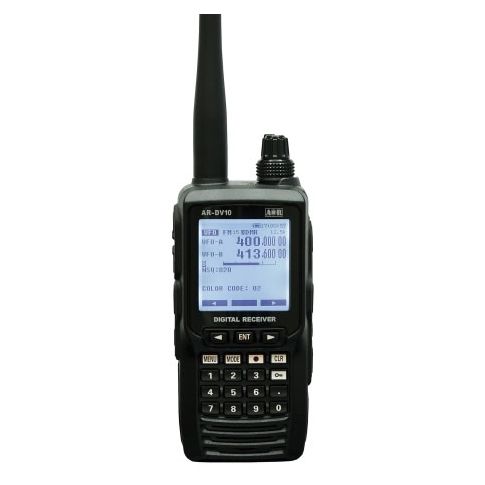 |
UNIDEN UBC-125XLT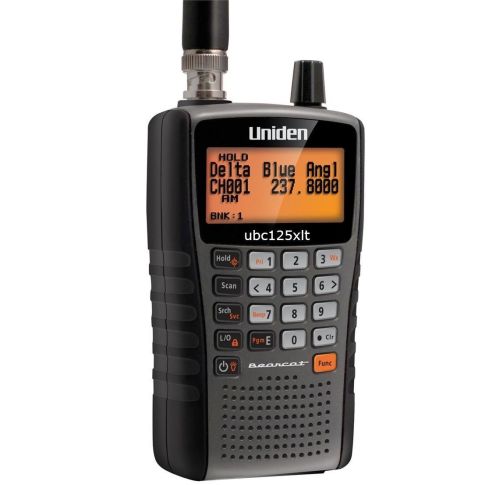 |
AOR AR-DV1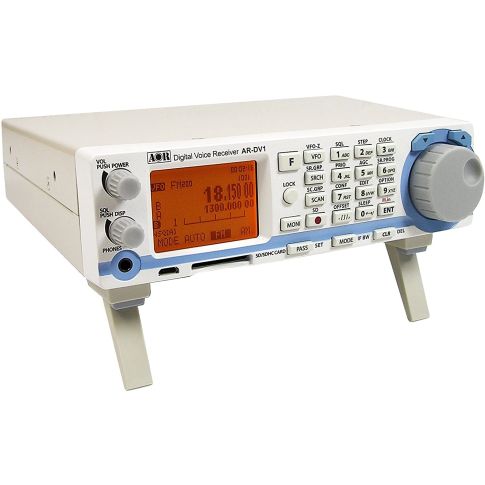 |
UNIDEN SDS-200E |
UNIDEN UBC-355CLT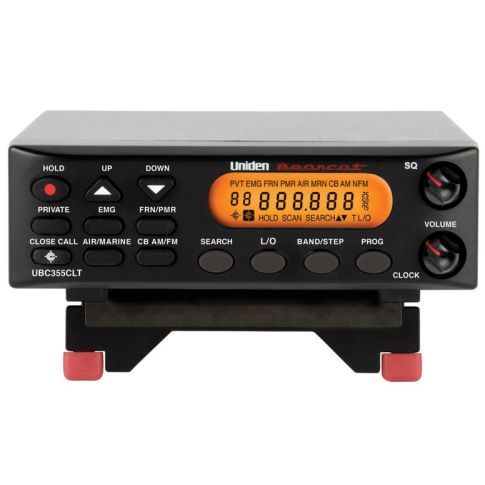 |
|
| Type | Handheld | Handheld | Desktop | Desktop | Desktop |
| Frequency Range | 0.05-1300 MHz | 25-960MHZ | 100 kHz-1300 MHz | 25-1300 MHz | 25-960Mhz |
| Digital mode | Yes | Analog | Yes | Yes | Analog |
| Channel Memory | 1200 | 500 | 200 | Dynamic | 300 |
| Pre-Programmed | No | Yes | No | No | No |
| VIEW PRODUCT | VIEW PRODUCT | VIEW PRODUCT | VIEW PRODUCT | VIEW PRODUCT |
1. Best Overall Choice/Editor’s Choice – AOR AR-DV10

The AOR AR-DV10 Digital Handheld scanner is one of the most advanced portable scanners used by government departments worldwide because of its range.
It supports a variety of digital and analogue modes, delivering massive functionality in your hand on the move.
The superior features of this scanner use a simplified circuit backed by the latest SDR digital processing technologies. It comes equipped with an Altera Cyclone IV FPGA and an Analog Blackfin DSP.
Another feature that distinguishes this exceptional handheld scanner is its IPX5 water-resistant rating. The rating follows the IEC 60529 protocol.
SPECIFICATIONS
-
Type: Desktop
-
Frequency Range: 25-960 MHz
-
Digital Mode: Analogue
-
Channel Memory: 500
-
UK Band Plan: No
PROS
-
Wide frequency range
-
The lock-out feature ignores specific frequencies when scanning
-
Stores up to 500 channels
-
Offers search parameters
CONS
-
The screen is glossy, making it susceptible to glare
2. UNIDEN UBC-125XLT — Best Value Handheld Scanner
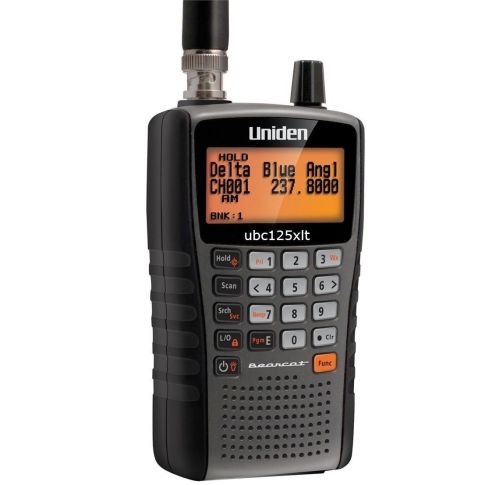
The Uniden UBC-125XLT has long been one of the most popular handheld scanners on the market. This stylish yet robust radio is optimal for indoor and outdoor use. It also has programmed channels grouped into ten banks with 50 channels each.
The UBC-125XLT includes Uniden's close call function and ten preset frequency bands, including CB channels, air traffic, maritime traffic, and PMR446 frequencies.
SPECIFICATIONS
-
500 Channels
-
Size: WxDxH 67x33x115 mm
-
Weight: 175 g
-
Scan speed: 90 steps/sec.
-
Frequency bands:
-
CB radio (25-30)
-
VHF Land mobile radio (30-88 Megahertz)
-
Air traffic (108-138 Megahertz)
-
Land mobile radio (138-174 Megahertz VHF and 225-512 Megahertz UHF)
-
Public services (806-960 Megahertz UHF)
-
PROS
-
Lightweight and easy to use when on the go
-
Low price without sacrificing too much in terms of functionality for the best value
-
Suitable for both seasoned pros and newcomers
CONS
-
Long charge times for the batteries
-
The radio doesn't operate while charging
3. Best Digital : AOR AR-DV1
The AOR AR-DV1U is a wideband communications receiver covers 100 kHz to 1300 MHz in traditional analogue modes (SSB, CW, AM, FM, S-FM, W-FM) as well as various digital modes.
In fact, we know of no other radio in this category that can decode Icom's D-Star mode, Yaesu's new C4FM mode, Alinco's digital mode, NXDN (note: 6.25 kHz only), P25 Phase 1, etc.
Interesting features include: 2000 Memories (in 40 banks of 50), Memory Scan, AM Synchronous Detection, Noise Reduction, Notch, Digital Data Display, Clock, Calendar, Alarm, Timer. The SD/SDHC jack supports logging functions. There is also a micro USB port. This radio will support field firmware updating. High performance is achieved since the receiver employs direct conversion below 18 MHz and triple conversion superheterodyne above 18 MHz.
SPECIFICATIONS
-
Type: Desktop
-
Weight: 2.5 Kg (Approx)
-
Frequency Range: 100 kHz-1300 MHz
-
Mode: Digital
-
Channel Memory: 2000
-
Pre-programmed: No
PROS
-
Wideband Reception
-
Compact
-
Crisp and clear display
-
Intuitive Interface
CONS
-
Price ‐ It's the most expensive scanner in this review
-
Learning curve ‐ It will take some time to understand the features
4. UNIDEN SDS-200E — Best Digital Scanner
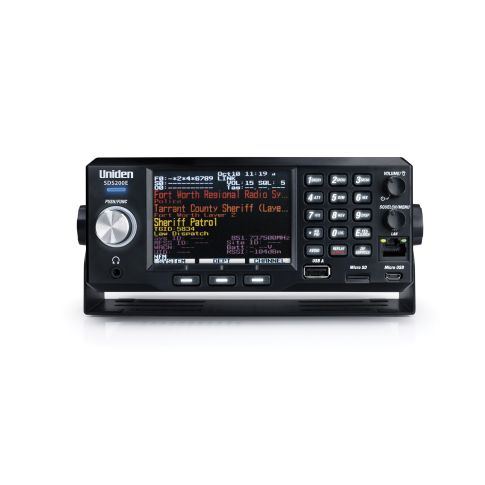
If you want to prepare for every possible eventuality, you can't go wrong with this powerhouse from Uniden. The SDS-200E is not a cheap radio scanner, but it's well worth it.
The SDS-200E is broadly similar to its handheld cousin, the SDS100, but with several high-quality additions, such as the latest True I/Q receiver technology. This digital scanner from UNIDEN has set a new benchmark for the best digital decode performance in the industry.
SPECIFICATIONS
-
Excellent sound quality with the True I/Q Receiver
-
TrunkTracker X
-
Ethernet Connectivity that gives the scanner top-quality streaming and control
-
Complete USA/Canada Radio Frequency Database
-
Customisable Colour Display
-
Close Call™ RF Capture with Do Not Disturb
-
8 GB microSD
-
Free Sentinel Software keeps the SDS200 database and memory up to date
PROS
-
Functionality and performance
-
True I/Q technology means it performs well even in environments with unreliable radio frequency
-
Rugged and weather-resistant, perfect for survival situations
CONS
-
Pricey — by far the most expensive radio on our list
-
Digital set-up not ideal for off-the-grid situations
5. UNIDEN UBC-355CLT — Best Budget Scanner
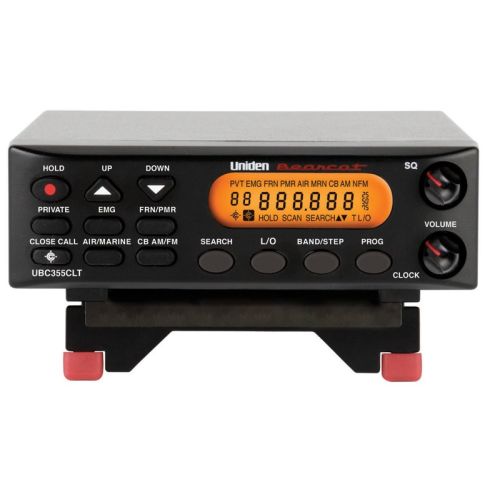
For less than £100, the Uniden UBC-355CLT is a great low-budget option that you can use as a base and mobile scanner. It also comes with Uniden's ‘close call’ function, which means it can instantly tune to signals transmitted nearby. It also comes with several pre-programmed frequencies, making it quick and easy to set up.
SPECIFICATIONS
-
300 Channels
-
Power supply: 12 VDC. Net adaptor
-
Scan speed: 50 step/sec.
-
Dimensions: WxDxH 132x142x42 mm
-
Weight 640 grams
-
Frequency range:
-
Amateur band (25-30 MHz)
-
Low VHF Land Mobile Radio (30-87 MHz)
-
Aircraft Band (108-137 MHz_
-
Land Mobile Radio 137-174 (MHz VHF, and 406-512 MHz UHF)
-
Public Service Band (806-960 MHz)
-
PROS
-
Low price
-
Small and lightweight
-
Quick set-up ideal for beginners
-
Portable — use it as both a mobile and base scanner
CONS
-
Limited functions that match its low price
-
Limited range when compared to other models on the market
What You Should Know Before Buying a Radio Scanner for Preppers
Before you rush off to make a purchase, there are a few things that every prepper needs to know before buying a radio scanner.
Types of Radios
If you're new to the world of radio, it can all seem bewildering, especially with so many acronyms, bands, channels, and wattages. The term ‘radio scanners’ can technically refer to several different types of radios, many of which come with slightly different uses and functions.
In the world of radio, users refer to scanners when talking about receivers that can pick up a broad range of frequencies. You can use them to listen to amateur radio channels and tune in to emergency broadcasts by police, fire, and other authorities.
Scanners are different from CB radios, which are probably the most well-known. CB radios are still widely used by truckers and hobbyists. However, a CB radio cannot pick up emergency bands. They are great for communication between points of no more than 20 miles but are limited to 4 watts, making them far from ideal in a serious large-scale emergency.
In the US you may have heard of the Family Radio Service (FRS) and General Mobile Radio Service (GMRS) which are two similar forms of radio that overlap in almost every way, except that the GMRS requires a licence while the FRS does not. Only available in the US, think of these as high-powered walkie-talkies that are great for family trips or commercial use.
Ham radios are another piece of equipment popular among preppers. They also have the broadest range of channels and frequency options by some distance, making them perfect for emergencies. Ham radios, unlike scanners, also allow you to transmit. However, you need a HAM radio licence to broadcast to other users, including emergency services. It is illegal to use them in non-emergency situations without a licence.
Critical Communications
We've all seen films where somebody sits in front of a radio and immediately becomes enthralled by something happening many miles away. The reality is usually very different. In remote areas, you might not hear anything at all, and even in heavily populated areas, you might not find what's on the airwaves particularly interesting. But the scanner market is a big market and people do like to eavesdrop on communication in whatever form.
However, if you're hoping to purchase a radio scanner to communicatr with others in the area, think again. Scanners are primarily for receiving signals and you cannot use them to transmit and converse with others. For preppers, scanners are essential because they allow access to information in emergencies, such as evacuations and alerts for natural and manufactured disasters, including fires, floods, and more.
At the end of the day, it’s helpful to think about what kind of communication you want from your radio device to guide your purchasing decision.
Base or Handheld
There are two schools of thought when choosing a handheld or a base radio scanner. Radios used at home or wherever you choose to prep will almost always have a longer range. Generally, top-end base radios are superior to handheld options unless you're going for high-end portable devices.
However, having something mobile comes with quite an obvious advantage, in that you'll be able to take it with you if you need to travel. You will need to take extra steps to install it in your truck or another vehicle, but once you do, you can receive crucial information on the go.
Whether you choose a base scanner or handheld will also depend on how you wish to use it and the kind of prepper you are. A desktop scanner is best if you need it for your home operating base. But if you'd prefer to use it whilst evacuating the busy urban areas, go with a handheld option.
Antennas Are Key
Expensive, high-quality scanners make a big difference, but any prepper will tell you that the antenna is the key.
A general rule is that your antenna should be at least 1/4 the size of the wavelength you want to receive, but many preppers choose to buy or build something much larger.
Of course, this only applies to base scanners, but even for handheld devices, it's easy to buy or construct something that can significantly boost your range.
FAQs
Do Preppers Need Radio Scanners?
It might be a stretch to say that preppers ‘need’ a radio scanner, but when you look at how possible scenarios might play out, it's easy to see how useful they could theoretically be.
We live in a world of mobile phone coverage, but when those little bars of connectivity finally disappear, it can be difficult to know what to do next. Radio scanners provide a different communication form that could prove vital in a worst-case scenario.
Mobile phone coverage can only go so far, whether it's a freak weather event, a large-scale natural disaster, or even a war. At worst, you'll never need to use your radio scanner in an emergency, but at best, it could be the difference between life and death.
Is It Legal for Preppers To Use Radio Scanners?
It is legal to buy, own and use a scanner, as long as you are not using it to listen in on private channels, which could range from taxis to the police and military. In theory, however, as long as you are only listening in and not speaking on restricted channels, most authorities tend to turn a blind eye. In the UK, most police channels are encrypted and cannot be received by Radio Scanners. Radio Scanners cannot pick up encrypted signals as you would expect.
It's important to remember that most preppers are not spending all their time monitoring restricted airwaves. Instead, they have scanners as an emergency tool in case the need arises. If there were to be a large-scale event where mobile-phone coverage disappeared, using a scanner to listen for emergency services and monitor the ongoing situation might prove imperative.
Conclusion
Most preppers are not huddled in underground bunkers wearing tin hats, as some believe. Prepping is about preparing yourself, your family, and those around you for those situations which may seem incredibly unlikely and which we all hope will never come to pass but do happen.
A good quality radio scanner is undoubtedly one of the most critical items in such a situation. Let's hope you never need to use it, but having one can make all the difference.
At Moonraker, we are one of the leading suppliers of radio scanners, antennas and accessories. Browse our shop today and discover all our great options today.